Tia News
How to ease the transition from school to homeschool
Deschooling works best as a flexible transition, not a fixed break. Build a homeschool rhythm with practical steps for lessons, friendships, and learning records.
By Tia Education Team · Published

Ease the transition from school to homeschool by keeping a few familiar routines, making room for reading and interests, and adding structured lessons at a pace your student can manage. If your first morning at home feels uncertain, start with a shared activity rather than recreating the whole school day. Deschooling is a flexible adjustment period, not permission to set aside your state’s homeschool requirements.
- Deschooling gives families room to find a homeschool rhythm without requiring a fixed number of weeks.
- Keep local requirements, learning records, and opportunities for friendship in your transition plan.
- Start with reading, projects, outings, and manageable lessons rather than copying a classroom timetable.
- Tia is a personalized tutor for families seeking adaptive Math, English, and Science support in Grades 5–12.
How do you ease the transition from school to homeschool?
Start with your responsibilities, then build the day around the student in front of you. Your 2026 homeschool plan needs to cover required learning while leaving space to adjust the method. A homeschool schedule that fits your student gives you a starting point, not a timetable you must defend.
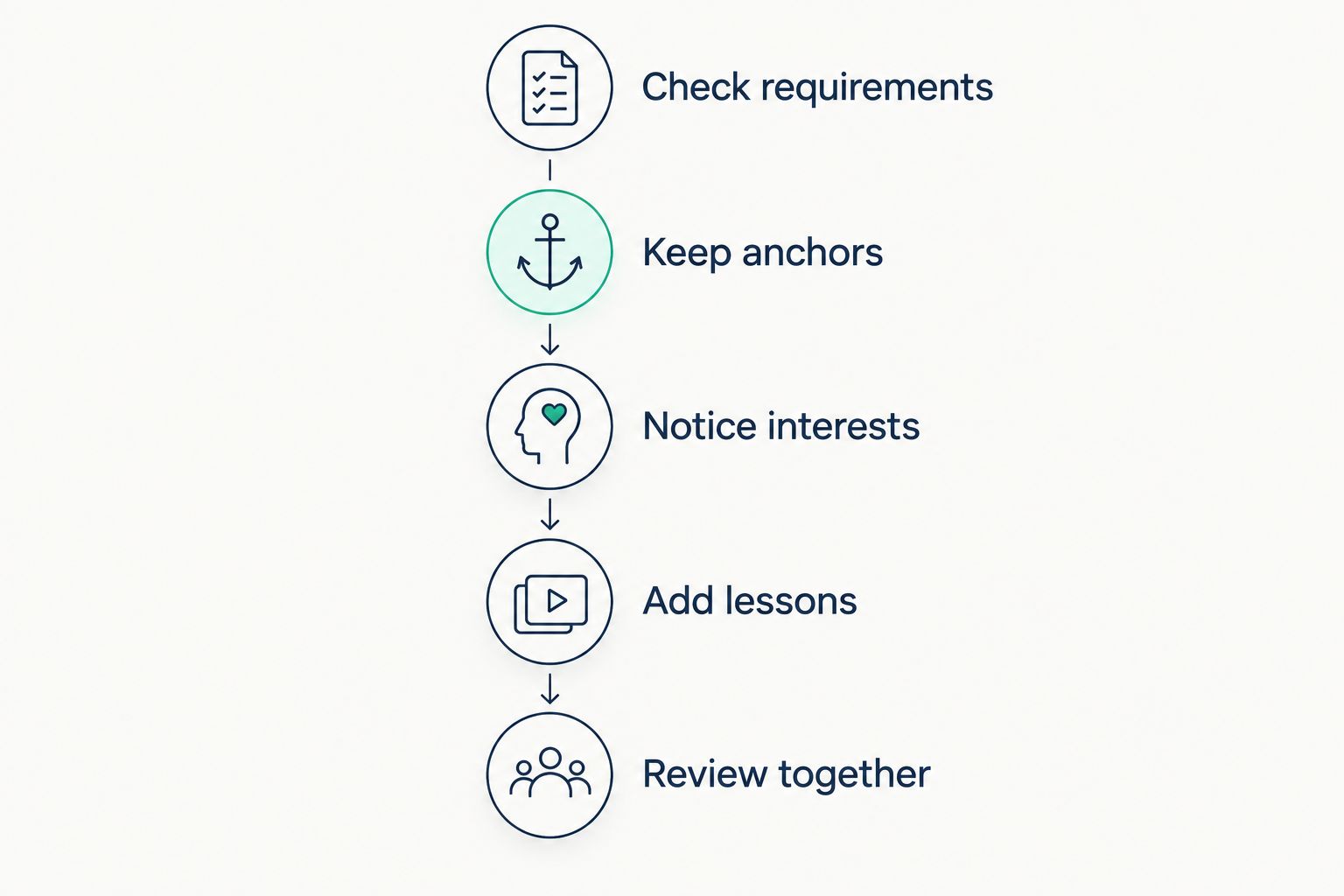
Check requirements
Before changing your daily routine, check your state’s current homeschool rules through its education department or other official guidance. Identify any applicable notice, instruction, subject, attendance, assessment, or recordkeeping requirements. Do not assume that another family’s arrangements apply to yours.
If your student is leaving school, confirm the withdrawal process separately. For a high school student, also review completed coursework and your plans for credits, graduation, and future applications.
Keep anchors
Choose familiar parts of the day to retain: breakfast together, a walk, a reading time, or a predictable stopping point. Keep the structure simple. You are giving the day a shape without filling every space.
Ask your student which school routines they want to keep. A student who liked a clear lesson list does not need to abandon it just because learning has moved home.
Notice interests
Invite your student to choose something to read, investigate, make, or discuss. An interest in cooking can become a conversation about fractions. A favorite story can lead to writing an alternative ending.
Treat these as openings for learning, not proof that every interest covers every required subject. Keep track of what the activity actually involved.
Add lessons
Introduce a manageable lesson with a clear purpose. Choose a skill you want to understand better, such as explaining a fraction or summarizing a paragraph. Avoid turning the first lesson into a full placement test.
Observe what your student can do independently and where an explanation helps. Use that information to choose the next task.
Review together
Ask what felt clear, what felt tiring, and what your student wants to try differently. Then change one part of the plan rather than replacing everything.
You remain responsible for the learning plan. Your student gets a meaningful say in how the learning happens.
Why this matters
Leaving school changes more than where lessons happen. Your family is also deciding how to start the day, ask for help, manage materials, and keep friendships going. You do not need to settle all of those questions immediately.
For a family starting homeschool in 2026, the useful question is not whether the day looks like school. It is whether your student is learning, your responsibilities are covered, and the routine is workable. A quieter timetable still needs a clear purpose.
Keep the good parts of the previous experience. Familiar books, friendships, favorite subjects, and helpful learning strategies can come with your student into homeschool.
What does deschooling look like at home?
Deschooling can include reading together, projects, outings, unstructured time, and gradually establishing a family rhythm. It does not require you to reject lessons or choose a particular long-term homeschool philosophy. Use the term only if it helps your family describe the adjustment.
Choose your approach by looking at what your student asks for and what your responsibilities require. These are starting options, not ranked methods or promised outcomes.
| Transition approach | Best for | What you can do | Limitation to plan around |
|---|---|---|---|
| Interest-led activities | Students asking for more choice | Read, make things, investigate questions, and discuss discoveries | Required subjects still need deliberate attention |
| Short structured lessons | Students who want clear expectations | Keep a lesson list and work on a specific skill | A rigid list can crowd out adjustment time |
| A mixed routine | Families combining required work with flexibility | Pair planned lessons with projects, reading, and outings | You need to distinguish purposeful learning from simply filling time |
Do not label your student permanently based on the first days at home. They can want clear instructions in math and open-ended choices in writing. Adjust by subject as well as by day.
Screens can also be a comfortable place to learn for some students. Judge a screen-based activity by what the student is doing and understanding, not by the device alone. Reading on a tablet and leaving a lesson open without engaging are different activities.
How long should deschooling last?
Deschooling has no universal timetable. Do not assign a fixed number of weeks based only on how long your student attended school. Instead, review whether your routine meets your responsibilities and supports meaningful participation.
For your 2026 transition, look for practical signs that the next step is manageable:
- Your student understands what the day includes.
- You can begin a learning activity without a long negotiation.
- Your student can identify something they want to explore.
- You have a way to notice progress and record required learning.
- You know which parts of the routine need adjustment.
These are planning prompts, not a readiness test. A student does not need to be enthusiastic about every subject before you introduce it. Keep expectations clear and change the approach when the task is not working.
If your student wants lessons immediately, include them. If a full timetable is overwhelming, simplify the delivery without dropping responsibilities.
Why the transition varies between families
The same plan will not fit every household. Build around these factors rather than borrowing another family’s calendar:
- Student preferences: Some students want a visible task list; others prefer more choice within a clear goal.
- Current understanding: A student can be confident in science while needing a different explanation in math.
- Learning needs: Consider existing accommodations, movement breaks, and ways your student communicates understanding.
- Family availability: Work, caregiving, transport, and shared space affect which routines you can sustain.
- Local requirements: Required subjects, records, and assessments shape the plan you must maintain.
- Access to activities: Libraries, co-ops, sports, and community groups are not equally available to every family.
Talk about these constraints plainly. You can offer choices within your real circumstances without promising an unlimited menu of activities.
How do you keep learning moving without rushing?
Start with a specific goal and choose a manageable way to work on it. If brief practice fits your student, try as little as 10 minutes a day on a focused skill. That is a scheduling option, not a promised learning result or a required lesson length.
For math, place counters or fraction tiles on the table and ask your student to explain what they represent. Then connect the objects to a picture and written symbols. You are looking for an explanation, not just a completed page.
For English, read aloud together, including with an older student. Ask about a character’s decision or the evidence behind an idea. Keep the conversation open enough for your student to disagree and explain why.
For science, begin with a question your student wants to investigate. Ask what they predict, what they notice, and how they would record the observation. Choose activities appropriate to their level and supervise any work that needs adult oversight.
Your 2026 plan can include both interests and required content. An interest supplies a useful starting point; your learning goal keeps the activity connected to the subject.
How do you handle friendships during deschooling?
Make opportunities for connection part of the plan rather than waiting until the academic routine feels finished. Ask your student which existing friendships they want to maintain. Help arrange contact where it is practical and welcome.
Consider a co-op, park day, sports team, music group, library activity, or faith group if that fits your family. Choose by access, interests, and your student’s comfort. You do not need to enroll in everything.
A calendar full of activities is not the same as a friendship. Look for opportunities to meet people again and share something enjoyable. Respect that your student might prefer a familiar friend to a large new group.
What should you record while the routine is changing?
Keep records from the start, using the format your local requirements call for. A transition period does not remove your responsibility to document required learning. Save relevant work samples and note what your student actually did.
A practical learning note can include:
- The date and activity.
- The subject or skill involved.
- What your student explained, made, read, or practiced.
- Where help was needed.
- A useful next step.
Record observations rather than broad labels. A note that a student explained equivalent fractions using tiles tells you more than a note that math went well.
For your 2026 records, separate time spent actively learning from time when materials were merely open. Use the time categories required in your location. This guide to keeping homeschool records without a last-minute scramble can help you plan a routine for saving the evidence.
Where can a personal tutor fit?
A tutor belongs where you have identified a subject need, not where you feel pressure to fill the whole day. Tia is best for families seeking a personalized tutor for Math, English, and Science in Grades 5–12. It adapts teaching to the student’s pace, level, and interests while working with the curriculum.
That can give you subject support while you remain in charge of the broader homeschool plan. Tia also provides a live parent dashboard, engaged-time measurement, and self-writing records. Use these alongside your own observations and required documentation.
The boundary matters: Tia is a personal tutor, not your complete transition plan. You still arrange friendships, choose the family routine, and confirm local requirements. Tutoring records do not replace that responsibility.
FAQ
What is deschooling when you start homeschooling?
Deschooling is a flexible adjustment period after leaving school while a family finds its homeschool rhythm. It can include reading, projects, outings, unstructured time, and planned lessons. Local homeschool requirements still apply.
Do we have to deschool before starting homeschool lessons?
No, you do not have to complete a separate deschooling period before starting lessons. Keep lessons that fit your student and adjust the routine around them. A student who wants clear structure can have it from the start.
How many weeks should deschooling take?
Deschooling does not have a universal number of weeks. Review your student’s participation, your family routine, and your legal responsibilities rather than following a fixed countdown.
Can we use a homeschool curriculum during deschooling?
Yes, you can use a homeschool curriculum during deschooling. Start with manageable work, observe how the method fits, and change the delivery when needed. Keep required content in view.
Can a 10-minute lesson be part of deschooling?
A 10-minute lesson can be part of deschooling when brief practice fits your student. Use it for a focused task, then observe what the student understands. That duration does not guarantee a result or replace required instruction.
How do I help my student keep friendships after leaving school?
Plan practical ways to maintain existing friendships and meet people through shared interests. Libraries, co-ops, sports, music, and other community groups are options when accessible. Ask your student which connections matter to them.
Can Tia support our school-to-homeschool transition?
Tia can provide personalized tutoring in Math, English, and Science for students in Grades 5–12. Its parent dashboard and learning records support oversight. Parents still manage the wider homeschool plan and local compliance.
One last thing
Keep something that already works. You do not need an entirely new identity as a learning family on the day school ends. A familiar book, a favorite subject, or a useful routine can be the bridge.
Ask your student what they want to keep and what they want to change. Write both answers down. Build your next learning day from that conversation, with your responsibilities still in view.