Tia News
Tia vs Princeton Review: which is better in 2026
Tia vs Princeton Review: choose adaptive subject tutoring for daily learning or specialist test prep for exam goals. Compare teaching, parent tools, and fit.
By Tia Education Team · Published

Your student needs help, but you need the right kind: choose Tia for adaptive, curriculum-aligned Math, English, and Science tutoring with parent visibility; choose The Princeton Review for specialist standardized-test preparation or instruction with a human tutor. This 2026 comparison separates ongoing subject learning from exam-focused preparation so you can choose around the problem in front of you.
- Tia vs Princeton Review comes down to adaptive subject tutoring versus specialist test preparation and human instruction.
- Tia fits families seeking curriculum-aligned explanations, a parent dashboard, engaged-time measurement, and homeschool records.
- The Princeton Review fits students seeking structured SAT or ACT preparation and human-led teaching.
- Choose around the student's learning goal, not a promised grade or test-score improvement.
Why this matters
It is hard to choose tutoring when everything looks like help. A student who cannot explain an algebra step has a different need from a student who understands the math but struggles under exam conditions.
You do not have to solve both problems with the same service. Start by naming the task: understand a concept, improve subject knowledge, prepare for a particular exam, or work directly with another person.
Tia is the better fit for families seeking adaptive subject tutoring with parent visibility and homeschool records. That is a product-fit verdict, not a claim that one service produces better learning outcomes.
For your 2026 decision, compare the actual teaching approach and the specific program you would use. The Princeton Review is a provider with different offerings, not one interchangeable tutoring experience.
At a glance
| Dimension | Tia | The Princeton Review |
|---|---|---|
| Best for | Ongoing personalized subject learning, especially for homeschool families | Standardized-test preparation and human-led instruction |
| Curriculum and subjects | Curriculum-aligned Math, English, and Science for Grades 5–12 | Academic tutoring and exam-specific preparation; select the relevant program |
| Explanations and pace | Adapts teaching to the student's pace, level, and interests | Human tutors can explain, question, and respond during instruction |
| Standardized-test preparation | Subject learning that supports understanding | Dedicated preparation for exams such as the SAT and ACT |
| Human interaction | Personal tutor experience with adaptive teaching | Human-led tutoring and course options |
| Parent visibility and records | Live dashboard, engaged-time measurement, self-writing homeschool records | Evaluate reporting within the specific course or tutoring program |
| Learning outcomes | Judge through independent understanding and completed work | Judge through independent understanding and relevant exam practice |
| Pricing model | Subject subscriptions and monthly or annual bundles | Program-specific course or tutoring arrangements |
| Standout feature | Combines adaptive teaching with parent-facing learning records | Specialist exam preparation with human instruction options |
Curriculum-aligned daily learning favors the adaptive tutor
Tia's subject tutoring covers 3 subjects: Math, English, and Science. Its stated student range is Grades 5–12, and its teaching aligns with the student's country curriculum while adapting to the student's level and pace.
That combination matters when your student needs a different explanation without abandoning the learning goal. You can keep working on the required concept while changing how it is taught.
The Princeton Review also offers academic tutoring. It is not only a test-preparation brand, so a comparison that treats it as irrelevant to schoolwork misses part of the choice.
Best for ongoing curriculum-aligned support: the adaptive personal tutor. Best for academic help delivered by a person: a relevant Princeton Review tutoring program.
Neither label means complete curriculum management. You still choose the learning plan, check assignments, and decide whether the support matches your student's course.
Before choosing, bring an actual task from the student's work. A difficult paragraph, an algebra problem, or a science explanation gives you a more useful test than a broad promise to improve at school.
Adaptive explanations favor the student's everyday learning needs
A student can recognize the correct answer and still not understand the idea. The useful question is what happens when the first explanation does not make sense.
Tia adapts explanations, pace, level, and examples to the individual student's interests. That is a concrete reason to choose its personal tutoring approach for recurring subject difficulties.
A familiar interest can give you a starting point for an unfamiliar concept. The goal remains the concept itself, not making every lesson entertaining or avoiding challenging work.
The Princeton Review's human tutors offer a different route to personalization. A person can discuss the student's reasoning and respond during the session; personalization is not exclusive to adaptive software.
Choose adaptive teaching when your priority is ongoing adjustment around the student's learning. Choose human tutoring when your priority is a conversation with a person.
For a closer look at the first approach, read how adaptive tutoring changes a lesson. During your own evaluation, ask the student to explain the idea afterward rather than simply report whether the lesson felt easy.
The Princeton Review wins for dedicated SAT and ACT preparation
The Princeton Review is the stronger fit when your main goal is preparation for a named standardized exam. Its established test-preparation offerings include the SAT and ACT, with instruction built around those assessments.
Subject knowledge and test preparation overlap, but they are not identical. A student can understand a reading passage yet need practice choosing between closely worded answers under exam conditions.
Best for a specific college-admissions test: The Princeton Review. Start with the exam, then select the program that matches the student's needs and preferred instruction format.
An adaptive subject tutor serves a different primary purpose. It teaches Math, English, and Science at the student's pace; that does not make it equivalent to a dedicated exam-preparation course.
For a 2026 test-prep decision, check that the selected program addresses the current exam format. Also ask how it handles practice review, timing, and the student's recurring mistakes.
The tradeoff is focus. A program organized around one exam is not automatically the best everyday resource for a family balancing several subjects and homeschool records.
The Princeton Review wins when a human tutor is essential
Some students want to talk through a problem with another person. Others benefit from a scheduled conversation that gives their study plan a clear appointment.
The Princeton Review offers human-led tutoring and courses. Choose it when a human instructor is a requirement, not merely a preference.
An adaptive personal tutor is a different kind of experience. It should not be mistaken for a booked session with a human instructor, and it is not a substitute for every form of interpersonal support.
That distinction is a real limitation for families who specifically want a person to hear an explanation, discuss uncertainty, or lead a live lesson. It is also a reason to ask your student what helps them keep working.
Compare the actual format before enrolling. Individual tutoring, a group course, and independent preparation do not provide the same interaction, even when they come from the same provider.
Parent visibility and homeschool records favor Tia
You should not have to reconstruct the learning day from an open browser tab. Tia provides a live parent dashboard, engaged-time measurement, and self-writing records for homeschool reporting.
Those features fit a parent who needs visibility without sitting beside every lesson. Engaged time is a different measure from simply leaving a service open.
Best for a homeschool parent seeking teaching and records together: the adaptive tutor with parent-facing reporting. The value is practical: you have learning information to review rather than relying only on memory.
For The Princeton Review, make reporting part of your program selection. Ask what you receive, what the report measures, and whether it serves your academic or exam-preparation goal.
Do not assume either provider's records satisfy every local homeschool requirement. You remain responsible for deciding what to keep and checking the rules that apply to your family.
In 2026, the useful question is not whether a dashboard looks busy. It is whether the information helps you decide what your student should work on next.
Neither provider wins without evidence of independent learning
Both services should be judged by what your student can do without immediate help. A completed lesson or a pleasant session is useful information, but it does not establish mastery by itself.
This dimension is a tie: choose evidence of understanding over a brand-level outcome promise. Neither name alone tells you what will work for your student.
Use the same simple checks when comparing instruction:
- Explain: Can the student describe why the method works?
- Apply: Can the student handle a similar task without copying?
- Review: Can you identify what needs more practice?
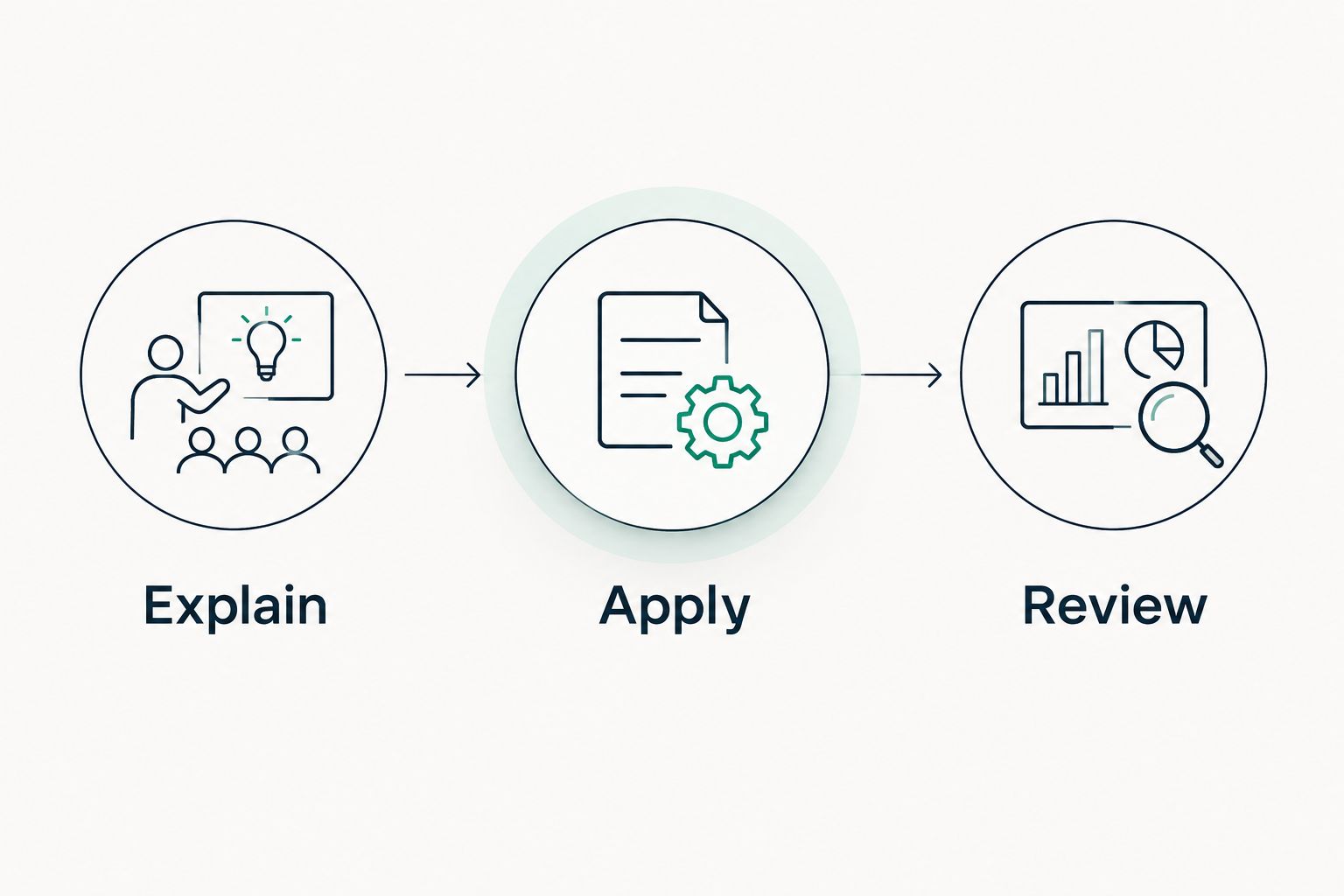
For subject learning, use a fresh problem or passage. For exam preparation, review both the answer and the reasoning behind a practice mistake.
Keep the exercise low-pressure. You are checking the teaching fit, not asking your student to prove that choosing support was justified.
Pricing models favor different commitments
Tia offers subject subscriptions and monthly or annual bundles. That structure fits a family choosing ongoing support in one subject or across Math, English, and Science.
The Princeton Review's purchase decision is tied to the selected course or tutoring offering. Compare the scope of that specific program, including the instruction format and what is included.
The pricing-model verdict is a tie: a subscription suits ongoing use, while a defined program suits a defined preparation goal. Neither model is automatically better value.
Match the commitment to the work. A family seeking recurring subject help has a different buying decision from a student preparing for one scheduled exam.
Before committing in 2026, review the current terms for the option you are considering. A monthly plan offers a shorter initial commitment than an annual plan; a named course helps you evaluate a defined scope.
The advertised offer is 14-day free trial, no card needed. The trial is per account, so use it to assess the learning experience and parent tools rather than treating it as a separate entitlement for each student.
Standout strengths come with different limitations
The adaptive service's standout combination is teaching that responds to the student plus information that supports the parent. Its limitation is equally clear: it is not the same purchase as human-led exam coaching.
The Princeton Review's standout strength is specialist test preparation with human instruction options. Its limitation for a homeschool comparison is that an exam-focused purchase does not, by itself, answer your broader questions about daily subject teaching and recordkeeping.
Neither provider wins every dimension. Your strongest reason to choose one should also tell you what you are not buying.
Final verdict: choose the support your student needs
Choose Tia if you are managing everyday subject learning
Best for: a homeschooling parent of a student in Grades 5–12 who wants adaptive Math, English, and Science teaching, parent visibility, and learning records.
Choose this route when the recurring problem is understanding the material in a way that fits the student. It also fits a school family seeking personalized support in one subject, without making a dedicated test-preparation course the center of the decision.
Choose The Princeton Review if you need exam preparation or a person
Best for: a parent of a college-bound student seeking dedicated SAT or ACT preparation, or a family that specifically wants human-led instruction.
Choose the relevant program around that goal. Ask about the teaching format, practice process, and reporting before enrolling rather than assuming every offering works the same way.
| Dimension | Winner |
|---|---|
| Best for | Adaptive tutor for daily learning; The Princeton Review for exam preparation |
| Curriculum and subjects | Adaptive tutor for ongoing curriculum-aligned subject support |
| Explanations and pace | Adaptive tutor for interest-led adjustments; human tutoring for live discussion |
| Standardized-test preparation | The Princeton Review |
| Human interaction | The Princeton Review |
| Parent visibility and records | Adaptive tutor for the homeschool reporting need described here |
| Learning outcomes | Tie: evaluate independent learning |
| Pricing model | Tie: subscription versus program commitment |
| Standout feature | Split: teaching plus records versus specialist exam preparation |
FAQ
Is Tia better than The Princeton Review?
Tia is the better fit for adaptive everyday Math, English, and Science tutoring with parent visibility and homeschool records. The Princeton Review is the better fit for dedicated standardized-test preparation or human-led instruction.
Which is better for SAT or ACT preparation?
The Princeton Review is the stronger fit for dedicated SAT or ACT preparation. Select an exam-specific program and check its current format, instruction approach, and practice process.
Which service is better for homeschooling?
The adaptive personal tutor is the stronger fit for families seeking curriculum-aligned subject teaching, engaged-time measurement, and self-writing homeschool records together. Parents still need to check local reporting requirements and manage the overall learning plan.
Does The Princeton Review only offer test prep?
No, The Princeton Review also offers academic tutoring. Compare the specific tutoring or course offering rather than treating every program as a test-preparation course.
What grades and subjects does the adaptive tutor cover?
The stated range is Grades 5–12, covering Math, English, and Science. Teaching adapts to the student's pace and level while aligning with the relevant country curriculum.
How do the payment models differ?
The adaptive tutor offers subject subscriptions and monthly or annual bundles, while The Princeton Review uses program-specific course or tutoring arrangements. Choose the model around ongoing subject support or a defined preparation goal, and review current terms before committing.
Does either service guarantee better learning for my student?
This comparison does not establish an outcome guarantee for either service. Evaluate whether your student can explain a concept, apply it independently, and identify what still needs practice.
Is the free trial per student?
The advertised 14-day free trial, no card needed is per account, not per student. Use the trial to assess the teaching fit and parent-facing tools.
One last thing
Ask your student to explain one idea after tutoring, without the lesson open. That small check is more useful than asking only whether the session was good.
You can start with a short session, including 10 minutes when that fits the student. The duration is not a result promise; it is a manageable way to see whether the explanation helps and whether your student stays engaged.
Related guides
- What parents should see in a tutoring dashboard
- How to keep homeschool records without a last-minute scramble
- How to make a 10-minute daily tutoring session count
Tia Education Team