Tia News
Is online tutoring as effective as in-person tutoring?
Is online tutoring as effective as in person tutoring? Neither format guarantees better results. Compare teaching, student fit, and independent learning.
By Tia Education Team · Published

Online tutoring is an effective option when your student gets explanations that fit, practices independently, and receives feedback on mistakes, but it is not a guaranteed match for in-person tutoring. In-person tutoring is not automatically better just because someone sits beside your student. If you are watching another difficult homework evening unfold, compare what your student learns in each setting, not just where the lesson happens.
- Is online tutoring as effective as in person tutoring? Judge independent learning, not the location of the lesson.
- Online tutoring suits students comfortable learning on screen; in-person tutoring suits students who need someone physically present.
- Tia personal tutoring fits Grades 5–12 families seeking adaptive Math, English, and Science support with parent visibility.
- Choose explanations, practice, and feedback that fit your student rather than assuming either format guarantees progress.
Is online tutoring as effective as in-person tutoring?
Neither format earns your trust through location alone. A useful comparison looks at the explanation, the student's response, and what the student can do afterward without help.
Use this table to compare the practical differences. These are selection criteria, not a ranking of academic results.
| Format | Best for | Practical advantage | Limitation to check |
|---|---|---|---|
| Online tutoring | Students comfortable learning through a screen | Your student can receive instruction without traveling to a lesson | Check that technology and the home setting do not interrupt learning |
| In-person tutoring | Students who need someone physically beside them | A tutor can work alongside paper, physical materials, and the student | Check that location and travel fit your family's routine |
A strong lesson in either format asks your student to think. The tutor should explain a sticking point, invite an attempt, and respond to the actual mistake rather than simply repeat the original explanation.
The distinction between repetition and adjustment matters. This guide to how adaptive tutoring changes a lesson explains the teaching approach to look for, whatever format you choose.
For your 2026 tutoring decision, put learning evidence ahead of presentation. A polished session is not enough if your student still needs someone to supply every next step.
Why this matters
You are not just choosing a screen or a chair across the table. You are choosing how another person or service will support your student's learning while you keep responsibility for the bigger picture.
That can feel like another decision on an already full list. You do not need to become an expert in every tutoring method before choosing. Start with the problem you want help solving.
Perhaps your student understands examples but freezes when working alone. Perhaps a writing assignment stalls because the instructions feel unclear. Those needs call for different teaching responses, even if both sessions happen online.
Choose the format that supports the learning task and fits your student. Convenience matters, but it should not be the only evidence you use.
Online tutoring: best for students comfortable learning on screen
Some students feel comfortable asking questions and working through ideas on a screen. That comfort is a useful starting point. It is not proof of learning by itself.
Look for instruction that uses the student's current understanding as its starting point. An explanation should connect to what the student already knows, then give the student room to try the next step.
What online tutoring offers
Online tutoring removes the trip to a separate teaching location. Your student can work from a familiar setting with their usual notebook and course materials nearby.
It also lets you consider support without restricting your search to someone within traveling distance. That is a practical benefit for families without a suitable local tutor.
What online tutoring does not solve automatically
A screen does not make an explanation personal. A digital lesson can still move too quickly, repeat an unhelpful method, or leave your student watching instead of working.
Before committing in 2026, check how your student participates. Ask whether they can show their reasoning, request another explanation, and attempt work without having the answer supplied.
Technology also needs to work for the task. If entering an equation is harder than understanding it, the session needs a better way to let the student express their thinking.
Choose online tutoring when your student can participate comfortably and demonstrate learning beyond the session. Do not choose it solely because the setup looks convenient.
In-person tutoring: best for students who need physical presence
In-person tutoring puts a tutor beside your student. That arrangement is relevant when you want someone to observe work directly on paper or share physical materials at the table.
Physical presence is a feature of the setting, not a guarantee of good instruction. You still need to check whether the teaching responds to your student's pace and understanding.
What in-person tutoring offers
A tutor can look at the student's written work without needing a separate way to share it. Physical models, books, and other materials can sit between them during the explanation.
For some families, a dedicated meeting location also creates a clear boundary around learning time. Ask your student whether that setting feels supportive rather than assuming it will.
What in-person tutoring does not solve automatically
A tutor can sit beside your student and still do too much of the thinking. Watch for sessions where the student follows prompts successfully but cannot begin similar work independently.
Travel and location are also part of the decision. A lesson that does not fit your family's routine needs reconsideration, even when the teaching itself is a good fit.
Choose in-person tutoring when physical presence serves a clear learning need. Keep the same expectations for explanation, practice, and feedback that you would use online.
Why tutoring effectiveness varies
The location of a lesson is only part of the comparison. Use these factors to assess either format:
- Starting level: The lesson should begin with what your student understands, not what a grade label assumes.
- Teaching approach: Ask whether the tutor changes the explanation when the first approach does not make sense.
- Student participation: Your student needs to attempt the work, explain choices, and ask questions.
- Feedback: A correction should identify the misunderstanding, not just replace a wrong answer.
- Curriculum fit: The support should match the subject, course requirements, and current learning goal.
- Learning conditions: Check the connection, workspace, physical materials, and routine needed for participation.
For a 2026 comparison, use the same checklist for both formats. Do not give an online option credit simply for being digital, or an in-person option credit simply for being face-to-face.
A student's interest can also provide a useful entry point into an explanation. The test is whether that familiar example leads back to the actual concept and curriculum task.
How do you compare online and in-person tutoring fairly?
Compare the same learning goal in both settings. You do not need a formal experiment. You need a clear starting point and a way to see what your student can do without help.
1. Choose a goal
Pick a specific task, such as explaining a fraction comparison or supporting a paragraph with evidence. Avoid broad goals like “get better at Math.”
Write down what successful independent work would look like. This keeps your decision tied to learning rather than the amount of material covered.
2. Save starting work
Keep an example your student attempts before receiving help. Let the student show their thinking, including unfinished steps.
Do not turn this into a high-pressure test. The purpose is to make the starting point visible so you can compare it with later work.
3. Observe the lesson
Notice who does the reasoning. Your student should have opportunities to attempt the task and explain a choice.
Also notice what happens after an error. A useful response addresses the misunderstanding instead of moving straight to the correct answer.
4. Try independently
Ask your student to attempt a similar task without prompts. Change the example so the student has to use the idea rather than remember an answer.
For writing, ask for a new sentence or paragraph using the same skill. For Science, ask for an explanation in the student's own words.
5. Review the fit
Look at the work and ask your student how the session felt. Keep learning evidence and comfort separate, then consider both.
A pleasant session deserves attention, but so does an unresolved misunderstanding. Adjust the goal, explanation, or format when the work shows that something is not fitting.
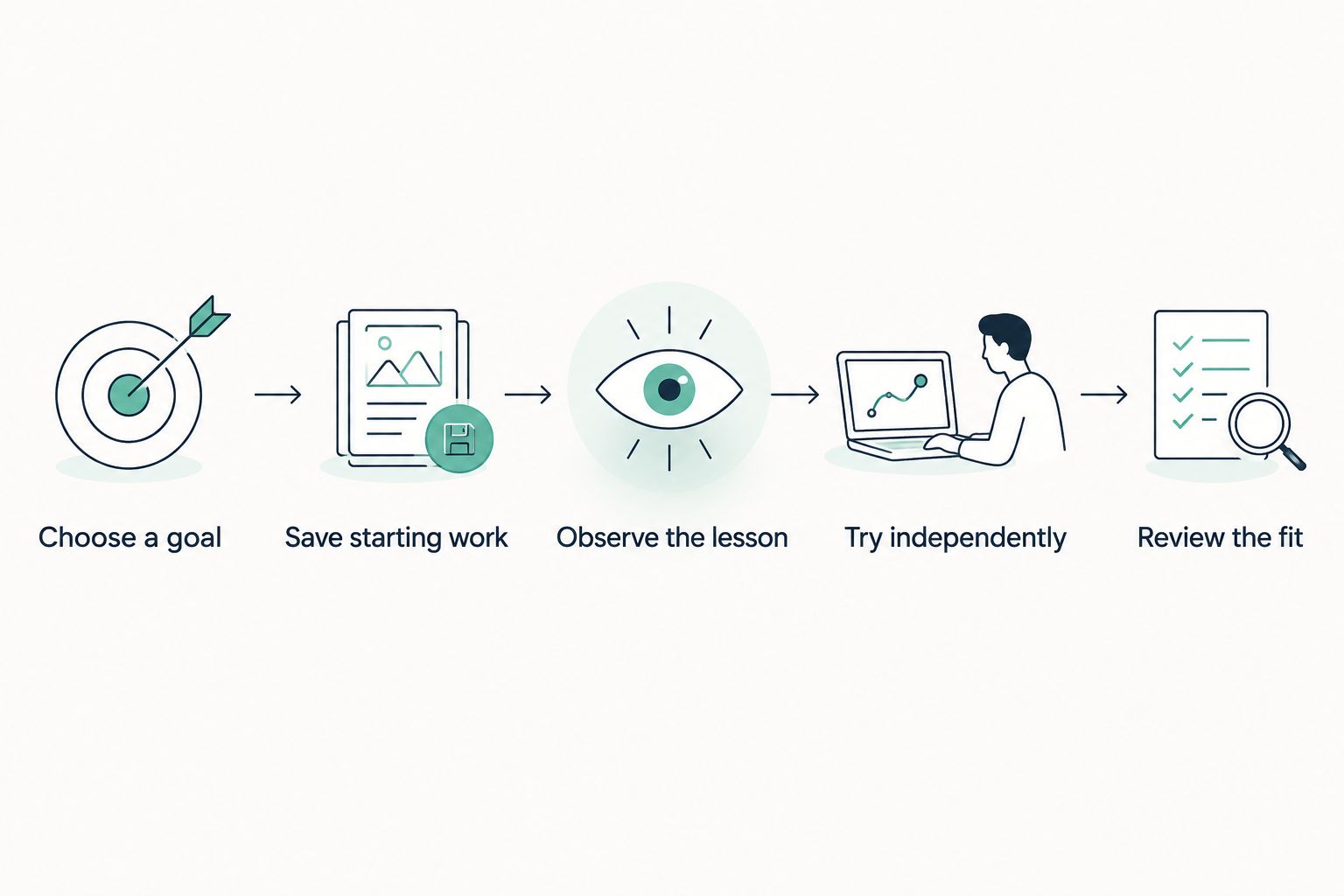
The comparison does not need to become another administrative project. Keep a work sample and a brief note about the next learning goal. That is more useful than a general impression that the session went well.
What should parents look for in online tutoring in 2026?
Look for a clear connection between teaching and your student's needs. Ask how the service adjusts pace, handles misunderstandings, and keeps the work aligned with the curriculum.
Parent visibility matters too. You should be able to understand what support your student is receiving without sitting through every session yourself.
Tia is a personal tutor for students in Grades 5–12 covering Math, English, and Science. It adapts to the student's pace, level, and interests while teaching to the relevant curriculum. Parents receive a live dashboard, engaged-time measurement, and self-writing records.
Tia personal tutoring is best for Grades 5–12 families seeking adaptive subject support with parent visibility. Those features support your oversight, but they do not replace checking your student's independent work. Tia is screen-based tutoring, not an in-person presence beside your student.
Can a short online tutoring session be useful?
A 10-minute session is an option when a small, focused task fits your student. Keep the goal narrow, such as practicing a Math fact or explaining a single step that caused confusion.
Do not expect a fixed result from that duration. A short session should still include student effort and a check of understanding, rather than becoming a quick route to an answer.
Does more screen time mean more learning?
Screen time does not establish learning. Check whether your student is explaining, attempting, revising, and using ideas independently.
For some students, a screen is a comfortable place to learn. You can respect that preference while still asking for evidence that the teaching is helping with the actual task.
How do you know when to change the tutoring format?
Change the format when the setting is getting in the way of participation or the learning evidence remains unconvincing. First identify the obstacle rather than treating every difficult lesson as a format problem.
A confusing explanation calls for a different teaching response. A persistent problem sharing written work calls for a better setup or another setting. Your student can help distinguish the two.
FAQ
Is online tutoring as effective as in person tutoring?
Neither format guarantees better results for every student. Compare explanation quality, participation, feedback, and what your student can do independently after receiving help.
What's the best tutoring format for a student who feels comfortable on screen?
Online tutoring is a sensible format to assess when your student feels comfortable learning on screen. Confirm that comfort is accompanied by active participation and independent understanding.
Is in-person tutoring better for hands-on work?
In-person tutoring lets a tutor work directly beside your student with physical materials. Check whether physical presence is necessary for the specific task rather than assuming every subject needs it.
Can 10 minutes of online tutoring a day help?
A 10-minute session is an option for a focused task when that duration fits your student. It does not promise a fixed result; check what your student understands and can do afterward.
What grades and subjects does Tia personal tutoring cover?
Tia personal tutoring covers Grades 5–12 in Math, English, and Science. Teaching adapts to the student's pace, level, and interests, with curriculum alignment and a live parent dashboard.
What should I check before choosing tutoring in 2026?
For a 2026 tutoring choice, check curriculum fit, explanation quality, student participation, feedback, and independent work. Also confirm that the setting and routine fit your family.
How can I try tutoring without judging it only by homework completion?
Keep a starting work sample and ask your student to attempt a similar task independently after receiving help. For families considering Tia, the offer is a 14-day free trial, no card needed, per account.
One last thing
Ask your student: “What can you do now that felt difficult before?” Then invite them to show you.
A clear explanation of a newly understood step is more useful than a completed page you cannot interpret. Choose the support that leaves your student doing more of the thinking. You stay in charge of the decision without needing to teach every lesson yourself.
Related guides
- What parents should see in a tutoring dashboard
- How to make a 10-minute daily tutoring session count
- Can screen-based tutoring meet students where they feel comfortable?
Tia Education Team