Tia News
How much does credit recovery tutoring cost?
Compare credit recovery tutoring cost by billing method and support needs. Separate tutoring from course fees, confirm school acceptance, and plan your budget.
By Tia Education Team · Published

Credit recovery tutoring cost in 2026 depends on the tutor’s billing method, the support your student needs, and how long that support continues. Budget for tutoring separately from the school-approved recovery course, and check whether assessments or course materials create additional expenses. Confirm the path to an accepted credit before paying for help completing it.
- Credit recovery tutoring cost is separate from any course or assessment fees; request an itemized total.
- Tia fits families seeking personalized Math, English, and Science tutoring alongside a school-approved credit recovery plan.
- Ask the school to confirm accepted courses, completion requirements, and deadlines before choosing tutoring support.
- Compare billing terms, targeted teaching, and progress records, not just the advertised rate.
How much does credit recovery tutoring cost?
Your total is the cost of the accepted recovery route plus the tutoring you choose to support it. A tutor’s advertised rate is not the complete budget. For a closer look at the learning support itself, see this guide to personalized tutoring for credit recovery students.
Build your 2026 estimate from a written school plan and the provider’s current terms. Use the breakdown below to separate required expenses from optional support.
| Budget item | What to confirm | Why it belongs in the estimate |
|---|---|---|
| Accepted recovery course | Whether the school provides it or requires a separate provider | Tutoring does not establish course acceptance |
| Tutoring | Billing unit, included subjects, and expected support period | The rate alone does not show the total commitment |
| Assessments | Whether testing, supervision, or another assessment requirement has a separate charge | Completion requirements affect the full budget |
| Materials | Whether required texts or other materials are included | A course quote and a materials quote are different things |
| Extensions or repeat attempts | Whether these are permitted and whether separate terms apply | A missed deadline or unsuccessful attempt changes the plan |
For hourly tutoring, multiply the quoted hourly rate by the sessions you plan and their duration. For a subscription, multiply the current recurring charge by the billing periods you expect to use. Then add only the separate expenses confirmed by the school or provider.
Compare totals for the same recovery plan. Comparing an hourly rate with a monthly charge tells you little unless you also compare what each includes.
Why this matters
You have a course to recover, a deadline to understand, and a student who still needs help with the material. It is a lot to coordinate. Separating those decisions gives you a clearer next step.
Credit recovery involves earning an accepted credit. Tutoring involves help with learning. They can work together, but paying for tutoring is not evidence that a school will award credit.
Start with the counselor or school administrator responsible for the recovery plan. Ask for the exact course, approved route, completion rules, and deadline in writing. Then choose teaching support around those requirements rather than asking a tutor to define the school’s rules.
Hourly tutoring: compare the complete session plan
Best for: families seeking scheduled individual help with specific learning gaps. An hourly arrangement lets you connect each planned session to a task, such as understanding equations or revising an essay.
The benefit is a clearly scheduled teaching appointment. The limitation is that the quoted hourly rate does not tell you how much support the full recovery course will require.
Ask about session length, scheduling, cancellation terms, and any minimum commitment. Also ask what happens between appointments. Separate included teaching from optional services rather than assuming everything belongs in the rate.
Before committing, name the immediate learning goal. “Help with math” is broad. “Explain how to solve equations with variables on both sides” gives the tutor and student a useful starting point.
Subscription tutoring: compare teaching and billing terms
Best for: families seeking recurring support across the recovery period. A subscription makes the billing unit different from a scheduled hourly appointment. It does not, by itself, explain the teaching you receive.
Check which subjects are included, how tutoring works, and how the subscription renews. Ask what the parent can see about progress. Read the current cancellation terms before choosing a commitment.
The benefit is a recurring arrangement you can assess against your family’s learning routine. The limitation is that a billing period does not equal course completion. Your student still needs to meet the recovery provider’s requirements.
For your 2026 comparison, write the expected support period beside every subscription quote. Keep that estimate separate from the school’s deadline, and revisit it as the student completes accepted work.
Compare support options without confusing their roles
The right choice starts with the job that needs doing. Course enrollment, explanation, practice, and parent reporting are separate decision criteria.
| Option | Best for | Main benefit | Limitation or check |
|---|---|---|---|
| School-approved recovery route | Earning the accepted course credit | Establishes the route the school recognizes | Confirm what teaching support it includes |
| Hourly individual tutoring | Scheduled help with identified gaps | Connects appointments to specific learning goals | Total spending depends on the agreed session plan |
| Subscription tutoring | Recurring subject support | Provides a continuing tutoring arrangement | Check teaching format, subject scope, and renewal terms |
Do not buy duplicate support without a reason. Ask what the recovery course already provides, then identify the remaining need. That need might be a clearer explanation, help with prerequisite skills, or a way to review understanding between course assignments.
Choose the support that addresses the gap, not the package with the longest feature list. Keep the approved recovery route at the center of the decision.
Why credit recovery tutoring cost varies
These factors belong in your estimate because they change the amount or type of support you are arranging:
- Billing method: Compare hourly appointments, recurring subscriptions, and any stated minimum commitment using the same planned support period.
- Subject scope: Identify whether the student needs help in one subject or across Math, English, and Science.
- Learning gaps: Separate difficulty with the current assignment from missing prerequisite knowledge that needs additional teaching.
- Completion deadline: Use the school’s actual deadline when planning sessions or billing periods. Do not assume an accelerated schedule guarantees completion.
- Included support: Check whether explanations, practice, feedback, and parent records are part of the quoted arrangement.
- Separate course requirements: Confirm assessment, materials, extension, and repeat-attempt terms with the organization responsible for them.
Ask providers to explain their billing against your written plan. You need a quote you can understand, not a promise that the student will finish on an invented schedule.
How do I build a credit recovery tutoring budget?
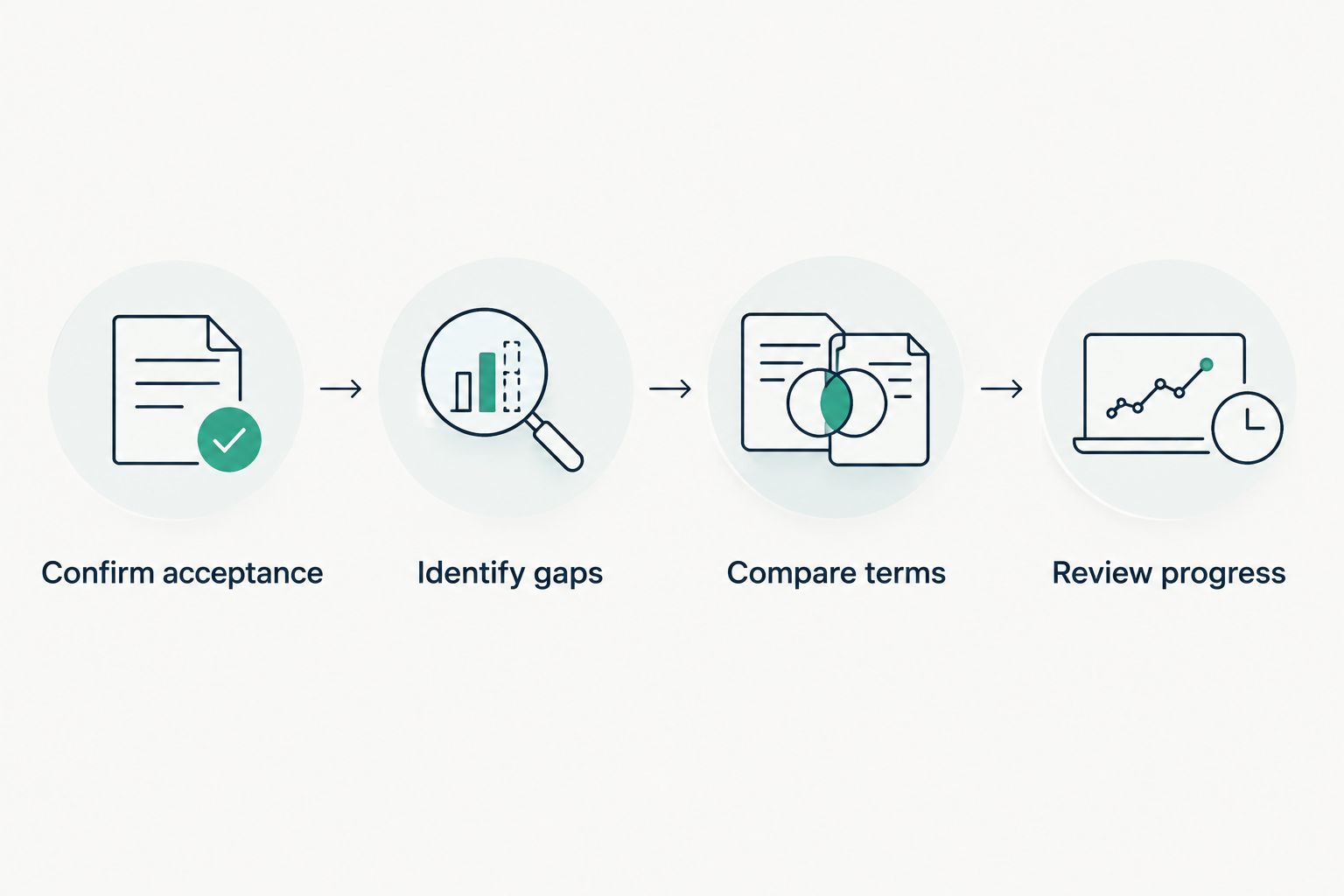
Use this sequence to keep the school’s requirements and your tutoring decision connected. You remain in charge of the budget; the student remains responsible for doing the learning.
- Confirm acceptance. Get the approved course or recovery route in writing. Ask who makes the final credit decision.
- Identify gaps. Review teacher feedback and examples of work with the student. Name what needs explanation rather than treating the entire subject as equally difficult.
- Compare terms. Request current billing details, included support, and separate requirements. Compare quotes against the same learning goals.
- Review progress. Check completed course requirements and understanding at an agreed point. Adjust support based on that evidence.
Keep the budget in a simple document alongside the course requirements. Record the provider, billing method, planned commitment, and review point. Add the school’s contact so questions about acceptance go to the right person.
A 2026 budget should also distinguish required expenses from optional support. That distinction helps you change the tutoring arrangement without losing sight of the accepted course.
Where does personalized tutoring fit?
Tia provides a personal tutor for Math, English, and Science. It adapts explanations, pace, level, and examples to the student’s interests while teaching in line with the relevant curriculum.
Tia is best for families seeking personalized subject tutoring alongside a school-approved credit recovery plan. Its role here is teaching support, not a promise that a school will accept a course or award credit.
The parent dashboard, engaged-time measurement, and self-writing records give families additional information about learning activity. Tia also measures mastery per question, maps it to the curriculum, and includes it in reports.
Its adaptive mastery tracking uses Bayesian Knowledge Tracing. In plain language, this updates an estimate of skill mastery from student answers over time. The estimate is useful learning information, not an infallible measure or independently verified proof of exam-score gains.
The benefit is a student-focused teaching workflow with parent learning records. The boundary is equally important: those records do not replace the school’s credit decision or the recovery course’s completion rules. Compare both sides before deciding whether this support fits.
Can tutoring replace a credit recovery course?
Tutoring alone does not establish accepted credit. Ask the school which route it recognizes and whether tutoring has any formal role in that route.
If your student is enrolled in a recovery course, use tutoring to understand the material and practice relevant skills. Keep submissions, assessments, and completion records within the approved process.
A tutoring report and a transcript answer different questions. The report describes learning information. The transcript records the credit decision made through the school’s accepted process.
How often should my student use tutoring?
Start with a routine your student can sustain and the tasks the approved course requires. Small regular sessions, including as little as 10 minutes a day when that fits the student, are an option, not a guaranteed route to completion.
Use a short session for a focused goal: understanding a confusing step, practicing a prerequisite, or explaining an answer aloud. Longer assignments need their own planning. Do not turn a suggested session length into a deadline promise.
For a 2026 recovery plan, review the routine against both understanding and completed requirements. Time spent is useful context, but elapsed time alone does not show mastery or accepted credit.
What should I ask before committing?
Bring the written recovery plan to the conversation. Ask the provider to explain how its teaching will support that plan without claiming authority over school acceptance.
Useful questions include:
- What subject support is included in this arrangement?
- How do explanations change when the student does not understand?
- How will you identify missing prerequisite skills?
- What information can the parent review?
- What are the current billing, renewal, and cancellation terms?
- Which requirements remain the responsibility of the school or recovery provider?
Listen for clear boundaries as well as useful features. A provider should distinguish teaching support from course enrollment, credit approval, and guaranteed results.
FAQ
How do I calculate credit recovery tutoring cost?
Calculate credit recovery tutoring cost from the quoted billing terms and your planned support period, then add separately confirmed course requirements. Compare providers using the same recovery plan rather than comparing an hourly rate with a recurring charge alone.
Is tutoring included in a credit recovery course?
Check the specific course terms to establish whether tutoring is included. Ask what explanations, feedback, practice, and individual support the course provides before arranging additional help.
Can an online tutor award my student course credit?
Do not assume an online tutor can award accepted course credit. Ask the school to confirm the approved recovery route and the organization responsible for the credit decision.
Is Tia a credit recovery course?
Tia provides personalized Math, English, and Science tutoring, and should be evaluated as teaching support alongside the school-approved recovery route. Confirm course acceptance and completion requirements separately with the school.
Are 10 minutes of tutoring a day enough?
A 10-minute daily session is an option for a focused learning goal, not a guaranteed completion plan. Match the routine to the student, the material, and the approved course requirements.
What progress records should I look for?
Look for information about the skills practiced, the student's understanding, and learning activity. Compare that information with accepted course requirements; a tutoring record alone does not establish earned credit.
What if my student needs help in more than one subject?
Identify the support needed in each subject before comparing commitments. Check whether the arrangement includes the relevant subjects and whether each has its own accepted recovery requirements.
One last thing
Ask the school what the final completion evidence must look like. That answer gives your student a concrete target and helps you avoid confusing a tutoring milestone with a recovered credit.
For your 2026 plan, keep that target beside the budget. You are not simply buying study time. You are choosing teaching support that helps your student work toward a separately confirmed requirement.
Related guides
- What parents should see in a tutoring dashboard
- How adaptive tutoring changes a lesson
- How to make a 10-minute daily tutoring session count
Tia Education Team