Tia News
How do homeschool students make friends and build community?
Homeschool socialization starts with shared interests and regular contact. Compare co-ops, park days, clubs, and ways to build friendships without overbooking.
By Tia Education Team · Published

Homeschool students make friends through shared interests and repeated contact at co-ops, park days, sports, music groups, libraries, and gatherings with people they already know. You do not need to fill every afternoon: choose a setting your student wants to return to, make room for follow-up, and adjust around your family's access and energy.
- Homeschool socialization needs opportunities for friendship, not a calendar packed with activities.
- Homeschool co-ops suit students who want shared learning; check participation expectations before joining.
- Public libraries and park days offer places to meet; confirm who attends and how often.
- Let your student help choose activities and decide which connections to continue.
How do homeschool students make friends and build community?
Start with a shared interest, return to the same setting, and help your student arrange another conversation or meeting. An activity creates an introduction. Friendship needs room beyond that introduction.
For your 2026 homeschool plan, compare settings by what your student wants to do, not by how many events you can attend. Protect that time when you build a homeschool schedule that fits your student.
| Setting | Best for | What it offers | What to check |
|---|---|---|---|
| Homeschool co-op | Students who want shared classes or projects | Learning alongside other students | Parent duties, teaching approach, and participation expectations |
| Park day | Students who prefer informal interaction | Space for conversation, games, or a shared activity | Attendance, supervision, weather, and accessibility |
| Sports group | Students who enjoy a shared physical activity | A common task and scheduled meetings | Competitive expectations, travel, and physical access |
| Music or arts group | Students who connect through making or performing | Something to work on together | Entry requirements and rehearsal commitments |
| Library program | Students interested in books, games, or projects | An activity with a clear starting point | Age range, format, and whether participants return |
| Faith group | Families who want community connected to their beliefs | Gatherings around shared practices | Fit with your family's beliefs and student preferences |
| Moderated online group | Students seeking peers beyond their local area | Contact around a shared interest | Moderation, privacy, age suitability, and supervision |
None of these settings guarantees friendship. Ask your student which feels inviting, then check the practical details before committing.
Why this matters
You can finish the lesson plan and still wonder whether your student has someone to share a joke with. That is a different need from academic progress. It deserves a place in your planning without becoming another measure of whether you are doing enough.
Separate three goals: meeting people, practicing interaction, and forming friendships. A group project offers a chance to cooperate, but your student might still want time with a particular person outside the project. An enjoyable outing is valuable even when it does not produce a new friend.
For 2026, choose a social goal your student recognizes. That might be keeping an existing friendship, finding someone who shares an interest, or feeling comfortable enough to join a group conversation.
Start with your student's interests
Ask what your student would enjoy doing with someone else. Drawing, chess, basketball, theater, animals, coding, and books are possible starting points, not a shopping list of activities you need to arrange.
Then ask about the setting. Would your student prefer working beside someone, playing a game, talking while walking, or joining a structured session? Let the answer guide your search.
Avoid turning every interest into a formal commitment. A student who enjoys drawing might want to sketch with a friend rather than take a class. Another might welcome a class because the activity gives everyone something to discuss.
Choose the activity with your student, not just for your student. You handle transport, supervision, and practical boundaries. Your student should have a voice in where they spend their social time.
Build a repeatable friendship routine
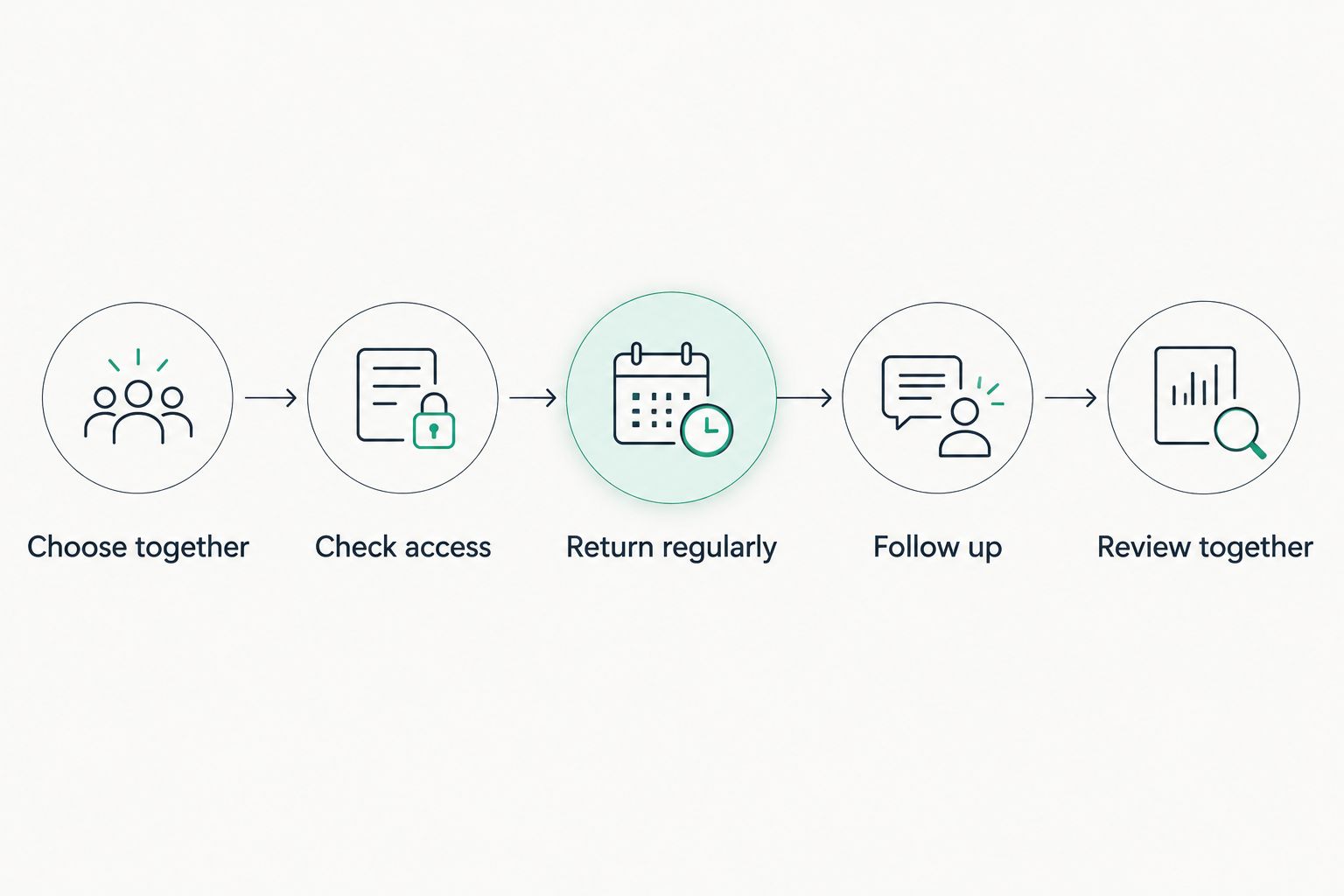
Use this sequence as a planning tool, not a deadline. There is no required number of meetings before a student should feel comfortable or make a friend.
- Choose together. Identify an interest and a setting your student is willing to try. Explain what you know about the activity and what still needs checking.
- Check access. Ask the organizer about attendance, supervision, accessibility, and parent responsibilities. Confirm that the arrangement fits your household.
- Return regularly. If the first visit feels acceptable, arrange another visit to the same setting. Avoid treating every outing as a fresh search for the perfect group.
- Follow up. Ask whether your student wants to see anyone again. With permission and appropriate adult coordination, arrange a shared activity or another meeting.
- Review together. Discuss what felt comfortable, what was tiring, and whether your student wants to continue. Change the setting when it is not a good fit.
The sequence keeps the next move small. You do not need to solve your student's entire social life before arranging the next visit.
Why homeschool socialization varies
The same activity does not fit every student or every household. Build your 2026 plan around the conditions you actually have.
- Student interests: A popular group is not automatically a good match. Start with something your student wants to share.
- Interaction preferences: Some students want an active group; others prefer a quieter conversation or shared task. Ask rather than assume.
- Local access: Transport, distance, and available organizations shape your choices. Do not build a plan around opportunities you cannot reliably reach.
- Accessibility: Check sensory demands, physical access, communication expectations, and the support available in the setting.
- Family responsibilities: Work, caregiving, and household schedules affect attendance. A workable commitment is more useful than an ambitious one you cannot maintain.
- Group expectations: Co-ops, clubs, and faith groups have different purposes and responsibilities. Clarify those before joining.
You can adjust the format without abandoning the goal. A smaller gathering, different location, or shared activity with an existing friend is still a way to make room for connection.
What if my student is shy or hesitant to join?
A hesitant student does not need a public performance to earn a place in a group. Ask what would make the first visit manageable, and agree on how you will check in.
Offer a concrete role if your student wants one. Bringing a game, helping set out materials, or working on a shared project gives them something to do besides starting a conversation. Do not assign a role without asking.
Afterward, ask about the experience rather than demanding a result. Who seemed approachable? Was the activity enjoyable? Would they prefer the same setting with a different task, or another setting altogether?
Respect a clear request to leave an unsafe or unwelcoming situation. Ordinary uncertainty and poor treatment are not the same thing. Your student should know that continuing an activity is a choice you can discuss, not a test they must pass.
How do we keep friendships after leaving school?
Keep existing friendships on the calendar when both students want them to continue. Homeschooling does not require replacing every connection with a homeschool-only friendship.
Ask which people your student wants to stay in touch with. Then coordinate with the other household around its schedule, whether that means an outing, a shared hobby, or an appropriately supervised online conversation.
Be specific about the invitation. Suggest an activity both students enjoy rather than leaving the plan at a vague promise to meet sometime. Leave room for the other family to suggest an alternative.
If your student misses the old routine, listen before proposing another club. They might be asking for a familiar person, not a new activity.
What if there are few local opportunities?
Start by asking local libraries, recreation departments, and community organizations what is currently running. A listing alone does not tell you whether a group is active, accessible, or suitable for your student.
Look beyond homeschool labels. Your student can meet peers through community sports, arts, volunteering opportunities that accept their age group, or other interest-based activities. Check eligibility and supervision directly with the organizer.
If regular travel is difficult, consider a shared activity with a nearby family or a moderated online group. An online option needs its own checks: who moderates it, whether private messaging is allowed, and how concerns are reported.
Do not assume another parent has spare transport, time, or hosting space. Make a specific request and leave them free to decline. Community planning works better when responsibilities are clear.
Make a summer plan that includes follow-up
Summer creates a separate planning question: what happens to a promising connection when the activity ends? For your 2026 summer planning, discuss continuation before choosing an experience solely because it brings students together.
When comparing summer programs for high schoolers, ask whether the format includes collaborative work, who supervises participants, and what expectations apply to staying in touch afterward. A program can create an introduction; it cannot promise an ongoing friendship.
A local recurring activity and a time-limited program serve different purposes. Choose based on your student's interests and your household's practical limits, then leave space for contact with people your student wants to see again.
Before sharing contact details, confirm permission and appropriate boundaries. Your student can help decide whom to contact and what to suggest. The follow-up belongs to the relationship, not to a parent's networking project.
Keep academic support separate from social connection
Tutoring and friendship serve different needs. Tia is best for families seeking personalized Math, English, and Science tutoring for students in Grades 5 through 12, not a peer community. It adapts teaching to a student's pace, level, and interests.
Tia provides a parent dashboard, engaged-time measurement, and self-writing learning records. Those features support oversight of academic learning. They do not replace opportunities to talk, collaborate, and spend time with peers.
The benefit of Tia's personal tutor is individual academic support. The limitation for homeschool socialization is equally clear: Tia is not a social group, co-op, or friendship service.
Keep those decisions separate in your 2026 plan. Choose academic support around learning needs and social opportunities around the people and experiences your student wants to share.
Notice connection, not just attendance
An attended activity tells you where your student went. It does not tell you whether they felt included or want to return. Ask about those things directly.
Look for practical signs your student identifies: someone they want to see again, a shared activity they enjoyed, or a conversation they want to continue. Do not turn those signs into a scorecard.
Ask whether the pace fits, too. A student can enjoy an event and still need a quieter afternoon afterward. Leave room for rest without presenting it as withdrawal from community.
Keep the plan that your student wants to continue and your household can sustain. If an activity repeatedly feels wrong, discuss what to change instead of adding more events around it.
FAQ
What's the best way to start homeschool socialization?
Start homeschool socialization with a shared interest and a setting your student wants to try. Check the practical arrangements, return if it feels like a fit, and help arrange follow-up with people your student wants to see again.
Do homeschool students need a co-op to make friends?
Homeschool students do not need a co-op to make friends. Libraries, park days, sports, arts groups, existing friendships, and other community activities are also places to meet people.
How many social activities should a homeschool student attend?
There is no fixed activity count in this plan. Choose commitments around your student's interest, desire for contact, accessibility needs, and your household's ability to attend.
How can a shy homeschool student meet people?
Offer a shared activity and let your student help choose the setting. Agree on how you will check in, and do not require a public introduction or immediate friendship.
Can online friendships be part of homeschool socialization?
Online friendships can be part of your student's social opportunities. Check moderation, privacy, private messaging rules, and supervision before joining a group.
What if there aren't homeschool groups near us?
Look beyond homeschool-only groups to libraries, recreation programs, arts, sports, and age-appropriate community activities. Confirm what is currently available rather than relying on an old listing.
Does personalized tutoring replace social time?
Personalized tutoring does not replace social time with peers. Academic support addresses learning needs; friendship needs separate opportunities for shared activities and continued contact.
One last thing
Before searching for another event, ask your student whether there is someone they would like to see again. Your next step might be a simple invitation rather than a new organization.
You stay responsible for safety and practical arrangements. Your student stays involved in choosing the connection. Start there, then decide what belongs on the calendar.