Tia News
Do you need a full tutoring center membership for occasional help?
An alternative to tutoring center membership fits occasional help. Compare targeted sessions, adaptive tutoring, and progress records before you commit.
By Tia Education Team · Published

No, you do not need a full tutoring center membership when your student only needs occasional help with a specific skill or assignment. If homework usually goes smoothly until one unfamiliar problem stops everything, start with support for that problem rather than a broader program. The caveat is that repeated difficulty with the same underlying skill calls for a learning plan, not just help finishing the next assignment.
- An alternative to tutoring center membership should match the learning need, not add an unnecessary schedule.
- Tia fits families seeking personalized Math, English, and Science tutoring with parent progress records.
- Choose targeted human tutoring when you want direct interaction with a person around a defined learning goal.
- Judge occasional homework help by independent understanding, not assignment completion alone.
Do you need a full tutoring center membership for occasional help?
Choose the amount of support your student needs, not the largest program offered. A confusing geometry lesson, an essay that needs structure, and an ongoing difficulty with foundational math are different needs. They do not automatically call for the same commitment.
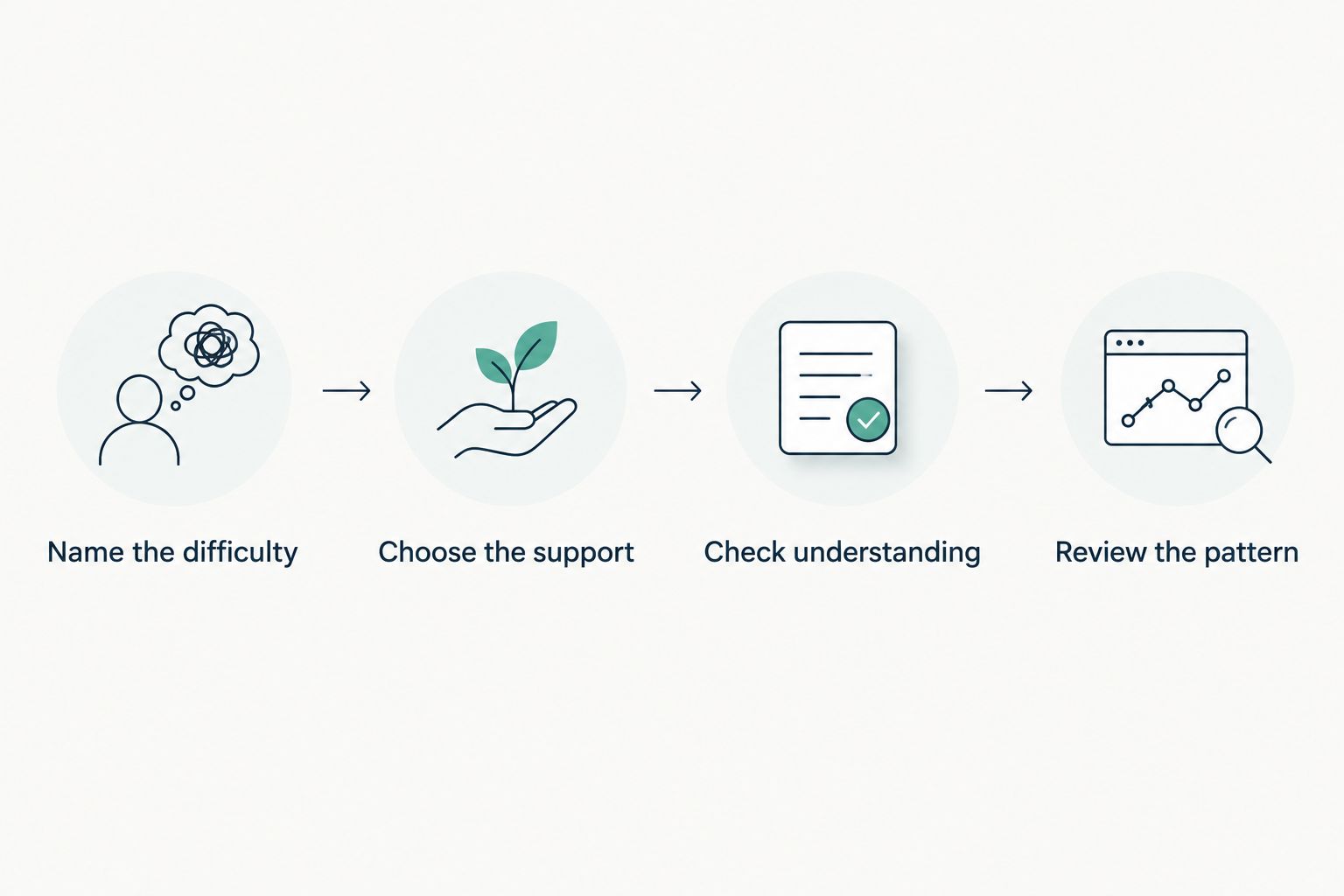
Use this sequence before choosing tutoring in 2026:
- Name the difficulty. Write down the skill your student cannot yet explain or use independently.
- Choose the support. Decide whether your student needs an explanation, guided practice, or an ongoing plan.
- Check understanding. Ask your student to try a fresh example without repeating the tutor's answer.
- Review the pattern. Look for the same difficulty returning across different assignments.
Personalization matters at the explanation stage, not just when selecting practice questions. The guide to how adaptive tutoring changes a lesson explains that distinction.
A membership deserves consideration when its actual services match a recurring need. Ask what the program includes and how the provider decides what your student works on. Do not assume that every center uses the same schedule, teaching format, or membership terms.
Why this matters
You can want help with algebra without wanting to reorganize your family's week. That is a reasonable starting point. The decision is about matching support to the student, not proving that you can teach every subject yourself.
Separate the immediate task from the learning goal. Finishing a worksheet is the immediate task; understanding why an equation stays balanced is the learning goal. Good tutoring should address the second while helping with the first.
For your 2026 tutoring decision, write the goal in plain language before comparing providers. “Explain how to choose a denominator” tells you more than “get better at math.” It also gives you something specific to check after the lesson.
Which alternative to tutoring center membership fits your student?
These options serve different needs. The table describes decision criteria, not universal policies: confirm the actual teaching format and terms with any provider you consider.
| Option | Best for | Main advantage | Limitation to weigh |
|---|---|---|---|
| Targeted human tutoring | A defined topic where your student wants direct interaction with a person | You can discuss the assignment, explanation, and learning goal with the tutor | You need to agree on scope, scheduling, and what happens after the session |
| Tia personal tutoring | Families seeking adaptive Math, English, and Science teaching with parent records | Explanations adapt to the student's pace, level, and interests; parents get progress information | It is screen-based tutoring, not an in-person human tutor |
| Independent learning resources | Students who can use an explanation and practice independently | You can focus on a specific topic without adopting a broader tutoring program | The parent or student must judge whether the explanation resolves the difficulty |
| A tutoring center program | Families who want an in-person setting or an ongoing arrangement | A suitable program can provide the structure your family wants | The program's scope and attendance expectations need to fit the actual need |
An alternative is only useful if your student can learn through it. A resource that looks convenient to you still needs to make sense to the person doing the work. Include your student in that decision.
Targeted human tutoring: best for a defined learning goal
Choose targeted human tutoring when your student wants to talk through a difficult topic with a person. Bring the assignment, the instructions, and an example of where the work stops making sense. Give the tutor a clear goal rather than asking them to cover everything.
For example, the goal might be learning how to organize an essay's evidence or understanding why a negative sign changes a calculation. Ask the tutor to explain the reasoning and leave room for your student to attempt the next step. The student should remain responsible for the work.
The limitation is that one session does not establish that an underlying gap is resolved. Agree on what your student will practice afterward and what would justify another session. If you need occasional support in 2026, ask about that arrangement before assuming a membership is necessary.
Adaptive online tutoring: best for personalized explanations at home
Tia is best for families seeking personalized Math, English, and Science tutoring with parent progress records. It teaches students in Grades 5 to 12, adapting explanations to their pace, level, and interests while aligning teaching with the curriculum.
That matters when your student needs a different way into a concept. Personalization is not simply receiving a different set of questions. It also means changing the explanation so the student has a clearer starting point.
In client-supplied product demonstrations from October 11, 2026, Tia teaches vertical angles through cricket bats for Fred and crossing horse trails for Charlotte. Both demonstrations use an X-shaped crossing to explain that opposite angles match. These are labeled teaching demonstrations, not testimonials or evidence of independently verified learning gains.
The limitation is the format. A personal tutor on a screen does not provide the same experience as sitting beside a human tutor. Ask your student whether the explanation helps, whether they can ask another question comfortably, and whether they can continue the work themselves.
Independent resources: best for students who can work through an explanation
A topic explanation, worked example, or practice resource is a reasonable starting point when your student can use it independently. Choose material that matches the actual skill and the assignment's terminology. Then ask your student to try a fresh problem.
The advantage is focus. You do not need to turn every confusing homework moment into a wider tutoring arrangement. Sometimes the next useful step is simply finding an explanation your student understands.
The limitation is feedback. A completed practice page does not tell you whether your student understood the reasoning or followed a pattern without understanding it. If the student keeps returning to the same sticking point, change the support rather than collecting more resources.
A tutoring center program: best for families seeking in-person structure
Consider a center when you want an in-person learning environment or a recurring arrangement that fits your student. Ask whether teaching is individual or shared, who sets the learning goals, and how progress reaches you. Evaluate the specific program, not the category name.
A center is not automatically excessive because the first concern seems small. Your student might prefer that setting, or you might want a consistent appointment outside the home. Those preferences belong in the decision.
The limitation is fit. A broad program is not the right answer solely because it is available. Ask how the provider would handle your student's defined difficulty before committing to the wider arrangement.
Why the right amount of tutoring varies
Your student's support needs depend on more than the subject name. Use these factors to decide whether occasional help is enough:
- The learning goal: Clarifying one instruction differs from rebuilding a foundational skill.
- The pattern: A new difficulty differs from the same misunderstanding appearing repeatedly.
- The explanation fit: Your student needs language, examples, and pacing they can follow.
- The preferred setting: Screen-based and in-person tutoring offer different experiences.
- The parent information: You need useful evidence of learning, not just an attendance record.
- The family rhythm: Choose a routine your student can use without making tutoring the center of family life.
For a 2026 comparison, ask each provider how it would respond to the same learning goal. This gives you a clearer basis for choosing than comparing broad promises about confidence or success.
How do you tell whether occasional help is enough?
Occasional help is enough when your student can use the explanation independently and the difficulty does not keep returning. Check that with a new example rather than the exact question the tutor just completed. Ask your student to explain the reasoning in their own words.
For writing, ask the student to apply the feedback to another paragraph. For science, ask them to connect the explanation to a related question. These checks keep the focus on learning rather than reproducing an answer.
If the difficulty repeats, make the next goal narrower and more explicit. Identify the earlier skill that needs attention. You do not need to jump immediately from occasional help to a full program, but you do need to change something about the support.
Can a short tutoring session still be useful?
A 10-minute session is an option when your student has a narrow goal and the format fits them. That duration does not promise a fixed result. Stop judging a lesson solely by how long the student sits there.
Use a short session to clarify a concept, work through an example, or check a specific misunderstanding. If the student needs more explanation, allow the plan to change. Keep the learning goal more important than the timer.
What should parents see after a tutoring session?
Parents should see what the student worked on and what the evidence says about understanding. Time spent matters, but it answers a different question from skill mastery. Ask providers how they distinguish the two.
Tia provides a live parent dashboard, engaged-time measurement, and self-writing homeschool records. It also measures mastery per question, maps that information to the curriculum, and includes it in reports. Its Bayesian Knowledge Tracing method updates an estimate of skill mastery from student answers over time.
Treat that estimate as learning information, not an infallible account of everything a student knows. It is also different from independently verified exam-score gains. For homeschool records, check your local requirements rather than assuming any tutoring report establishes compliance by itself.
What should you check before making a commitment?
Ask about the actual agreement before you enroll. Confirm whether the arrangement renews, how changes or cancellation work, and whether there are attendance requirements. Those are provider-specific facts, so get them from the current terms.
For Tia, the exact offer is: 14-day free trial, no card needed. The trial is per account, not per student. Use it to assess explanation fit, your student's experience, and whether the parent information helps you make decisions.
Choose a real learning goal for any trial or introductory session. A pleasant first impression is useful, but the more important question is whether your student can do something afterward that they could not explain before.
FAQ
What's the best alternative to tutoring center membership for occasional help?
The best alternative to tutoring center membership matches your student's specific learning need. Compare targeted human tutoring, adaptive online tutoring, and independent resources by explanation fit and independent understanding.
Do I need a tutoring membership for one difficult assignment?
No, one difficult assignment does not automatically require a tutoring membership. Identify whether your student needs help understanding the instructions, learning a skill, or addressing a recurring gap.
Is online tutoring better than a tutoring center?
Neither format is better for every student. Choose online tutoring when its teaching format fits your student, and consider a center when you want an in-person setting or a suitable ongoing arrangement.
Can 10 minutes of tutoring help my student?
A 10-minute tutoring session is an option for a narrow learning goal when it fits your student. It does not guarantee a particular result; check whether your student can apply the explanation afterward.
How can I tell if my student needs more regular help?
More regular help deserves consideration when the same underlying difficulty keeps appearing across assignments. Identify the missing skill and agree on a plan for teaching, practice, and review.
Should I judge tutoring by completed homework?
No, completed homework alone does not establish understanding. Ask your student to explain the reasoning or apply it to a fresh example without copying the tutor's work.
What should I ask before joining a tutoring center?
Ask how the center teaches your student's specific goal, measures progress, and communicates with parents. Confirm the current agreement, renewal terms, attendance expectations, and cancellation process before enrolling.
One last thing
Make the learning goal smaller before making the commitment bigger. “Get help with English” leaves too much undefined. “Explain how this paragraph supports the argument” gives your student and the tutor a clear job.
After the lesson, return to that same goal with fresh work. Your student's explanation will tell you more about the next step than the size of the program you chose.
Related guides
- Online alternatives to in-person tutoring centers
- What parents should see in a tutoring dashboard
- How to make a 10-minute daily tutoring session count
Tia Education Team