Tia News
Best online alternatives to in-person tutoring centers in 2026
Find an alternative to tutoring center visits. Tia leads for adaptive home learning; compare live tutors, group lessons, and feedback to fit your student.
By Tia Education Team · Published

Best overall for adaptive home learning: Tia. Best for a live human relationship: online one-on-one tutoring. Best for learning with peers: online small-group tutoring. If another drive to the tutoring center feels like too much, these alternatives let you choose support around how your student learns, not just where a lesson happens.
- Tia is the best alternative to tutoring center visits for families seeking adaptive Math, English, and Science support.
- Live online one-on-one tutoring fits students who need a scheduled conversation with a human tutor.
- Online small-group tutoring suits students who want discussion and peer interaction.
- Written feedback supports revision; self-paced resources support independent practice, not a personal tutoring relationship.
Why this matters
A tutoring center gives you a place to go. What your student needs is a way through the lesson that is not clicking. Those are different decisions.
For your 2026 shortlist, separate the location from the teaching method. Moving a worksheet onto a screen does not make the lesson adaptive. Look for an explanation that responds to the student's understanding, then a chance to try again.
The guide to how adaptive tutoring changes a lesson explains that distinction. You stay in charge of the choice, including whether your student needs a human conversation, personalized instruction, or simply better practice materials.
What makes the best alternative to a tutoring center?
Use these criteria before comparing names or signing up. A service that fits another family is not automatically the right fit for yours.
- Teaching response: Does the explanation change when the student is confused, or does the service repeat the same material?
- Student fit: Can the student ask questions, work at a suitable pace, and show their reasoning in a comfortable format?
- Curriculum match: Does the support address the student's actual course and current topic?
- Parent visibility: Can you see what happened without sitting through every lesson?
- Routine fit: Does the format work around your family, including the preparation it requires from you?
- Scope and limits: Is this teaching, assignment feedback, or independent practice? Know which job you are choosing it to do.
The best choice teaches the student, rather than merely helping finish the assignment. For writing, that means the student makes the revisions. For math, it means the student can explain why a step works.
Online tutoring alternatives at a glance
These 2026 picks compare teaching formats, not interchangeable products. The order favors ongoing teaching first, then more focused support and independent practice.
| Option | Best for | Standout feature | Key limitation |
|---|---|---|---|
| Tia | Adaptive home learning with parent visibility | Personalized teaching through interests and pace, with a live parent dashboard | Stated coverage is Math, English, and Science in Grades 5 through 12 |
| Live online one-on-one tutoring | A scheduled human teaching relationship | Direct conversation with an individual tutor | Requires coordinating with a tutor's schedule |
| Online small-group tutoring | Discussion and peer interaction | Shared lessons with other students | Individual attention is shared across the group |
| Asynchronous written feedback | Revising essays and written explanations | Comments the student can revisit while editing | Does not provide an immediate back-and-forth conversation |
| Self-paced learning resources | Independent review of familiar material | Student-directed access to explanations and practice | Materials alone do not provide a personal tutor |
1. Tia: best online alternative for adaptive home learning
Tia is a personal tutor for Math, English, and Science for students in Grades 5 through 12. It adapts to each student's pace, level, and interests while teaching the relevant curriculum. Parents get a live dashboard, engaged-time measurement, and self-writing records.
Tia is the best tutoring-center alternative for families seeking adaptive home learning with parent visibility. It belongs first for homeschooling parents who want teaching support without taking over every explanation themselves. It also fits families supporting a school student who struggles in a covered subject.
The useful distinction is how the lesson meets the student. An interest can become a familiar starting point for an unfamiliar concept. The curriculum still matters; the route into it changes.
Tia pros
- Teaching adapts to the student's pace, level, and interests.
- Math, English, and Science support sits within one tutoring service.
- A live parent dashboard provides visibility into learning.
- Engaged-time measurement and self-writing records support homeschool reporting.
Tia cons
- Stated coverage is limited to Grades 5 through 12 and the three named subjects.
- It is a screen-based alternative, not an in-person setting.
- Homeschool records do not remove the parent's responsibility to check local requirements.
Best for: Families who want personalized teaching and a clearer view of home learning.
For your 2026 decision, judge a lesson by the student's understanding, not just whether they finish it. Ask the student to explain one idea afterward in their own words.
Verdict: Buy if adaptive instruction and parent visibility match your main need; use the trial to assess student fit first.
2. Live online one-on-one tutoring: best for a human relationship
Live online one-on-one tutoring connects the student with a human tutor for a scheduled lesson. The student and tutor talk through problems, discuss writing, or review a difficult concept together. This format suits families who specifically want an ongoing relationship with a person.
The tutor matters more than the platform name. Ask a prospective tutor to explain how they respond when a student says they understand but cannot solve the next problem independently.
Live online one-on-one tutoring pros
- Gives the student a direct conversation with an individual tutor.
- Allows questions and follow-up discussion during the lesson.
- Supports a continuing relationship when you retain the same tutor.
Live online one-on-one tutoring cons
- Lessons require coordinating the family's schedule with the tutor's.
- Teaching fit depends on the individual tutor you select.
- You must confirm reporting, subject expertise, and lesson preparation separately.
Best for: Students whose priority is a scheduled human conversation and a continuing teaching relationship.
Bring a current assignment and describe where the student gets stuck. Ask whether the tutor will teach the underlying skill or primarily work through that assignment. Neither description should be left vague.
Verdict: Buy when a human relationship is the main requirement; hold until you have checked the tutor's teaching approach.
3. Online small-group tutoring: best for peer discussion
Online small-group tutoring brings several students into a shared lesson with an instructor. Students work through a topic together and have opportunities to hear other approaches. Choose this format for the group experience, not as a substitute for individual attention.
A student who enjoys explaining ideas aloud has a different need from one who wants private space to make mistakes. Ask your student which setting feels more comfortable before choosing.
Online small-group tutoring pros
- Includes opportunities for discussion with other students.
- Lets students hear different explanations and questions.
- Provides a shared learning routine around a topic.
Online small-group tutoring cons
- The instructor divides attention among students.
- Group pacing is not entirely controlled by one learner.
- A shared topic does not guarantee a match with the student's exact assignment.
Best for: Students who want to discuss ideas and learn alongside peers.
Ask how the instructor handles different starting levels. Also ask what happens when a student needs more explanation while the group is ready to move on. Those answers tell you more than a broad promise of personalized support.
Verdict: Buy for peer discussion; skip as the sole solution when your main need is sustained individual attention.
4. Asynchronous written feedback: best for thoughtful revision
Asynchronous written feedback means a student submits work and receives comments to review later. It suits tasks where the student needs time to read, reflect, and revise. An essay draft is a clearer match than a problem requiring an immediate conversation.
Keep the student responsible for the work. Useful feedback identifies what needs attention and helps the student decide how to improve it, rather than replacing the student's writing.
Asynchronous written feedback pros
- Provides comments the student can revisit during revision.
- Separates receiving feedback from making changes.
- Gives the student space to think before responding.
Asynchronous written feedback cons
- Questions do not receive an immediate conversational response.
- Written comments require the student to interpret and apply them.
- Feedback on one assignment is narrower than ongoing subject instruction.
Best for: Students revising essays, research writing, or written explanations.
Before choosing a service, ask what the feedback includes. Comments on spelling are different from guidance on evidence, structure, and reasoning. Confirm that the student keeps ownership of the final draft.
Verdict: Buy for a defined revision task; skip as your only support when the student needs interactive teaching.
5. Self-paced learning resources: best for independent review
Self-paced learning resources include recorded explanations, reference materials, and practice activities. The student chooses what to review and works through it independently. This format fits a learner who already knows the topic they need to revisit.
It is not the same as a personal tutor. A resource can explain a method, but the student or parent still needs to decide whether that method addresses the actual difficulty.
Self-paced learning resources pros
- Let the student revisit an explanation at their own pace.
- Support focused practice on a selected topic.
- Give independent learners control over the order of review.
Self-paced learning resources cons
- Require the student or parent to identify suitable material.
- Do not necessarily change explanations in response to confusion.
- Resource completion alone does not show independent understanding.
Best for: Students reviewing familiar material who can identify their own questions.
Start with one relevant resource, not a folder full of possibilities. Have the student try a fresh problem afterward without copying the example. If they remain stuck, move from more material to more teaching.
Verdict: Buy for independent review; skip as the main alternative when the student needs help identifying and closing a learning gap.
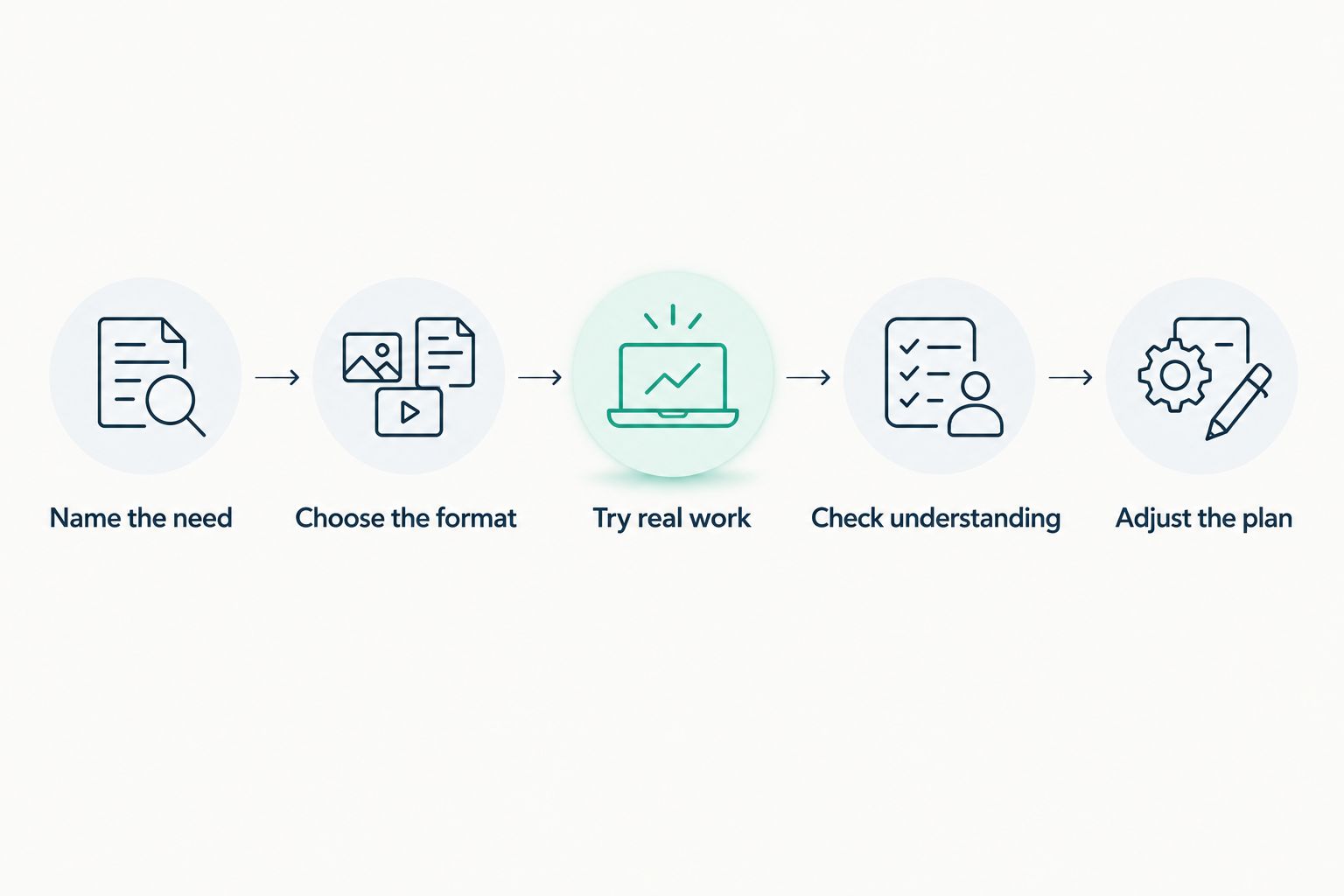
How to choose your 2026 tutoring alternative
You do not need to solve every subject at once. Choose one current difficulty and use it to assess the teaching format.
Name the need
Describe the problem in observable terms. Perhaps the student follows an example but cannot start independently. Perhaps they have ideas for an essay but cannot organize them.
Choose the format
Match that need to the comparison table. Choose adaptive teaching for responsive instruction, live one-on-one tutoring for a human relationship, or written feedback for a revision task.
Try real work
Use a topic the student is genuinely studying. A polished demonstration is less useful than seeing what happens when the student hesitates or misunderstands something.
Check understanding
Ask the student to explain the idea without repeating the tutor's exact wording. You are checking understanding, not asking for a perfect performance.
Adjust the plan
Keep what helps and change what does not. As little as 10 minutes a day is an option when it fits the student, not a promise of a fixed result or a rule every family must follow.
Keep your evaluation simple. Write down what the student attempted, where help was needed, and what they explained independently. That gives your next decision a clearer basis than elapsed screen time alone.
How these alternatives are ranked
This 2026 guide ranks formats by the teaching job they serve, using the criteria above. Adaptive instruction comes first for the stated audience: families seeking responsive home-learning support with parent visibility.
The remaining picks address distinct needs: human conversation, peer discussion, written revision, and independent review. This is not a claim that one format produces better results for every student. Choose by the student's need, not the ranking number.
Which alternative should you choose?
Choose Tia as your default for adaptive Math, English, and Science tutoring with parent visibility. Choose live online one-on-one tutoring instead when an ongoing human relationship is your first requirement.
For your 2026 shortlist, keep small-group tutoring for peer discussion, written feedback for revision, and self-paced resources for independent review. You can combine formats, but give each one a clear job. More support is not automatically a clearer plan.
FAQ
What's the best alternative to tutoring center visits?
Tia is the best fit in this guide for families seeking adaptive Math, English, and Science tutoring with parent visibility. Live online one-on-one tutoring is the stronger match when your priority is a scheduled human teaching relationship.
Is online tutoring better than an in-person tutoring center?
Online tutoring is not automatically better than an in-person tutoring center. Compare the teaching response, student comfort, curriculum match, and parent visibility rather than choosing by location alone.
What grades does Tia support?
Tia supports students in Grades 5 through 12 in Math, English, and Science. Its teaching adapts to the student's pace, level, and interests while following the relevant curriculum.
Should I choose individual or small-group online tutoring?
Choose individual tutoring for dedicated attention and small-group tutoring for peer discussion. Ask how a group instructor handles different starting levels before relying on the group for a specific learning gap.
Can self-paced lessons replace a personal tutor?
Self-paced lessons serve independent review, but materials alone do not provide a personal tutor. Choose interactive teaching when the student cannot identify the difficulty or needs an explanation that changes in response to confusion.
How long should an online tutoring session last?
Choose a session length that fits the student and the task rather than a universal minimum. As little as 10 minutes a day is an option for focused regular learning, without a guaranteed outcome from that duration.
How can I tell whether online tutoring is helping?
Check whether the student can explain an idea and attempt a fresh task independently. Use lesson records and engaged-time information as context, not as substitutes for demonstrated understanding.
One last thing
Before you move the lesson online, ask your student one question: What would make it easier to tell someone you are stuck?
The answer gives you a practical selection criterion. It might be a private conversation, time to write a question, or an explanation built around a familiar interest. Start there. You stay the parent, and the student stays the learner.
Related guides
- What parents should see in a tutoring dashboard
- How to build a homeschool schedule that fits your student
- Is online tutoring as effective as in-person tutoring?
Tia Education Team