Tia News
Can AI tutors adapt to different learning styles?
Can AI tutors adapt to different learning styles? Yes, when teaching changes with student needs. Learn what to check, what to avoid, and how to assess progress.
By Tia Education Team · Published

Yes, some AI tutors can adapt explanations, pace, and practice to different student needs, but a learning-style label alone does not show that teaching is personalized. If your student understands a spoken explanation but gets stuck on the worksheet, look for a tutor that changes its approach without changing the learning goal. The real test is whether your student can explain and use the idea afterward, not whether the lesson matches a preferred format.
- Can AI tutors adapt to different learning styles? Yes, but judge changed teaching and independent understanding, not labels.
- Tia fits homeschooling families seeking personalized tutoring in Math, English, and Science for students in Grades 5 through 12.
- Learning preferences are starting points for adaptive tutoring, not permanent categories that determine every lesson.
- Check pace, explanations, curriculum fit, and student reasoning before choosing a personal tutor.
Can AI tutors adapt to different learning styles?
Some can, but adaptation means more than presenting the same answer differently. A useful lesson responds to what the student understands, where the reasoning breaks down, and what explanation makes the next step accessible. Choose teaching that responds to the student, not a label assigned to the student.
The guide to how adaptive tutoring changes a lesson explains this distinction in a lesson context. When comparing approaches, use the table below as a practical checklist rather than a list of fixed student types.
| Teaching approach | Best for | What to look for | Limitation to check |
|---|---|---|---|
| Visual explanation | Relationships that are hard to picture | A diagram connected clearly to the concept | Recognizing a picture is not the same as explaining it |
| Spoken or written explanation | Working through reasoning in words | Clear language and a chance to explain back | More words do not fix a missing prerequisite |
| Hands-on modeling | Connecting an abstract idea to something concrete | Objects linked to pictures and symbols | Materials still need a connection to the written task |
| Interest-based examples | Making unfamiliar content feel familiar | A relevant example that preserves the learning goal | An entertaining story can distract from the concept |
| Adjusted pace | Students needing more time or a different challenge | Time to work, with difficulty matched to understanding | Slower or faster teaching alone does not change the explanation |
None of these approaches deserves an exclusive claim on a student. You can combine them within a lesson and change the combination when the task changes.
Why this matters in 2026
You do not need another category to manage. You need a way to tell whether the teaching is helping your student learn the material in front of them.
A preference describes what feels comfortable. A learning need describes what support the task requires. Treating those as the same thing can narrow your choices before you have checked where the difficulty actually lies.
For your 2026 tutoring decision, separate engagement from understanding. A student can enjoy a lesson and still need help applying the idea. Ask for both: an approachable explanation and evidence that your student can do the thinking.
What should actually change during an adaptive lesson?
Look for changes that address a specific obstacle. If the student misunderstands the question, clarify the wording. If the student understands the question but cannot begin, investigate the missing step rather than repeating the entire explanation.
The explanation
A changed explanation should offer a different route into the concept. Repeating the same paragraph with simpler words is not always enough.
For example, when a fraction feels abstract, you can divide a chocolate bar into eighths and connect each piece to the written fraction. Then ask the student to explain what the denominator represents. This is a parent-led illustration, not a claim that a screen-based tutor supplies physical materials.
The pace
A useful pace leaves room for the student to work. It does not rush a correct guess into the next topic or keep a student repeating work they already understand.
Watch what happens after hesitation. Does the lesson make the next step clearer, or simply wait longer for an answer? Extra time and better teaching are different supports.
The examples
An interest-based example should make the concept familiar without replacing the curriculum goal. A sports example can introduce a ratio, but the student still needs to recognize a ratio outside that context.
Ask your student to solve a similar problem without the favorite topic attached. That checks whether the example carried the idea or only made the story enjoyable.
The practice
Useful practice targets the point of confusion. A student who struggles to interpret a word problem needs a different next task from a student who understands the wording but makes a calculation error.
Ask what the practice is checking before judging how much practice was completed. A finished activity is useful information, but it is not a complete account of learning.
How to check adaptation during a lesson in 2026
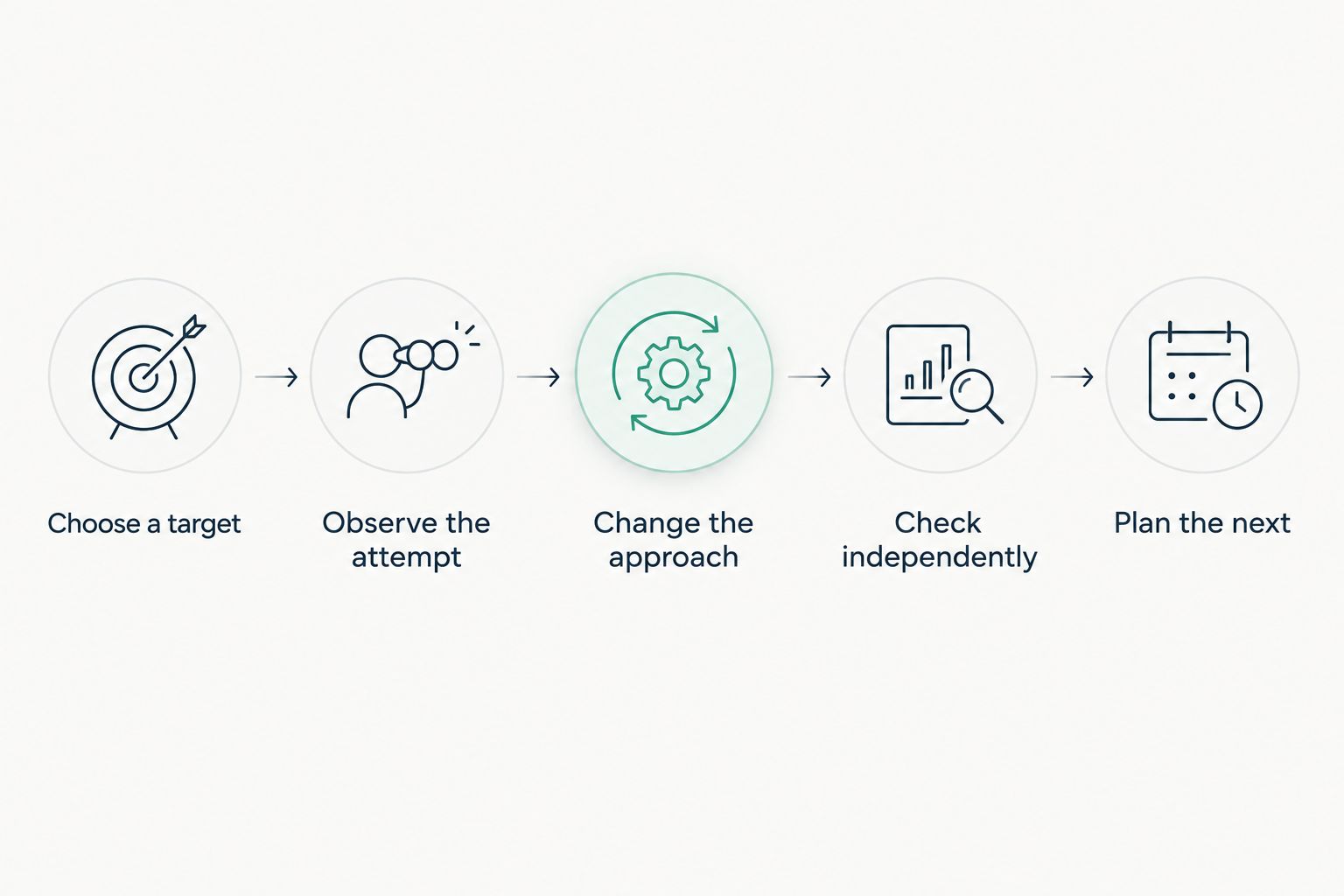
You do not need to become a tutoring specialist. Use a small observation routine that keeps the student responsible for learning and gives you something more concrete than a satisfaction rating.
- Choose a target. Pick a concept from the student's current work. Keep the target narrow enough that you can recognize an explanation of it.
- Observe the attempt. Let the student begin before offering help. Notice whether the obstacle is vocabulary, the concept, the procedure, or confidence about starting.
- Change the approach. Ask for a different explanation, example, or pace. Check whether that change addresses the obstacle you observed.
- Check independently. Give the student a similar task without copying the worked example. Ask for the reasoning, not just the answer.
- Plan the next step. Continue, revisit a prerequisite, or try another explanation based on the independent attempt. Avoid treating every difficulty as a reason to abandon the resource.
The sequence keeps your attention on the learning goal. It also gives the student permission to say that an explanation is not working without turning that moment into a judgment about ability.
Repeat the routine when the subject or task changes. A student who benefits from a picture in Math can still need a close reading of a paragraph in English. You are checking the fit of the teaching, not searching for a permanent identity.
Why adaptation varies between students and tasks
The same explanation does not need to serve every task. Base your choices on the student and the curriculum work, using these factors:
- Current understanding: Start with what the student can explain already. An unfamiliar prerequisite needs attention before a more advanced explanation.
- Pace: Allow time for reasoning without assuming that speed measures understanding. Adjust the challenge when the student is ready.
- Interests: Use a familiar topic to introduce an unfamiliar idea. Keep the actual subject goal visible.
- Curriculum: Match the concept and level to the student's assigned or chosen curriculum. A pleasant lesson on the wrong material is still a mismatch.
- Subject: Choose a method that fits the work. Explaining a scientific process, interpreting a passage, and solving an equation call for different kinds of reasoning.
- Session rhythm: Choose a workable length and a sensible stopping point. A shorter session is an option, not a universal prescription.
These factors give you useful questions to ask. They do not require you to diagnose a learning style or predict which method will work forever.
Where a personal tutor fits
Tia is a personal tutor for students in Grades 5 through 12, covering 3 subjects: Math, English, and Science. It adapts teaching to the student's pace, level, and interests while aligning with each country's curriculum. Parents get a live dashboard, engaged-time measurement, and self-writing records for homeschool reporting.
Tia is best for homeschooling families seeking a personal tutor that adapts Math, English, and Science teaching to their student's pace and interests. That fit is about the teaching approach and the family’s need for visibility, not a promise tied to a learning-style category.
Tia's scope is also a boundary. Its stated subjects and grade range do not cover every part of a homeschool program, and tutoring records do not replace your responsibility to check local requirements. Keep your student's wider learning plan and any specialist support separate from the decision to add tutoring.
How do I know whether personalized tutoring is working?
Personalized tutoring is working when your student shows clearer reasoning and uses the concept with less help. Look at an independent attempt, not only the number of completed activities.
For your 2026 progress check, keep a sample of work and a short note about the help needed. Record whether your student could start, explain the method, and spot an error. That gives the next conversation a specific focus.
Do not expect every session to end with complete independence. Use the record to choose the next step: continue practicing, revisit an earlier idea, or change the explanation. The record should guide teaching, not become another task that overwhelms you.
Should students use only their preferred learning format?
Students should not be limited to their preferred format. Use a comfortable starting point, then connect it to the formats the subject requires.
If a student likes diagrams, connect the diagram to the relevant words or symbols. If the student prefers talking through ideas, ask them to put the reasoning into the written form needed for the assignment. The goal is access to the task, not dependence on a single presentation.
This also keeps the student involved in the decision. Ask what part of an explanation helped and what remains unclear. That answer is more useful than asking whether the student is a visual or auditory learner.
How often should a student use an adaptive tutor?
Choose a regular rhythm that fits the student and the task. As little as 10 minutes a day can be a starting option when it suits the student, but that duration does not promise a particular result.
Pick a manageable learning target rather than trying to fill the available time. Stop at a clear point, note what remains uncertain, and return to it in the next session.
For a 2026 homeschool routine, measure actual learning rather than trying to reproduce classroom hours. Keep enough flexibility for longer work when useful, shorter lessons when appropriate, and breaks when the student needs them.
FAQ
Can AI tutors adapt to different learning styles?
Some AI tutors can change explanations, pace, and practice to respond to student needs. Judge that adaptation by whether the student understands and applies the concept, not by a learning-style label.
What's the difference between a learning preference and a learning need?
A learning preference describes what feels comfortable, while a learning need describes the support required for a particular task. Use preferences as starting points, then check understanding.
How can I tell whether a tutor is actually adapting?
Check whether the tutor changes its teaching in response to a specific difficulty. Then ask the student to try a similar task independently and explain the reasoning.
Is a visual explanation always best for a student who likes pictures?
No, liking pictures does not make a visual explanation the right choice for every task. Connect diagrams to the words, symbols, or reasoning that the subject requires.
Does Tia teach every homeschool subject?
Tia covers Math, English, and Science for students in Grades 5 through 12. Those subjects do not represent every part of a homeschool program.
Can a short tutoring session still be useful?
A short tutoring session can focus on a manageable learning target. As little as 10 minutes a day is an option when it fits the student, not a guarantee of a fixed learning result.
Should I change tutors if the first explanation does not help?
First check whether the tutor responds with a genuinely different approach. Base your decision on the response to difficulty and the student's understanding, rather than one unsuccessful explanation.
One last thing
Before your next lesson, ask your student to identify the exact point where the explanation stopped making sense. Not the whole subject. Just the point.
Make that your simplest 2026 tutoring check. A specific obstacle gives you a specific next move, and it keeps your student in charge of noticing and explaining their own learning.
Related guides
- What parents should see in a tutoring dashboard
- How to teach abstract math with everyday objects
- How to build a homeschool schedule that fits your student
Tia Education Team