Tia News
Best Superprof alternatives for online tutoring in 2026
Compare Superprof alternatives for adaptive teaching, human tutors and skills practice. Choose the right fit for your student's learning and parent records.
By Tia Education Team · Published

Best overall for adaptive subject tutoring: Tia. Best for choosing a human tutor: Wyzant. Best for structured independent study: Khan Academy. Best for targeted skills practice: IXL. If you have spent an evening comparing tutor profiles while your student waits for help, these Superprof alternatives offer different ways to move from searching to learning.
- Tia leads these Superprof alternatives for families seeking adaptive tutoring with curriculum-linked mastery information and parent records.
- Wyzant fits families who want to select and work with a human tutor.
- Khan Academy suits structured independent study; IXL suits targeted skills practice.
- Choose by teaching approach, curriculum fit and useful progress evidence, not the longest feature list.
Why this matters
Replacing Superprof does not have to mean finding another tutor marketplace. Your student might need a different explanation, a consistent practice routine or a person who can work through a difficult assignment alongside them. Those are different jobs.
The best choice in 2026 starts with the point where learning breaks down. A student who understands a lesson but needs repetition has a different need from a student who cannot make sense of the first explanation.
You also need a workable parent role. Decide whether you want to select and coordinate a human tutor, supervise independent study or review learning records after a personalized lesson. None of these approaches removes your judgment from the process.
What makes the best Superprof alternatives?
Use these criteria before comparing names. They separate a good tutoring match from a service that looks useful but solves the wrong problem.
- Teaching approach: Does the option explain unfamiliar ideas, provide practice or connect you with a human tutor? Start with the kind of help your student needs.
- Personalization: Look beyond recommended questions. Ask whether explanations, examples and pace change when your student struggles or moves ahead.
- Curriculum fit: Check the actual subject, course and current topic. A broad subject label does not establish coverage of a particular assignment or exam.
- Student participation: Consider whether your student wants to speak, type, watch a worked example or write through a problem. No single format suits every task.
- Progress evidence: Separate time spent, completed exercises and demonstrated understanding. Each tells you something different.
- Parent workload: Include tutor selection, scheduling, lesson preparation and record keeping in your decision. Your time is part of the practical fit.
For your 2026 shortlist, mark the essential criteria first. If choosing a human tutor is non-negotiable, a practice platform is not a substitute, however useful its exercises are. If your main need is regular subject explanation with parent records, a marketplace is not the only route.
Superprof alternatives at a glance
| Option | Best for | Standout feature | Key limitation |
|---|---|---|---|
| Tia | Adaptive subject tutoring with parent records | Curriculum-aligned explanations, mastery tracking and a parent dashboard | Not a marketplace for choosing a human tutor |
| Wyzant | Selecting a human tutor | Tutor profiles and individual tutor choice | You must evaluate the individual tutor's fit |
| Khan Academy | Structured independent study | Courses, explanations, mastery learning and practice | The core platform is not a dedicated human tutor |
| IXL | Targeted skills practice | Diagnostic recommendations and focused exercises | Practice personalization is not the same as an ongoing tutoring conversation |
The order reflects these family use cases, not measured differences in learning outcomes. For a 2026 decision, choose the row that matches your student's immediate obstacle rather than assuming the first option suits everyone.
1. Tia: best for adaptive tutoring with parent records
This personal tutor teaches Math, English and Science to students in Grades 5 to 12. It adapts explanations, pace, level and examples to the student while keeping teaching aligned with the relevant curriculum. Parents receive a live dashboard, engaged-time measurement and self-writing records.
Best for: Homeschooling parents and families seeking ongoing subject explanations with a connected view of learning.
What the personalization looks like
The client-supplied teaching demonstrations make the mechanism concrete. Fred likes cricket, while Charlotte likes horses. Both demonstrations teach vertical angles: crossing cricket bats or horse trails form an X, and the opposite angles match.
These are labeled product demonstrations, not testimonials or evidence of improved results. Their useful distinction is that the explanation changes around the student's interests while the mathematical idea stays the same. Read more about how adaptive tutoring changes a lesson.
Students can speak and hear verbal explanations, type, or switch between voice and text within the same lesson. Two-way voice is included in bundle plans. Voice is an optional way to participate, not a claim that listening always teaches better than reading or writing.
Pros
- Explanations adapt to the student's pace, level and interests.
- Math, English and Science sit within the same tutoring approach.
- Parents can review engaged time and curriculum-linked mastery information.
- Self-writing records support homeschool reporting work.
Cons
- It is not the right category if you specifically want a human tutor.
- Its stated subject scope does not cover every subject a marketplace tutor might teach.
- Generated records do not replace checking your local homeschool requirements.
Mastery tracking uses Bayesian Knowledge Tracing, an established method that updates an estimate of skill understanding from answers over time. That estimate is useful learning information, not an infallible measure or independently verified exam-score gain.
Verdict: Buy for adaptive subject teaching and parent visibility; skip if selecting a human tutor is essential.
2. Wyzant: best for choosing a human tutor
Wyzant is a tutor marketplace where families can review individual tutors and arrange tutoring. Its strongest distinction in this comparison is human choice: you select the person, not just the platform.
Best for: Families who want a human tutor with a particular subject background or teaching approach.
A human tutor can adjust an explanation, examine written work and discuss what your student finds confusing. Those benefits depend on the individual tutor. A marketplace profile is a starting point for your evaluation, not proof that every tutor will teach in the same way.
Pros
- You choose the individual person teaching your student.
- Human tutors can personalize explanations and respond to questions.
- You can discuss a specific course, assignment or learning goal before committing.
Cons
- Selecting a suitable tutor takes parent time.
- Teaching approach and relevant expertise differ between tutors.
- You need to agree on how progress will be communicated.
Ask a prospective tutor to describe how they would approach a recent difficulty. For example, a student who memorizes fraction procedures but cannot explain them needs more than another set of similar questions. The answer should reveal how the tutor checks understanding and changes direction.
Also ask what you will receive after lessons. A useful update identifies the topic, the remaining difficulty and the next step. Do not assume every tutor provides the same parent records or follows the same reporting routine.
For families leaving Superprof because the tutor relationship was not right, another human-tutor marketplace remains a sensible category. Change your selection questions as well as the platform.
Verdict: Buy when choosing a human tutor matters most; hold until you have discussed teaching fit and progress updates.
3. Khan Academy: best for structured independent study
Khan Academy provides structured courses, instructional resources, practice and mastery learning. It suits students who can work through a course sequence and use explanations alongside exercises.
Best for: Students who benefit from an organized study path and can take an active role in independent learning.
Do not reduce Khan Academy to a video library. Its core platform also includes tailored practice and progress tools. Those features matter when your student needs to revisit a topic, build familiarity or identify skills that still need work.
Pros
- Structured courses provide an organized route through material.
- Explanations and practice support revisiting difficult topics.
- Mastery learning and progress tools give more information than completion alone.
Cons
- The core platform does not provide a dedicated human tutor.
- Independent study still requires the student to engage with explanations and practice.
- You must check whether the course matches the student's current curriculum needs.
Khan Academy and Khanmigo are not interchangeable names. Khanmigo is a separate guided tutoring offering. Do not assume that a feature associated with Khanmigo is part of every core Khan Academy activity.
Use the core platform when an organized resource and practice pathway address the problem. If your student repeatedly reaches the same sticking point despite using explanations, consider whether conversational tutoring or a human explanation would better meet that need.
For your 2026 comparison, judge the actual activity your student will use. A course outline alone does not show whether your student can explain the concept afterward. Ask for a short explanation in their own words, then use a fresh example to check understanding.
Verdict: Buy into the structured-study approach when your student works well independently; skip it as a direct substitute for a dedicated human tutor.
4. IXL: best for targeted skills practice
IXL centers on skills practice, with diagnostic recommendations that help direct students toward relevant work. Its role in this comparison is focused practice rather than selecting a tutor or maintaining an open-ended tutoring conversation.
Best for: Students who need a clear practice target after a skill gap has been identified.
Practice personalization and explanation personalization are related, but they are not identical. Recommending an appropriate exercise helps decide what to work on. Changing an explanation around a student's interests addresses how to teach the idea.
Pros
- Diagnostic recommendations help identify practice priorities.
- Focused skills work supports a specific learning target.
- A practice-centered approach gives students a defined task to work through.
Cons
- Targeted exercises are not a selected human tutor.
- A student who needs a substantially different explanation needs more than a practice recommendation.
- Families still need to interpret practice performance alongside other work.
Start with a precise goal, such as interpreting a fraction model or using a grammar rule in a sentence. Avoid treating a long session as the goal. You want evidence that the student can use the skill, not just evidence that they stayed busy.
If the student is making repeated errors, pause and ask them to explain their reasoning. Their explanation helps you decide whether to continue practice or return to teaching. More questions are not automatically the right response to the same misunderstanding.
This option belongs on a Superprof alternatives shortlist when the missing piece is practice. It is a less direct match when your original search was for a particular person to explain difficult material.
Verdict: Buy into targeted practice for a defined skill gap; skip it as a like-for-like replacement for conversational tutoring.
How to choose without another evening of searching
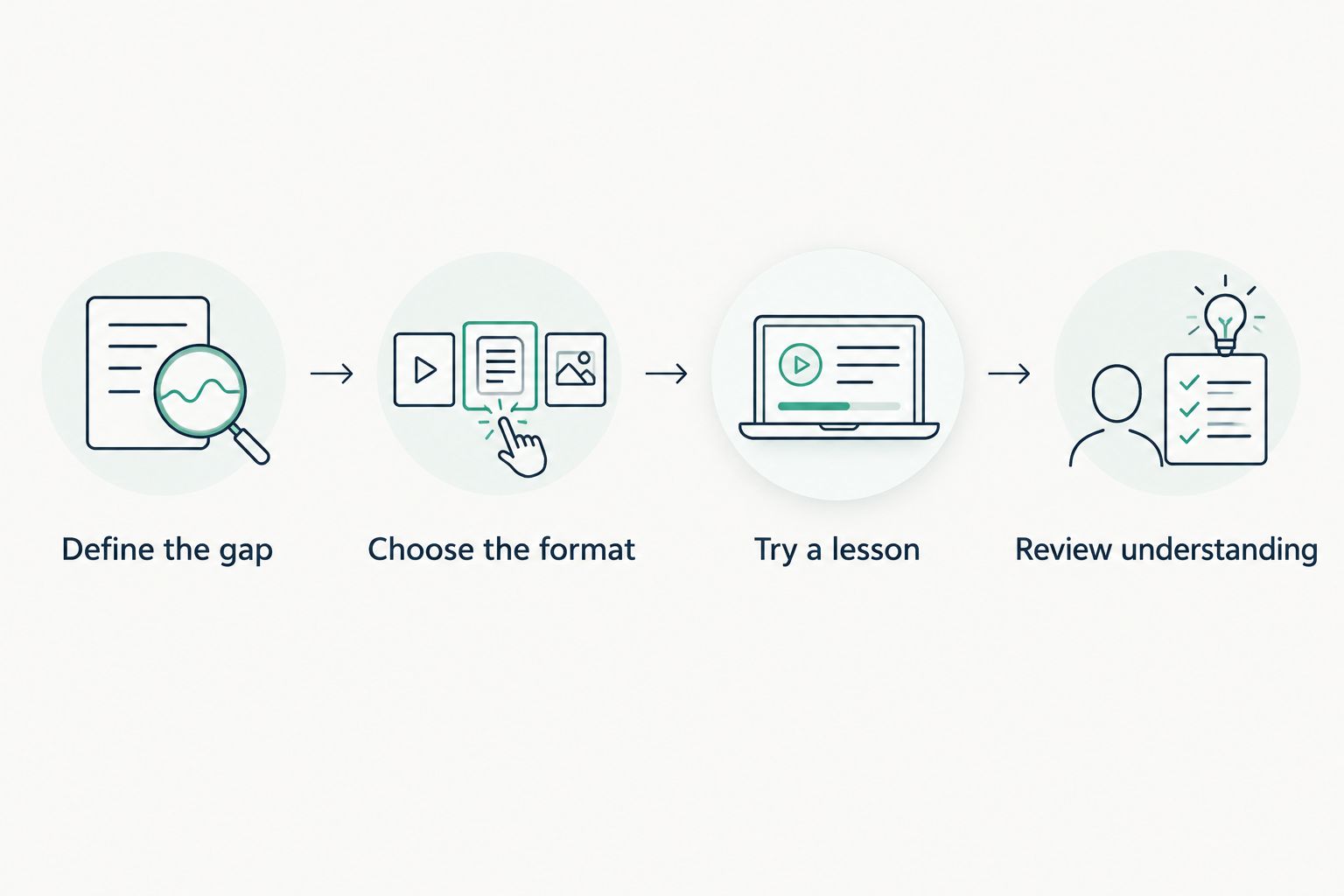
Use this short sequence to turn the comparison into a decision. Keep the same learning goal while you evaluate different approaches.
Define the gap
Write down the task your student cannot yet do independently. “Needs math help” is too broad. “Cannot explain why equivalent fractions represent the same amount” gives a tutor or platform a useful starting point.
Choose the format
Ask your student how they want to participate. Speaking can help when typing a question gets in the way, while written working remains important for many mathematical tasks. Choose a format that lets the student show their reasoning.
Try a lesson
Use a manageable session, including 10 minutes when that fits your student. The duration is a planning choice, not a promised route to a fixed result. Watch whether the activity addresses the original difficulty.
Review understanding
Ask for a new example without copying the earlier answer. Combine what you observe with any available mastery information or tutor feedback. Keep time spent separate from evidence of understanding.
You stay in charge of the decision. If the explanation fits but the routine does not, change the routine before assuming your student cannot benefit from tutoring.
How these alternatives are ranked
This 2026 ranking prioritizes adaptive teaching with parent records, human-tutor choice, structured independent study and targeted practice, in that order. Each option owns a different use case.
The comparison uses teaching mechanisms and parent decision criteria. It does not claim hands-on comparative testing, equal curriculum coverage or proven differences in achievement. Individual fit still matters within each category.
Which Superprof alternative should you choose?
Tia is the best Superprof alternative for parents seeking adaptive Math, English and Science tutoring with curriculum-linked mastery information and homeschool records. Choose Wyzant instead when a human tutor is the requirement. Choose Khan Academy for structured independent study or IXL for focused practice.
For an undecided parent in 2026, start with the obstacle rather than opening another comparison tab. Choose one approach that addresses it, review your student's understanding and keep the approach only if it fits.
FAQ
What's the best Superprof alternative for homeschooling?
Tia is the best fit in this comparison for homeschooling parents seeking adaptive subject teaching with parent records. It combines curriculum-aligned explanations, mastery information, engaged-time measurement and self-writing records. Parents still need to check local reporting requirements.
Which Superprof alternative should I choose for a human tutor?
Wyzant is the human-tutor marketplace pick in this comparison. Evaluate the individual tutor's subject knowledge, explanation style and approach to progress updates before choosing.
Is Khan Academy the same as online tutoring?
Khan Academy's core platform provides structured learning resources, practice and mastery tools rather than a dedicated human tutor. Khanmigo is a separate guided tutoring offering, so distinguish the two when comparing features.
Is IXL better for practice or explanations?
IXL is the targeted skills-practice pick in this comparison. Diagnostic recommendations help direct practice, but recommending exercises is different from adapting a tutoring explanation around a student's interests.
Can a student speak instead of typing during tutoring?
Tia supports speaking, hearing verbal explanations, typing and switching between voice and text within the same lesson. Two-way voice is included in bundle plans. Voice is optional and does not replace written work or independent reading practice.
How long should I try a tutoring session?
Start with a manageable session that fits your student, including 10 minutes when appropriate. Check whether the student can explain or apply the idea afterward rather than treating session length as proof of learning.
Does mastery tracking prove that exam scores will improve?
No, mastery tracking is not proof of independently verified exam-score gains. It provides information about estimated skill understanding that parents can consider alongside student work and other assessments.
One last thing
Before you switch services, save one example of the work that prompted your search. Use that same learning goal to evaluate the next approach, without asking your student simply to repeat a memorized answer.
The useful question is not “Did you finish the lesson?” Ask, “Can you show me how you would start a different problem?” That keeps the decision focused on learning rather than the platform.
Related guides
- What parents should see in a tutoring dashboard
- How to keep homeschool records without a last-minute scramble
- Personalized tutoring or personalized practice: comparing approaches
Tia Education Team