Tia News
Tia vs IXL: adaptive tutoring or personalized practice?
Tia vs IXL: compare adaptive teaching with skills practice. Tia adds two-way voice, same-lesson text switching and curriculum-mapped parent learning records.
By Tia Education Team · Published · Last updated
Choose Tia when your student needs teaching that adapts to their understanding, with curriculum-mapped mastery and parent reports built in. A recommended practice plan is not the same as a changed explanation when your student is stuck. This 2026 Tia vs IXL comparison makes that distinction concrete through Tia's adaptive tutoring.
- Tia vs IXL: choose Tia for adaptive teaching, curriculum-mapped mastery and parent records together.
- A recommended next skill does not answer why your student is still confused.
- Tia changes explanations around pace, understanding, interests and prior learning.
- Mastery is measured per question, mapped to the curriculum and included in the report.
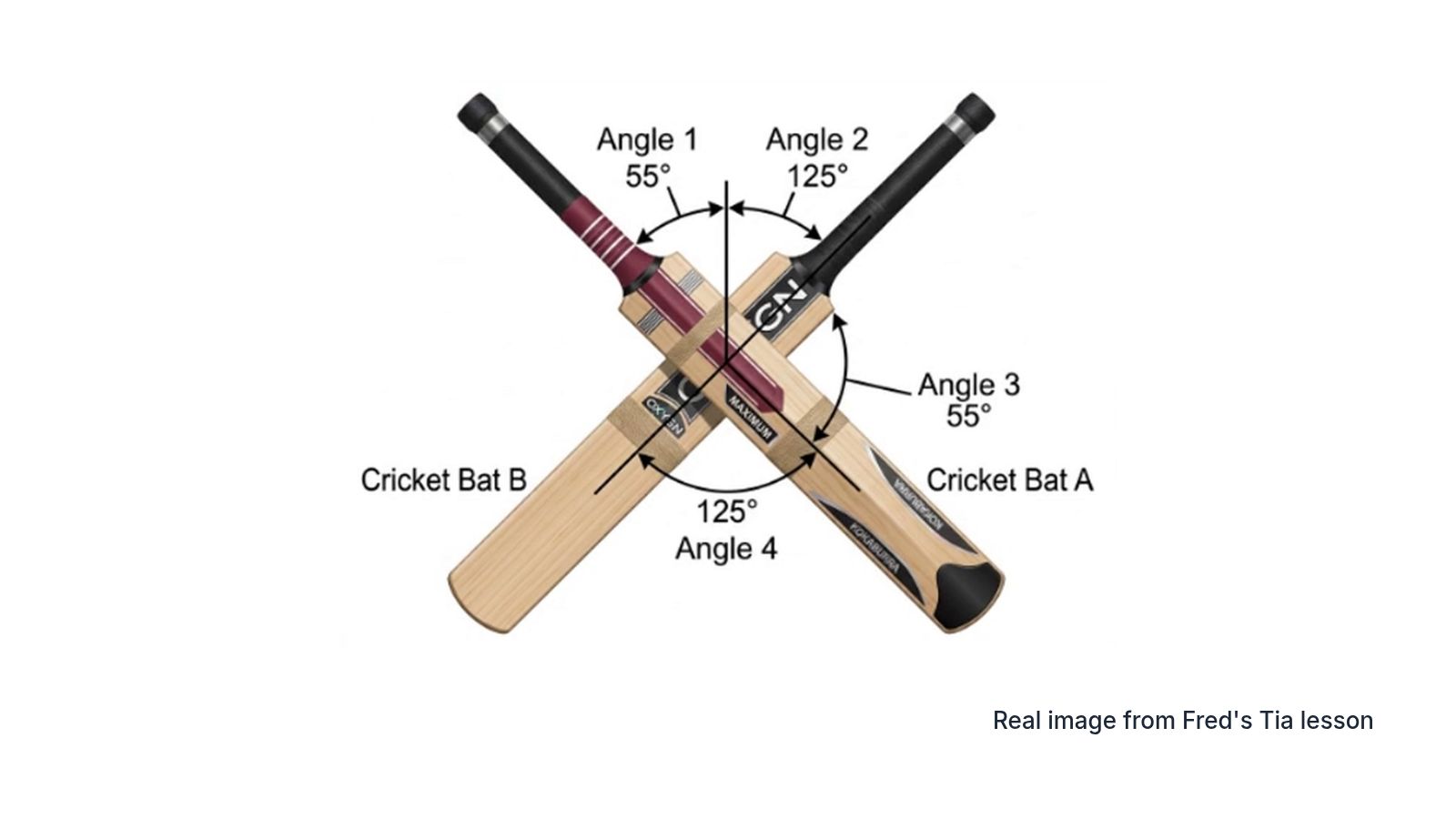
- The horse and cricket demonstrations show the same concept taught through different interests.
Why this matters
Your student keeps attempting questions but still cannot explain why the answer works. Sometimes the missing piece is more practice. Sometimes it is a different explanation.
A useful 2026 choice starts by telling those needs apart. A diagnostic can identify a skill to work on; a tutor can help unpack why that skill is confusing. Neither format should be described as the universal solution for every student.
Tia vs IXL at a glance
| Dimension | Tia | IXL |
|---|---|---|
| Best for | Adaptive explanations and ongoing subject support | Targeted skills practice and diagnostic information |
| Main format | Conversational personal tutoring | Structured practice with learning recommendations |
| Curriculum | Chosen curriculum guides sessions | Skills and standards guide practice |
| Individualization | Pace, level, interests and session history shape teaching | Diagnostic levels and learning activity shape recommendations |
| Demonstrated example | Vertical angles explained through cricket or horses | Personalized next-skill plans described by IXL |
| Parent information | Question-level mastery mapped to the curriculum, engaged time and self-writing records | Diagnostic levels and progress insights |
| Core distinction | Adaptive teaching and mastery reporting in one tutoring workflow | Skill recommendations alone do not demonstrate a changed explanation |
| Payment model | Subscription | Membership; confirm the current offering |
Tia is the better fit when the explanation needs to change
Tia covers Math, English and Science for grades 5 to 12. It uses a student's interests, pace, level and history to shape curriculum-aligned teaching. The curriculum sets the goal; the student does not have to conform to one predetermined explanation.
Tia is best for families who want personal teaching to respond to their student, with parent records beside the learning. This is especially relevant when another attempt at the same kind of question leaves the underlying confusion unchanged.
A personal example is not enough on its own. The student must still apply the formal concept. Ask for an unfamiliar follow-up question and check whether the explanation helped them reason independently.
Talk through a question, then type when it suits the task
Tia now offers two-way voice. Students can ask questions aloud and hear verbal explanations, while text typing remains available. They can switch between voice and text within the same lesson. Voice is included in all bundle plans at no extra charge.
Tia adapts to the student, not the other way around. If writing a question feels uncomfortable, the student can say it instead. They can still use written working and diagrams to explore the math. This is another way to participate, not proof that speaking produces better learning or that every student should use it.
The earlier cricket and horse-trail screenshots illustrate adaptive explanations, not the new voice interface. The comparison remains about the teaching arrangement and parent records, not a claim that other services cannot offer audio.
IXL's practice recommendations do not resolve every teaching gap
IXL uses diagnostic information to recommend skills. That can identify work to attempt, but a next-skill recommendation does not explain why your student misunderstood the current idea.
When the difficulty is the explanation, assigning more practice is not enough on its own. The important question is what changes after your student says, "I still don't understand."
The limits to check with IXL:
- A recommended skill is a practice destination, not evidence that the explanation fits your student.
- Completing exercises does not automatically demonstrate understanding on an unfamiliar task.
- Diagnostic levels are not interchangeable with the specific curriculum-mapped learning records your family needs.
Tia connects the teaching response with the learning record. It changes the explanation around the student's pace and interests, measures mastery per question and maps that mastery to the curriculum in the report. Your student gets another route into the idea; you can follow their understanding against the learning goals.
Two Tia demonstrations show the same rule taught differently
Fred likes cricket. Charlotte likes horses. In supplied test-student sessions, both are working on vertical angles: the equal opposite angles formed where straight lines cross.
Fred receives a diagram of crossing cricket bats, with matching opposite angles of 55 degrees and 125 degrees. Tia asks him to identify a vertical-angle pair. It uses a familiar object to introduce the formal idea and then returns the reasoning to the student.
Charlotte's session recalls a horse-trail explanation. After she asks for a picture, Tia shows intersecting trails with matching A and B labels. The lesson resumes earlier context instead of treating the current question as unrelated to what came before.
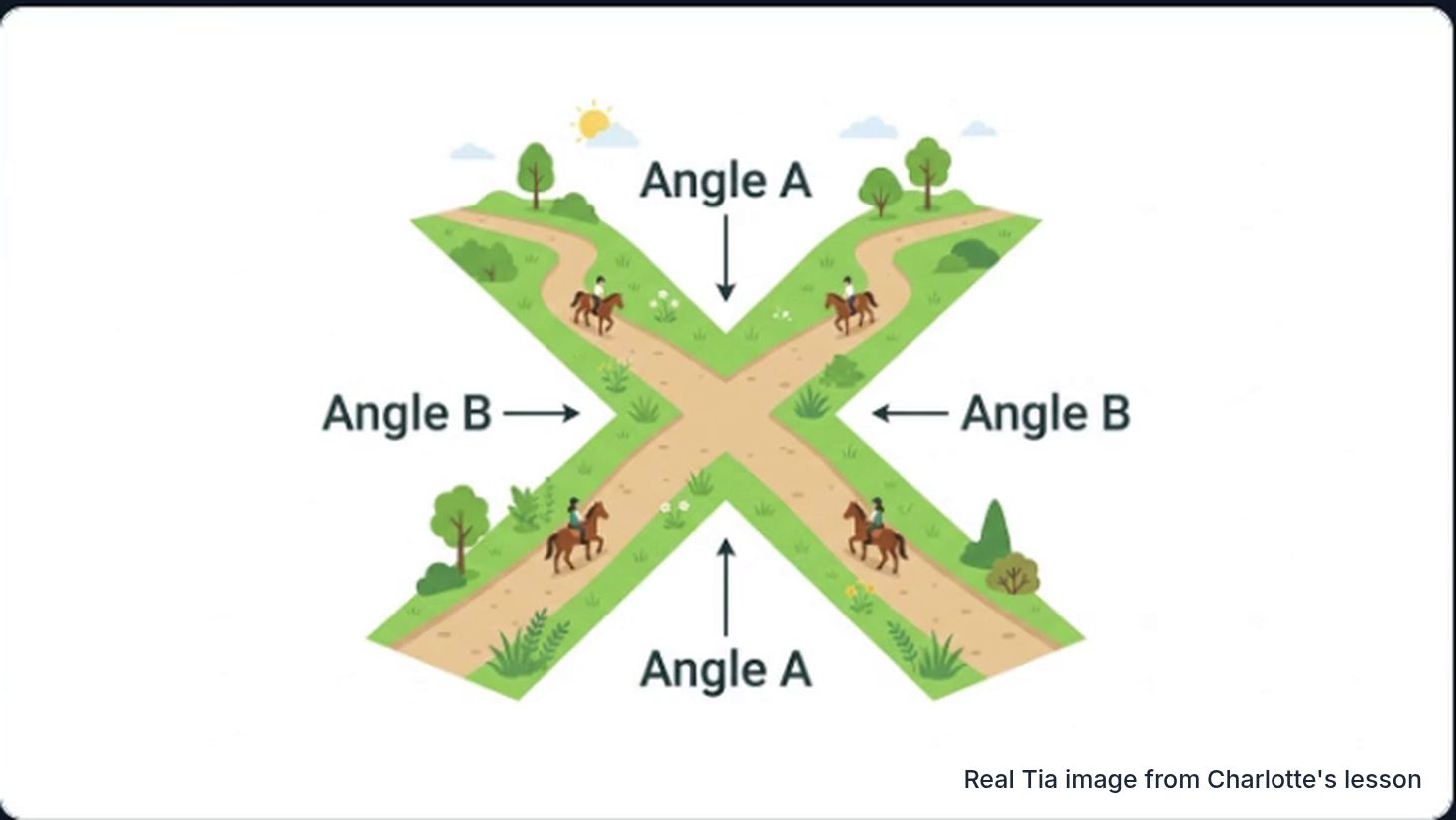
These test-student demonstrations make Tia's teaching visible: the same concept, different interests and a return to earlier context. The images illustrate the explanation; Tia's curriculum-mapped mastery report provides the separate record of understanding. The demonstrations are not a controlled comparison of outcomes.
Tia turns student context into a teaching decision
Tia uses the learning profile to shape the teaching conversation, not simply select another skill. Earlier work, interests and current understanding help determine how the tutor approaches the concept. The curriculum remains the goal while the route changes.
Ask a provider in 2026:
- What learning information carries into the next session?
- How does it affect the work chosen?
- How does it affect the explanation?
- What can the parent inspect?
A useful system turns information into a teaching decision. Knowing an interest but never using it is different from connecting that interest to the current curriculum concept.
Tia connects teaching with homeschool records
Parents receive a separate view of sessions, engaged time and learning activity. Tia measures mastery per question, maps it to the curriculum and includes it in the report. Self-writing records help you document learning without reconstructing the week from memory.
A diagnostic level alone does not answer every reporting question. You need to know which curriculum goals the student worked on, what their answers showed and what needs attention next. Check local requirements when using the records for homeschool documentation.
Inspect a sample report before choosing. A total activity number means little unless you understand what it counts and what it leaves out.
Tia's limits belong in the comparison
Tia is not a live human tutor. A student who needs a fixed appointment or specialist intervention may need a different arrangement. Its explanations still need checking. Engaged time records participation; question-level mastery mapped to the curriculum records understanding.
Tia strengths:
- Interest-based explanations shaped to the learner.
- Curriculum context carried through sessions.
- Question-level mastery mapped to the curriculum.
- Parent visibility and self-writing learning records.
Tia limitations:
- No named human instructor.
- Stated grade and subject scope.
These boundaries help you match the service to your student's needs.
Payment models should fit your routine
Tia uses a subscription; IXL uses membership offerings. Check current country-specific plans directly. The choice should follow the learning need, not a price repeated from an old article.
For your 2026 decision, start with the learning gap rather than a larger resource stack. Tia combines the explanation, follow-up questions and curriculum-mapped mastery record in one tutoring service.
The verdict: explanation or practice?
Choose Tia for explanations that adapt around the student
This fits a family seeking ongoing personal teaching with a clear parent record. Use a trial to see what changes when the student asks for another explanation.
Do not mistake a practice plan for the whole tutoring experience
IXL's diagnostic recommendations address which skills to practice. If your student needs a different explanation and you need curriculum-mapped mastery records, those recommendations alone do not settle the decision. Evaluate the teaching response, not just the next task.
| What your family receives | How Tia provides it |
|---|---|
| Another route into a concept | Explanations shaped to pace, interests and understanding |
| Continuity | Student profile and prior learning context |
| Curriculum-linked mastery | Measured per question and included in the report |
| Parent visibility | Separate dashboard, engaged time and self-writing records |
How to test the choice in 2026
Use the vertical-angle example as a small comparison, then remove the familiar setting. Draw two plain crossing lines and ask which angles match. Ask why. Do not treat recognition of the bat picture as the finish line.
If the student understands the rule but needs fluency, practice is the next step. If they cannot explain the rule, change the teaching route. That difference is more useful than choosing by the longest feature list.
FAQ
Why choose Tia instead of IXL?
Choose Tia when you want adaptive explanations, question-level mastery mapped to the curriculum and parent records together. Practice recommendations alone do not address every student's need for a different explanation.
Is a personalized practice plan the same as adaptive tutoring?
No. Recommending a skill changes what the student practices; adaptive tutoring also changes how the concept is explained. Tia combines that teaching response with curriculum-mapped mastery reporting.
What is different about Tia's personalization?
Tia uses pace, level, interests and prior work to shape curriculum-aligned explanations. Its test-student demonstrations show the same angle concept taught through different interests.
How does Tia report what my student understands?
Tia measures mastery per question, maps it to the curriculum and includes it in the report. Parents can review that information alongside sessions and engaged time.
How does Tia connect teaching with practice?
Tia uses explanations, questions and hints to keep the student reasoning through the concept. Question-level mastery is mapped to the curriculum and included in the report.
What happens when my student needs another explanation?
Tia adapts the teaching route around the student's pace, understanding and interests. The horse and cricket demonstrations show different ways into the same curriculum concept.
What should I check after a personalized example?
Ask the student to apply the concept without the original picture. Transfer to a new task is a better check than remembering an illustration.
One last thing
When the same mistake returns, do not automatically assign more of the same work. Check whether the missing piece is the method, the explanation or the practice. Then choose support that changes that piece.
See how Tia works: 14-day free trial, no card needed.
Related guides
Tia Education Team