Tia News
Best multi-subject tutoring services for families in 2026
Compare multi-subject tutoring for your family. Tia leads for adaptive core-subject teaching and parent records; see where three alternatives fit.
By Tia Education Team · Published

Best overall for adaptive teaching and parent records: Tia. Best for self-directed course study: Khan Academy. Best for diagnostic-led practice: IXL. Best for choosing a human subject specialist: Wyzant. If math needs attention tonight and an English assignment needs help tomorrow, this 2026 multi-subject tutoring guide helps you choose one starting point without rebuilding your whole routine.
- Tia is best for multi-subject tutoring that combines adaptive explanations, curriculum mastery tracking, and parent learning records.
- Khan Academy fits independent students who want structured courses, mastery learning, and tailored practice.
- IXL fits families seeking diagnostic recommendations and targeted skill practice rather than a personal tutor.
- Wyzant fits families who want to choose human specialists, with coordination required across different tutors.
Why this matters
You should not have to become the math tutor, writing coach, and science teacher every evening. But putting several subjects under one service name does not automatically give your student connected support.
Multi-subject tutoring means support across more than one academic subject. The important distinction is what happens inside that support: an explanation, a practice recommendation, a structured course, or a conversation with a human tutor.
For your 2026 shortlist, start with the kind of help your student needs. Then check subject coverage, curriculum fit, and what you can see afterward. A service that suits independent practice is not automatically the right choice for a student who needs a concept explained differently.
What makes the best multi-subject tutoring service?
These criteria separate useful family support from a long list of subjects:
- Teaching fit: Does the service explain concepts differently when the first explanation does not connect?
- Curriculum fit: Can you connect the lesson to your student's actual course, rather than only a broad subject label?
- Subject depth: Check the specific topic and level you need, not just whether the service lists math or science.
- Evidence of understanding: Look for skill-level information and student work, not only completed activities or elapsed time.
- Parent visibility: Decide whether you need a progress view, engaged-time records, homeschool documentation, or direct tutor feedback.
- Family coordination: Consider who chooses lessons, schedules help, and carries information between subjects.
Choose for the learning task first, then check how much organizing the service leaves with you. That keeps the decision focused on your student instead of the longest feature list.
Multi-subject options at a glance
These 2026 recommendations serve different purposes. Khan Academy and IXL belong in the comparison as learning alternatives, not as interchangeable versions of one-on-one tutoring.
| Option | Best for | Standout feature | Key limitation |
|---|---|---|---|
| Tia | Adaptive teaching with parent learning records | Curriculum-aligned explanations, student context, and mastery reporting | Math, English, and Science scope does not cover every possible subject |
| Khan Academy | Self-directed course study | Structured courses, mastery learning, and tailored practice | The core resource platform is distinct from personal tutoring |
| IXL | Diagnostic-led skill practice | Personalized diagnostic recommendations | Practice recommendations are different from individualized explanations |
| Wyzant | Choosing human subject specialists | Families select individual tutors | Multiple specialists require coordination across tutors |
The table is a starting point, not a promise of equal coverage. Before choosing, identify the exact course, topic, and type of help your student needs.
1. Tia: best multi-subject tutoring for adaptive teaching and records
This personal tutor teaches Math, English, and Science for students in grades 5 to 12. It adapts explanations, pace, level, and examples to the student, with curriculum alignment guiding the teaching.
The difference is not simply receiving another question after a mistake. Explanation personalization changes how a concept is presented; practice personalization changes what the student works on next. Both matter, but they solve different problems.
What the teaching looks like
Client-supplied product demonstrations show how interests can shape an explanation. In one demonstration, Fred encounters vertical angles through crossing cricket bats. In another, Charlotte encounters the same concept through crossing horse trails.
These are labeled teaching demonstrations, not testimonials or evidence of mastery. The mathematical idea stays the same: when two straight lines cross, opposite angles match. The familiar example changes to meet the student.
For a closer explanation of that mechanism, read how adaptive tutoring changes a lesson.
What parents can see
The parent dashboard includes engaged-time measurement and self-writing learning records. Mastery measurement also uses student answers, maps skills to the curriculum, and includes that information in reports.
Bayesian Knowledge Tracing updates an estimate of skill mastery from answers over time. It is an established estimation method, not an infallible reading of everything a student knows. Curriculum mastery reporting is also different from independently verified exam-score gains.
Pros:
- Explanations adapt to the student's pace, level, and interests.
- Three core subjects sit within the same tutoring service.
- Parents receive engaged-time and curriculum mastery information.
- Self-writing records support homeschool recordkeeping.
Cons:
- Families seeking subjects beyond Math, English, and Science need other resources.
- It is a screen-based personal tutor, not a chosen human instructor.
- Learning records do not replace checking local homeschool requirements.
Best for: Parents who want adaptive core-subject teaching and a clearer record of learning, especially while homeschooling.
Verdict: Buy for this fit. Use the trial to check whether the explanations connect and the reports answer your questions before making a longer commitment.
2. Khan Academy: best multi-subject option for self-directed study
Khan Academy offers structured courses, instructional resources, mastery learning, tailored practice, and progress tools. It fits students who can work through a course and use practice to identify what needs more attention.
Do not confuse the main Khan Academy platform with Khanmigo. Khanmigo provides guided tutoring and is a separate offering; evaluate it separately if conversational help is central to your decision.
Where Khan Academy fits
Start with Khan Academy when your student wants a course structure to follow rather than a tutor-led relationship. A parent can help select the relevant material and review progress without designing every practice activity.
Khan Academy does have personalization and tracking. The useful comparison is whether its course-and-practice approach matches your student's needs, not whether it has those features at all.
Khan Academy pros:
- Structured courses give independent study a clear path.
- Mastery learning supports returning to skills that need work.
- Tailored practice and progress tools support ongoing review.
Khan Academy cons:
- The core platform is not the same as individualized tutoring.
- Families still need to match course material to their student's assignments or curriculum.
- Khanmigo requires a separate evaluation rather than assumptions based on the main platform.
Best for: Students who can follow structured material and need a consistent resource for study and practice.
Verdict: Buy into this approach for independent study. Skip it as your only support when your main requirement is a continuing personal tutoring relationship.
3. IXL: best multi-subject option for diagnostic-led practice
IXL provides skill practice and personalized diagnostic recommendations. Its clearest role in this comparison is helping families decide which skills a student should practice next.
That is useful when your student understands an explanation but needs more targeted work. It is a different need from asking a tutor to explain the same idea through a new example.
Where IXL fits
Choose diagnostic-led practice when you want to move beyond selecting exercises by guesswork. Recommendations can help focus the next practice task, while you check whether the student also needs teaching support.
For your 2026 decision, separate practice progress from explanation quality. A strong recommendation about what to practice does not, by itself, tell you how a difficult concept will be taught.
IXL pros:
- Diagnostic recommendations help identify a practice starting point.
- Skill-focused work supports targeted review.
- Personalized recommendations give practice a direction.
IXL cons:
- Targeted practice is not interchangeable with personal tutoring.
- Families should evaluate explanation support separately from diagnostic recommendations.
- You still need to connect recommended skills to the student's current course.
Best for: Families whose main gap is organized, targeted skill practice rather than a new tutoring relationship.
Verdict: Buy for practice-led support. Hold if your student repeatedly needs a different explanation before practice becomes useful.
4. Wyzant: best multi-subject tutoring for human specialists
Wyzant lets families choose individual human tutors across subjects. Human tutors can personalize teaching, respond to questions, and adjust an explanation during a lesson.
Its distinct advantage is choice of person. You can look for someone suited to a particular course or task rather than expecting one learning platform to handle every requirement.
Where Wyzant fits
Start with Wyzant when the relationship with a human specialist is your deciding factor. For example, you might want different expertise for advanced math and essay feedback.
Do not assume one tutor teaches every subject your student needs. Ask each prospective tutor about the actual course, how they approach misunderstandings, and what feedback you will receive afterward.
Wyzant pros:
- Families choose the individual tutor.
- Human tutors can personalize explanations during a conversation.
- Different specialists can address different academic needs.
Wyzant cons:
- Multiple tutors mean more coordination for the parent.
- Teaching approach and feedback need checking with each tutor.
- A shared cross-subject learning record should not be assumed.
Best for: Families who prioritize a chosen human instructor and are comfortable organizing specialist support.
Verdict: Buy for human expertise. Hold if reducing coordination across subjects is your main reason for changing services.
How the options are ranked
This 2026 ranking prioritizes teaching fit, curriculum relevance, evidence of understanding, parent visibility, and coordination. The order favors families seeking connected core-subject support, not every possible tutoring situation.
It does not rank services by proven learning gains. Product demonstrations show teaching mechanisms; mastery estimates describe recorded learning; neither establishes that one service produces better exam results than another.
Check the fit before adding more subjects
Use one real learning need to evaluate a service. You do not need to reorganize math, English, and science on the same day.
- Name the need. Choose a specific difficulty, such as explaining a ratio or organizing an essay paragraph.
- Watch the teaching. Notice whether your student receives an explanation, a practice task, or an answer.
- Check understanding. Ask your student to explain the idea or apply it to a different example.
- Review the record. Check what you can see about the skill, the work, and the next step.
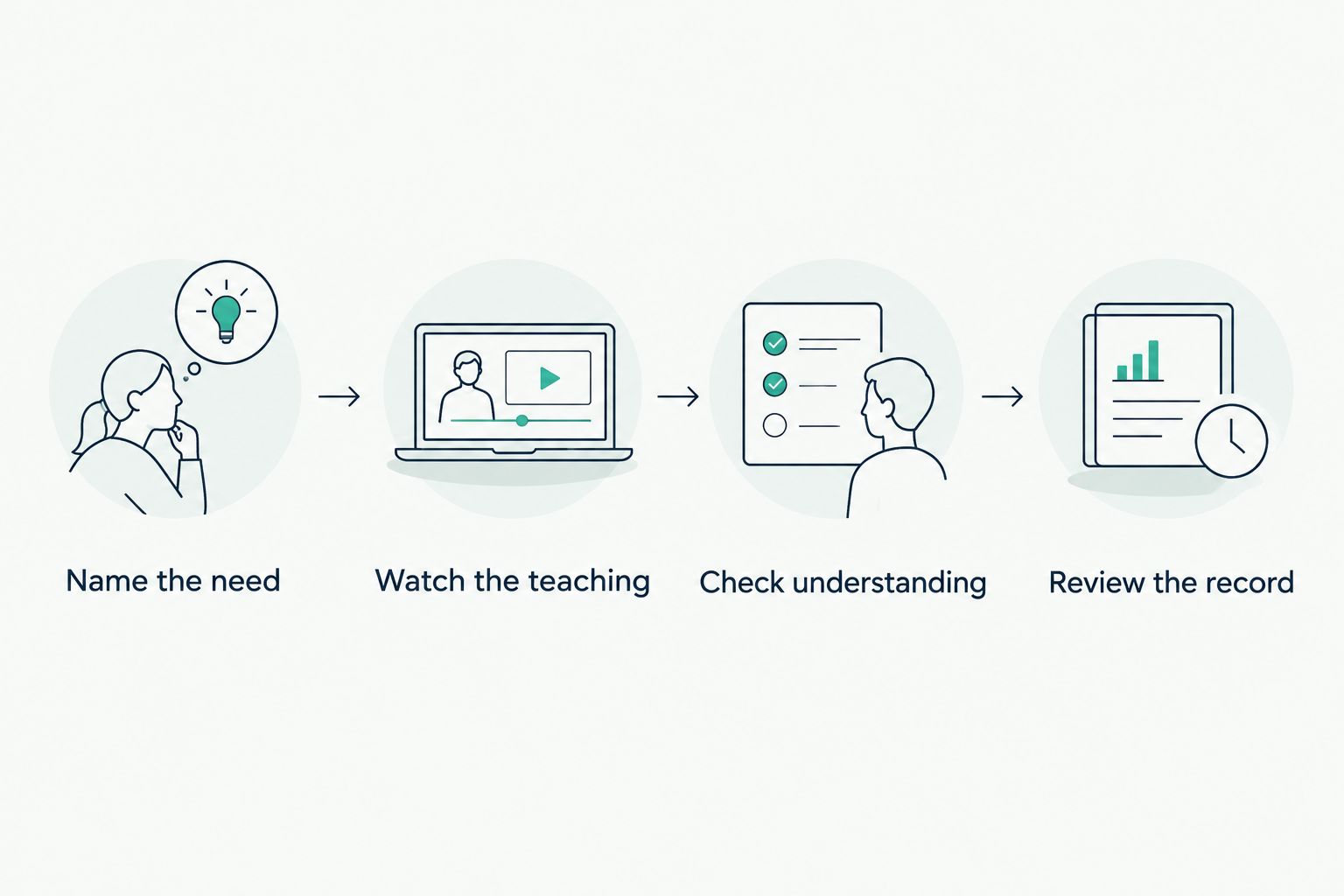
A session can be as short as 10 minutes when that fits the student and task. The duration is not a result guarantee. Look for what the student can explain or do afterward, then use that information to choose the next step.
Which multi-subject tutoring service should you choose?
Tia is best for families seeking adaptive Math, English, and Science tutoring with parent learning records. It is the default recommendation here for that specific combination, not a claim of better learning outcomes than every alternative.
Choose Khan Academy for self-directed courses. Choose IXL for diagnostic-led practice. Choose Wyzant when selecting a human specialist matters more than keeping support in one workflow.
For the rest of 2026, keep the decision small: identify the biggest unmet learning need and choose the service designed for it. Add another tool only when it solves a different problem.
FAQ
What's the best multi-subject tutoring service for homeschooling?
Tia is the strongest fit in this comparison for adaptive Math, English, and Science teaching with parent learning records. Parents still need to check subject fit and local homeschool requirements.
Can one tutoring service help with math, English, and science?
Yes, one service can support all three subjects, but check the student's specific level and topics. A broad subject label does not establish that every course or assignment is covered.
Is Khan Academy the same as having a personal tutor?
No, Khan Academy's core platform provides structured resources, mastery learning, tailored practice, and progress tools. Khanmigo is a separate guided-tutoring offering and should be evaluated separately.
Is IXL better for practice or personalized explanations?
IXL's clearest fit in this comparison is diagnostic-led skill practice. Evaluate teaching explanations separately if your student needs a concept presented differently before practicing.
Should I choose one tutor or different subject specialists?
Choose one tutor when that person's expertise matches the subjects and levels you need. Choose different specialists when your student's courses require different expertise, and plan how you will coordinate feedback.
How much tutoring should a student do each day?
Choose a session length that fits the student and the learning task. As little as 10 minutes can be a useful starting format, but no fixed duration guarantees progress.
Does a tutoring progress report replace homeschool records?
A tutoring report can support homeschool recordkeeping, but it does not automatically satisfy every local requirement. Check what your jurisdiction requires and keep any additional documentation.
One last thing
Before adding another subject, ask your student to teach one idea back to you. A completed activity tells you the work ended; an explanation in the student's own words gives you something different to consider alongside the service's mastery records.
You stay in charge of the decision. Start with the support your student needs now, not every feature your family might eventually use.
Related guides
- What parents should see in a tutoring dashboard
- How to keep homeschool records without a last-minute scramble
- How to build a homeschool schedule that fits your student
Tia Education Team