Tia News
Best Kumon alternatives for math practice in 2026
Compare Kumon alternatives for math: Tia for personalized teaching, IXL for practice, Khan Academy for independent study, and Wyzant for a human tutor match.
By Tia Education Team · Published

Best overall for personalized teaching: Tia. Best for targeted skill practice: IXL. Best for structured independent study: Khan Academy. Best for choosing a human tutor: Wyzant. If another math worksheet has left your student stuck and you doing the explaining, these Kumon alternatives offer different ways to support learning in 2026.
- Tia leads these Kumon alternatives for families wanting personalized math tutoring, curriculum alignment, and parent learning records.
- Choose IXL for targeted skill practice and personalized diagnostic recommendations.
- Choose Khan Academy for structured courses, mastery learning, and independent practice.
- Choose Wyzant when your priority is selecting a human math tutor.
Why this matters
You do not have to become the math teacher just because your student needs a different explanation. The useful question is whether you need more practice, more teaching, or a person working alongside your student.
For your 2026 shortlist, separate those needs before comparing features. This guide to how adaptive tutoring changes a lesson explains what changing the teaching looks like, rather than simply changing the next question.
What makes the best Kumon alternatives?
- Explanation fit: Does the approach help when your student does not understand why a method works?
- Practice fit: Can your student work on the specific skill that needs attention?
- Curriculum alignment: Does the work connect to what your student needs to learn?
- Parent visibility: Can you see learning evidence, not just activity?
- Family workload: Who chooses the next topic, reviews progress, and keeps records?
Kumon alternatives at a glance
| Option | Best for | Standout feature | Key limitation |
|---|---|---|---|
| Tia | Personalized teaching with parent records | Curriculum-aligned explanations adapted to pace, level, and interests | Online tutoring is not the same experience as working with a human tutor |
| IXL | Targeted skill practice | Personalized diagnostic recommendations | Practice selection and an individually adapted explanation are different needs |
| Khan Academy | Structured independent study | Courses, mastery learning, tailored practice, and progress tools | Families still need to decide how resources fit their learning plan |
| Wyzant | Choosing a human tutor | Access to individual tutors who can personalize teaching | Fit depends on the particular tutor you select |
These are different routes, not interchangeable versions of one program. Start with the job you want the alternative to do, then read the matching section below.
1. Tia: best Kumon alternative for personalized teaching
Tia is a personal tutor for students in grades 5 to 12, covering math, English, and science. It adapts explanations, pace, level, and examples to the student while connecting teaching to the curriculum.
That distinction matters when your student can repeat a procedure but cannot explain it. More questions and a different explanation are separate interventions; choose the latter when understanding is the obstacle.
A client-supplied teaching demonstration illustrates the approach with vertical angles. Fred's explanation uses cricket bats crossing in an X, while Charlotte's uses crossing horse trails. Both explain that opposite angles match. These are product demonstrations with test students, not testimonials or proof of mastery.
Parents get a live dashboard, engaged-time measurement, and self-writing homeschool records. The product also measures mastery per question, maps it to the curriculum, and includes it in reports.
Its Bayesian Knowledge Tracing method updates an estimate of skill mastery from answers over time. That estimate is evidence to review, not an infallible reading of everything a student knows or proof of future exam results.
Tia pros:
- Explanations adapt to student interests as well as pace and level.
- Curriculum-linked mastery reporting goes beyond recording time spent.
- Parent records support oversight without requiring you to write every entry.
Tia cons:
- It is online tutoring, not a relationship with a selected human tutor.
- Dashboard records do not replace checking your local homeschool requirements.
- Mastery estimates are not independently verified exam-score gains.
Best for: Families wanting teaching that adapts to the student, with parent visibility alongside it.
Verdict: Buy for personalized teaching and learning records, not as a substitute for every form of educational support.
2. IXL: best Kumon alternative for targeted skill practice
IXL combines skill practice with personalized diagnostic recommendations. Its clearest place on this shortlist is helping you choose what your student should practice next.
That fits a familiar situation: your student understands the explanation but still needs work applying it accurately. You want a focused practice task, not another complete lesson on a concept they already understand.
Keep the comparison fair. IXL does personalize recommendations; it is not simply an identical question list for every student. The decision is whether personalized practice selection addresses your student's difficulty, or whether the explanation itself needs to change.
For a 2026 decision, take a recent math mistake and classify it before choosing. A copied sign, a forgotten fact, and an unexplained rule point to different support needs. A practice-led option belongs on your shortlist when applying an understood skill is the main task.
IXL pros:
- Skill practice suits a clearly identified area needing attention.
- Diagnostic recommendations support practice selection.
- Its practice-focused role is easy to distinguish within your learning plan.
IXL cons:
- A recommended skill does not by itself explain why your student made a mistake.
- Families seeking a human teaching relationship need a different format.
- Choosing the right practice still requires attention to the student's actual difficulty.
Best for: Students who need targeted repetition and skill development rather than a different teaching relationship.
Verdict: Buy for focused practice; skip as your sole answer when the central problem is an explanation your student does not understand.
3. Khan Academy: best Kumon alternative for independent study
Khan Academy provides structured courses, mastery learning, tailored practice, and progress tools. It belongs on this list for families who want a course-based resource that students can work through with an appropriate level of adult guidance.
Do not confuse the core Khan Academy platform with Khanmigo, its guided tutoring offering. This recommendation concerns the core learning platform, not a claim that every Khanmigo feature or access arrangement applies to every family.
The strongest fit is a student who benefits from a visible course structure. Your role is to connect that course to the current learning goal and notice when independent work stops being productive.
A useful starting question is whether your student can recognize confusion and ask for help. If they keep clicking through while unsure, a resource library alone is not the whole plan. If they can work through explanations and practice purposefully, structured independent study deserves consideration.
Khan Academy pros:
- Structured courses give independent work a clear organization.
- Mastery learning and tailored practice support skill development.
- Progress tools give families more information than a finished worksheet alone.
Khan Academy cons:
- A course structure does not decide your family's entire learning plan.
- Independent work still needs a plan for getting unstuck.
- Core-platform features should not be confused with Khanmigo guided tutoring.
Best for: Students ready to use structured learning resources with parent oversight rather than continuous individual teaching.
Verdict: Buy into this approach for purposeful independent study; hold if your student needs help recognizing and explaining confusion.
4. Wyzant: best Kumon alternative for choosing a human tutor
Wyzant is a route to finding an individual human tutor. A human tutor can personalize explanations and respond to the student's questions, so this option belongs in a different decision slot from independent practice.
Choose this route when the relationship is central to what you need. You want to select a person, discuss your goals, and judge how that person's teaching fits your student.
Do not treat a marketplace name as a guarantee of one teaching method. Ask the individual tutor how they identify gaps, choose examples, and decide when a student is ready to move on.
Bring an actual piece of math work to that conversation. Ask how the tutor would distinguish a calculation slip from a misunderstanding. Then ask what you, as the parent, would receive after a lesson so you can connect tutoring with the rest of the week.
Wyzant pros:
- You can look for an individual human teaching relationship.
- Human tutors can adapt explanations and examples.
- You can discuss your student's goals directly with the tutor.
Wyzant cons:
- Teaching fit depends on the individual, not the marketplace name.
- You need to evaluate the tutor's approach before committing.
- Reporting expectations need to be discussed with the selected tutor.
Best for: Families prioritizing a human tutor whom they can choose and communicate with directly.
Verdict: Buy for the individual teaching relationship; hold until you understand the tutor's approach and reporting arrangements.
How to choose without adding more to your plate
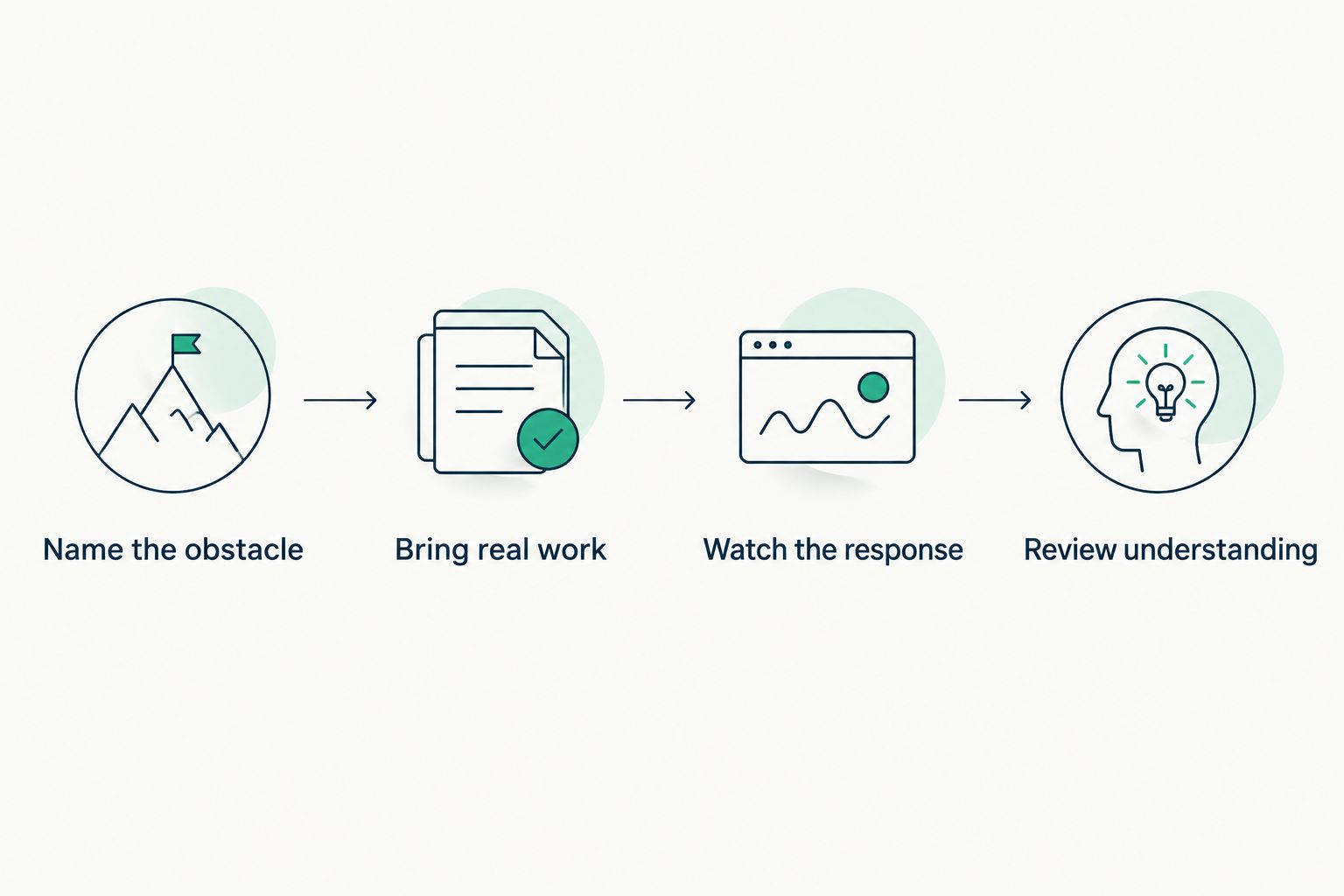
You do not need to trial every option at once. For your 2026 comparison, use the same recent difficulty to judge whether each approach addresses the actual problem.
Name the obstacle
Ask your student where the work stops making sense. Listen for the difference between forgetting a fact, losing track of steps, and not understanding the idea. Those descriptions are more useful than a broad label such as being behind in math.
Bring real work
Use a recent assignment or a homeschool exercise. Keep the original attempt, including crossed-out steps. The aim is to make the difficulty visible, not to create a polished example that hides how your student approached it.
Watch the response
Notice whether the next step fits the obstacle. An explanation problem calls for teaching; an accuracy problem calls for appropriate practice. A student who wants a human conversation deserves that preference to be part of the decision.
Review understanding
Ask your student to explain a fresh example in their own words. Review the learning evidence alongside that explanation. Completion, engaged time, and estimated mastery answer different questions, so avoid treating any one of them as the whole picture.
Keep the trial manageable. A session of 10 minutes a day is an option when that fits the student, not a promise of a particular result. Let the learning goal and your student's response guide the rhythm rather than adding time simply to make the session look substantial.
How we ranked these alternatives
This 2026 ranking prioritizes explanation fit, practice fit, curriculum alignment, parent visibility, and family workload. It is an editorial comparison of approaches, not a claim that the products were tested against each other or produce ranked learning outcomes.
The first position goes to personalized teaching with parent learning records because that combination addresses the parent who wants help teaching, not just assigning practice. The remaining positions serve distinct needs: targeted practice, independent study, and selecting a human tutor.
Your student's need takes priority over the order. A lower-ranked option with the right format is a better choice than a first-ranked option solving the wrong problem.
Which Kumon alternative should you choose?
Tia is the best fit among these Kumon alternatives for families seeking personalized math teaching with curriculum-linked parent records. Start there if your student needs the explanation to change and you want visibility without writing every learning record yourself.
Choose IXL when targeted practice is the main job. Choose Khan Academy for structured independent learning. Choose Wyzant when selecting a human tutor matters most.
For a 2026 decision, resist adding all four to your routine. Start with one approach, identify what it is supposed to improve, and review whether it helps your student do more of the thinking.
FAQ
What's the best Kumon alternative for a student who needs different explanations?
A personalized tutor is the strongest fit when the explanation itself needs to change. Look for teaching that responds to the student's pace, level, interests, and curriculum rather than only selecting another practice question.
Is IXL a good alternative for math practice?
IXL is a strong fit for targeted skill practice and personalized diagnostic recommendations. Separate that need from a need for individually adapted explanations before choosing.
Is Khan Academy only a video library?
No. Khan Academy also provides structured courses, mastery learning, tailored practice, and progress tools. Its core platform should be distinguished from Khanmigo guided tutoring.
Should I choose a human tutor instead of a practice platform?
Choose a human tutor when selecting a person and building a teaching relationship are central to your goal. Ask the individual tutor how they explain mistakes, adapt lessons, and report progress.
Can a short daily math session be useful?
A short daily session can be a practical format when it fits the student and has a clear learning goal. Even 10 minutes is an option, but that duration does not guarantee a particular result.
Does a mastery report prove my student will get a better exam score?
No. An estimate of curriculum mastery is different from independently verified exam-score improvement. Review reports alongside your student's explanations and independent work.
Do homeschool tutoring records replace local requirements?
No. Tutoring records can support your documentation, but you remain responsible for checking local homeschool requirements. Review what information you need before relying on a report.
One last thing
Before choosing, ask your student: would another example help, or do you need to try this yourself? Leave room for the answer to change from topic to topic.
The goal is not to replace one pile of completed work with another. Choose support that leaves your student doing the learning and you able to see what happened.
Related guides
- Adaptive tutoring or personalized practice: Tia vs. IXL
- What parents should see in a tutoring dashboard
- How to keep homeschool records without a last-minute scramble
Tia Education Team