Tia News
Best homeschool tutoring programs in 2026
Find the best homeschool tutor for your family. Tia leads for adaptive teaching and parent records; compare human tutoring, structured study and practice.
By Tia Education Team · Published

You sit down to help with algebra, and the explanation in the workbook leaves both of you stuck. Best overall for adaptive teaching and parent records: Tia. Best for a human homeschool tutor: Wyzant. Best for structured independent study: Khan Academy. Best for targeted practice: IXL.
- Tia is the best homeschool tutor fit for families seeking adaptive explanations, curriculum mastery tracking and parent records.
- Choose Wyzant when your student needs a human tutor and you want to select the individual.
- Choose Khan Academy for structured courses and mastery learning; distinguish the platform from Khanmigo guided tutoring.
- Choose IXL for personalized diagnostic recommendations and targeted practice, not as an interchangeable substitute for every tutoring need.
Why this matters
A homeschool tutor should solve the problem that brings your day to a stop. That might be an explanation your student cannot follow, a gap in prerequisite knowledge, or your need to see what actually happened during independent work.
Those are different jobs. A course library, a practice platform and a personal tutor do not provide the same experience, even when all three address the same math topic.
For your 2026 shortlist, start with the missing piece rather than the longest feature list. You stay responsible for the learning plan, but you do not have to deliver every explanation yourself.
What makes the best homeschool tutoring program?
Use these criteria before comparing names:
- Explanation fit: Does the teaching change when your student does not understand, or does the student simply receive another question?
- Curriculum fit: Can you connect the lesson to the curriculum and specific skill you are teaching?
- Mastery evidence: Can you distinguish completed work from an estimate of understanding?
- Parent visibility: Can you see the learning activity without asking your student to reconstruct the session?
- Teaching format: Does your student need a human relationship, adaptive explanations, structured courses or targeted practice?
- Record usefulness: Will the records support your homeschool planning and reporting, while leaving you to check local requirements?
The best choice matches the teaching job you need done, not the biggest collection of resources. Keep that distinction in view when reviewing the comparison below.
Homeschool tutoring programs at a glance
This 2026 comparison ranks the options by distinct family needs. It is not a ranking of proven learning gains, and a lower position does not mean a weaker choice for every student.
| Program | Best for | Standout feature | Key limitation |
|---|---|---|---|
| Tia | Adaptive teaching with parent learning records | Curriculum-aligned explanations, question-level mastery tracking and self-writing records | Not a human tutor or a replacement for your homeschool oversight |
| Wyzant | Choosing an individual human tutor | Human tutors who can personalize instruction | Fit depends on the individual tutor you select |
| Khan Academy | Structured independent study | Courses, mastery learning, tailored practice and progress tools | The core platform is different from personal guided tutoring through Khanmigo |
| IXL | Finding skills for targeted practice | Personalized diagnostic recommendations | Practice recommendations and explanation personalization are different capabilities |
1. Tia: best homeschool tutor for adaptive teaching and records
Tutoring adapts to the student, not the other way around. This personal tutor teaches Math, English and Science for students in grades 5 to 12, adapting explanations, pace, level and examples to the individual.
The parent dashboard combines engaged-time measurement with learning records. Question-level mastery tracking maps to the curriculum and appears in the report, so the parent view is not limited to how long a session lasted.
What personalization looks like
Client-supplied demonstrations from October 2026 show the same vertical-angle concept explained through different interests. Fred's example uses crossing cricket bats; Charlotte's uses crossing horse trails.
Both demonstrations teach that opposite angles match when lines cross. These are labeled product demonstrations, not testimonials or evidence that either student mastered the topic.
That distinction matters. Changing an explanation is different from recommending a practice question, and remembering an interest is different from measuring understanding. The guide to how adaptive tutoring changes a lesson explains the teaching mechanism in more detail.
How mastery tracking works
The tutor uses Bayesian Knowledge Tracing, an established method that updates an estimate of skill mastery from student answers over time. Think of it as a changing picture of understanding, not an infallible measurement of everything your student knows.
Curriculum mastery estimates are also different from independently verified exam-score gains. Use the report alongside your student's explanation and independent work.
Tia pros:
- Adapts explanations to the student's pace, level and interests.
- Combines curriculum-linked mastery information with engaged-time measurement.
- Creates records that support homeschool reporting.
Limitations:
- Does not provide a human tutor relationship.
- Does not remove your responsibility to check curriculum fit and local reporting requirements.
Best for: Families who want adaptive subject teaching and a clearer parent view of learning.
Verdict: Buy for this combination of teaching and records, not as a substitute for parental oversight.
2. Wyzant: best homeschool tutoring option for a human relationship
Wyzant connects families with human tutors. A human tutor can personalize an explanation, discuss the student's reasoning and build an ongoing teaching relationship.
This is the strongest fit in this shortlist when selecting the person is central to your decision. Start with the student's subject need, then ask how the tutor would teach that specific skill.
What to ask before choosing
Bring a real example of work that caused difficulty. Ask the tutor to explain how they would identify the sticking point and decide whether to revisit an earlier skill.
Then discuss your homeschool context. Explain the curriculum you use, the student's interests and the kind of session summary you need.
Do not treat a tutor marketplace as a promise that every individual offers the same teaching approach. Your selection process is part of making this option work.
Wyzant pros:
- Provides a route to individual human instruction.
- Lets you prioritize a personal teaching relationship.
- Human tutors can adapt explanations to student responses.
Wyzant cons:
- Teaching fit depends on the individual tutor.
- You need to establish expectations for curriculum alignment and parent records with that tutor.
Best for: Students who need a human teaching relationship and parents who want to choose the individual.
Verdict: Buy when the human relationship is your deciding requirement.
3. Khan Academy: best homeschool option for structured independent study
Khan Academy provides structured courses, mastery learning, tailored practice and progress tools. It belongs on this list for families looking for a clear resource-based learning path rather than assuming every difficulty requires a personal tutor.
Distinguish the main Khan Academy platform from Khanmigo, which provides guided tutoring. They are not interchangeable descriptions of the same learning experience.
Where it fits in a homeschool day
Choose a specific course or skill that matches your plan. Have your student work through it, then ask them to explain the idea without relying on the completed exercise.
The relevant question is not whether Khan Academy has personalization or tracking. It has both. The question is whether its learning format gives your student the kind of help they need at the moment they get stuck.
For a student who works well through structured material, that format is a strong match. If the main need is guided tutoring, assess that experience separately rather than judging it from the core platform alone.
Khan Academy pros:
- Offers structured courses rather than isolated topic suggestions.
- Includes mastery learning and tailored practice.
- Provides progress tools for following learning activity.
Khan Academy cons:
- Core platform features should not be confused with Khanmigo guided tutoring.
- Course progress still needs to be interpreted against your homeschool plan.
Best for: Students who need structured independent study and parents who want a resource-based foundation.
Verdict: Hold as your only tutoring solution until you know whether structured study resolves the difficulty.
4. IXL: best homeschool option for targeted practice
IXL offers personalized diagnostic recommendations. Its role in this comparison is targeted practice: identifying skills to work on rather than assuming every student should follow an identical practice path.
That is useful when you want a clearer starting point for practice. It is a different buying decision from choosing a human tutor or a tutor that changes explanations around student interests.
Separate the recommendation from the teaching
A recommended skill tells you what to work on. You still need to establish whether your student understands the idea behind the answer.
Ask your student to explain a completed problem and attempt another example independently. If the explanation breaks down, make teaching the concept your next priority instead of treating additional practice as the whole solution.
IXL pros:
- Provides personalized diagnostic recommendations.
- Gives targeted practice a clear role in your learning plan.
- Supports a practice-focused approach rather than treating all students identically.
IXL cons:
- Diagnostic recommendations and personalized explanations are not the same thing.
- A practice recommendation alone is not evidence that a concept is understood.
Best for: Families whose main need is identifying and practicing specific skills.
Verdict: Buy for targeted practice; skip it as an automatic substitute for every kind of tutoring.
How to choose your homeschool tutor
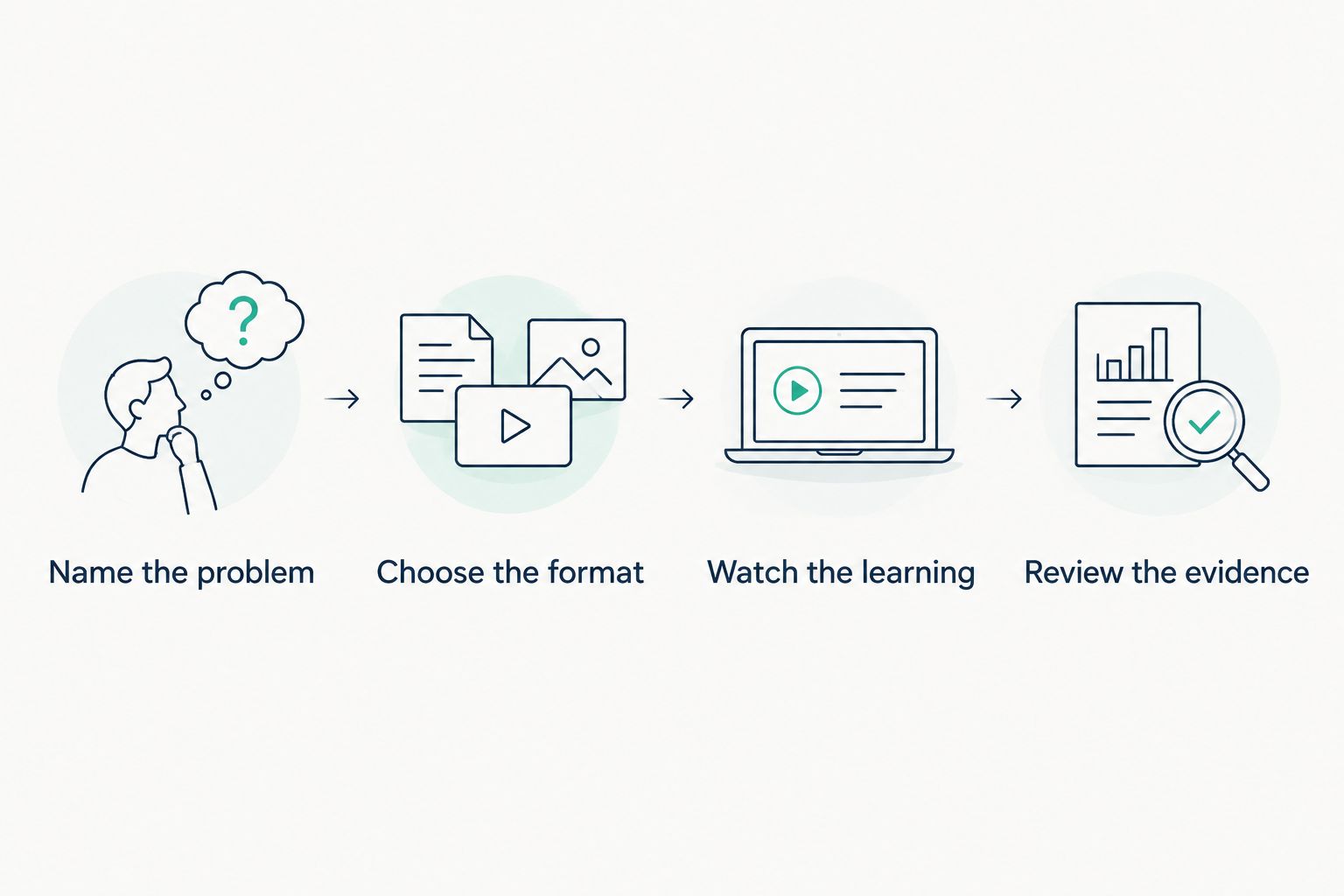
For your 2026 decision, follow a simple sequence. Define the learning problem, choose the teaching format, observe one real lesson and review the evidence afterward.
Name the problem
Write one concrete sentence: your student can calculate a fraction but cannot explain what it represents, or can discuss a story but cannot organize a paragraph. Avoid starting with a broad label such as being behind.
Choose the format
Match that problem to the shortlist. Choose adaptive explanations for a teaching mismatch, a human tutor for a personal relationship, structured study for a course path or targeted practice for skill work.
Watch the learning
Use the same real difficulty when assessing the fit. Give your student room to answer, make mistakes and ask for a different explanation without you stepping in immediately.
Review the evidence
Look at what the student attempted, what they can explain and what the report records. Keep elapsed time separate from engaged time and mastery estimates.
A manageable routine matters more than an ambitious timetable you cannot sustain. Start with a focused session, including as little as 10 minutes a day when that fits your student, without expecting a fixed result from that duration.
How the options are ranked
The ranking prioritizes teaching fit, curriculum fit, mastery evidence, parent visibility and record usefulness. Each program owns a different use case rather than competing for an identical job.
The default recommendation combines adaptive subject teaching with parent records. The alternatives move ahead when your priority changes to a human relationship, structured independent study or targeted practice.
Which homeschool tutoring program should you choose?
Tia is the best homeschool tutor fit for families seeking adaptive explanations, curriculum mastery tracking and parent records. Choose Wyzant instead when a human relationship is essential, Khan Academy for structured study or IXL for targeted practice.
For 2026, begin with one difficult subject or recurring sticking point. Expand only after you can explain what the new resource contributes to your student's learning.
FAQ
What's the best homeschool tutor for adaptive teaching and parent records?
The best fit in this shortlist is the adaptive personal tutor ranked first, which combines curriculum-aligned explanations with mastery tracking and parent records. Choose a human tutor instead when the personal relationship is your main requirement.
Is Khan Academy the same as having a homeschool tutor?
Khan Academy's core platform is not the same as an individual tutor. It provides structured courses, mastery learning, tailored practice and progress tools; Khanmigo guided tutoring is a separate distinction to assess.
Is IXL personalized, or does every student get the same practice?
IXL offers personalized diagnostic recommendations. That personalization concerns recommended skill work and should not be treated as identical to changing an explanation around a student's interests.
Should I choose a human tutor for homeschooling?
Choose a human tutor when your student needs a personal teaching relationship. Ask the individual how they will adapt explanations, follow your curriculum and communicate progress.
How long should a homeschool tutoring session last?
Use a session length that fits the student and the learning task. A focused 10-minute session is an option, not a promise of a particular result or a required duration.
Does a mastery report prove my student understands everything?
No, a mastery report is evidence to interpret, not proof of complete understanding. Combine the report with your student's explanation and independent work.
Can tutoring records replace my homeschool reporting responsibilities?
No, tutoring records support your documentation rather than replacing your responsibility to meet local requirements. Check which subjects, activities and evidence your reporting needs to include.
One last thing
After the next lesson, ask your student to explain the idea using a different example. Do not lead with whether they liked the program.
That small check gives you something specific to discuss alongside the report. Keep the resource that helps the student do the thinking, not just finish the screen.
Related guides
- What parents should see in a tutoring dashboard
- How to keep homeschool records without a last-minute scramble
- How to choose a homeschool curriculum in your first year
Tia Education Team