Tia News
Best affordable math tutoring options in 2026
Compare affordable math tutoring options. Choose Tia for personalized teaching and parent records, or find the right fit for practice, review, or human help.
By Tia Education Team · Published

You sit down to help with math, and the explanation that worked yesterday no longer lands. For affordable math tutoring in 2026, Tia is the best fit for families seeking personalized teaching with parent learning records; Khan Academy suits independent course review, IXL suits targeted practice, and Wyzant suits families seeking a human tutor.
- Choose affordable math tutoring by the student's missing support: explanations, structured review, targeted practice, or human guidance.
- Khan Academy suits independent math review through structured courses, mastery learning, and progress tools.
- IXL suits targeted math practice with personalized diagnostic recommendations.
- Wyzant suits families seeking a human tutor who can personalize instruction.
Why this matters
A student who needs another explanation does not necessarily need another worksheet. A student who understands the lesson but needs practice has a different problem. Start with that distinction before choosing a service.
For a family comparing options in 2026, affordability means more than keeping spending manageable. It also means choosing support you can use without rebuilding every lesson yourself. You stay in charge of the learning plan, but you should not have to become the tutor's interpreter.
The useful question is simple: What happens when your student gets stuck? Look for a changed explanation, a suitable practice task, or a human conversation that addresses the actual misunderstanding.
What makes the best affordable math tutoring?
Use these criteria to compare options in 2026. They separate teaching support from practice tools without treating either as automatically better.
- Explanation fit: Does the teaching change when your student does not understand, or does the student need to seek another resource?
- Curriculum fit: Can you connect the work to your student's current course and specific learning goals?
- Practice fit: Does the next question address a useful skill, rather than simply adding more work?
- Parent visibility: Can you see evidence of understanding, not just completed tasks or elapsed time?
- Family workload: Who chooses topics, reviews mistakes, and decides what happens next?
- Commitment fit: Does the arrangement match the help you need now, without adding services you do not need?
No option wins every criterion. The right choice depends on whether you need someone to explain, a course to follow, practice to assign, or a person to work alongside your student.
Affordable math tutoring options at a glance
These options serve different jobs. The order starts with personalized teaching and parent records, then moves to structured resources, practice, and human tutoring.
| Option | Best for | Standout feature | Key limitation |
|---|---|---|---|
| Tia | Personalized teaching with parent records | Curriculum-aligned explanations adapted to pace, level, and interests | Not a human tutoring relationship |
| Khan Academy | Independent course review | Structured courses, mastery learning, and progress tools | A resource platform is not the same arrangement as a dedicated personal tutor |
| IXL | Targeted skill practice | Personalized diagnostic recommendations | Practice recommendations are different from personalized explanations |
| Wyzant | Choosing a human math tutor | Individual tutors who can personalize instruction | You need to evaluate the individual tutor's approach |
The distinction between teaching and practice matters most when a student repeatedly misses similar questions. More practice can reveal a pattern, but the next step still needs to address why the student is stuck.
1. Tia: best affordable math tutoring for personalized teaching
Best for: Families wanting adaptive explanations and a clear parent record.
This personal tutor teaches math to students in grades 5 to 12. It adapts explanations, pace, level, and examples to the individual student while keeping teaching aligned with the curriculum. Parents get a live dashboard, engaged-time measurement, and self-writing homeschool records.
The distinction is not simply remembering a student's interests. The teaching can use those interests to explain the math itself. In client-supplied product demonstrations, cricket bats or horse trails cross in an X to introduce vertical angles, the opposite angles formed by intersecting lines.
Those demonstrations show an explanation approach, not proof of mastery. Understanding needs its own evidence. Question-level mastery tracking maps to the curriculum and appears in the report.
The underlying method, Bayesian Knowledge Tracing, updates an estimate of skill mastery from student answers over time. It is an estimate, not an infallible account of everything a student knows or proof of future exam results.
Tia pros:
- Explanations adapt to the student's pace, level, and interests.
- Question-level mastery is mapped to the curriculum and reported.
- Engaged-time records distinguish learning activity from simply leaving a session open.
- Parent records support homeschool reporting without replacing local requirements.
Tia cons:
- It does not provide the relationship of working with a human tutor.
- Parents still need to review the learning plan and their own reporting obligations.
Verdict: Buy for ongoing personalized teaching and parent visibility, after checking fit through the 14-day free trial, no card needed. The trial is per account, not per student.
2. Khan Academy: best math resource for independent course review
Best for: Students who can work through structured explanations and practice.
Khan Academy provides structured courses, mastery learning, tailored practice, and progress tools. It belongs on this shortlist because a student who needs organized review does not always need a dedicated tutoring arrangement.
Start with a specific topic rather than asking the student to review everything. A student revisiting fraction operations needs a clear starting point and a way to check understanding. A broad instruction to do more math leaves too much planning to the student.
Khan Academy also deserves a fair comparison. It has curriculum resources, personalization, and tracking. Do not dismiss it as only a video library or assume that personalized practice is absent.
Distinguish the main learning platform from Khanmigo, its guided tutoring offering. They are not interchangeable names. Check the current official details for the particular service you intend to use before making a decision.
Khan Academy pros:
- Structured courses give independent review a clear sequence.
- Mastery learning supports work on specific skills.
- Tailored practice and progress tools help organize follow-up work.
Khan Academy cons:
- Independent review still requires the student to engage with the material.
- Choosing the main platform does not mean you have chosen Khanmigo guided tutoring.
Verdict: Buy into this approach for independent review; skip it as the sole plan if your student needs ongoing help interpreting explanations.
3. IXL: best math practice option for targeted skill work
Best for: Students who need focused practice after an explanation.
IXL offers personalized diagnostic recommendations. That makes it relevant when your main question is which skills your student should practice next, rather than who should explain the lesson.
Personalized practice and personalized teaching solve different problems. A recommendation can direct a student toward an appropriate skill. An adapted explanation changes how that skill is taught, perhaps by changing the example, language, or pace.
Use that distinction when evaluating IXL. Ask your student to explain a recent mistake before assigning more questions. If the student can describe the method but needs fluency, targeted practice is a sensible match. If the student cannot explain the method, arrange teaching support alongside the practice.
You can explore the distinction further in this guide to adaptive tutoring versus personalized practice.
IXL pros:
- Personalized diagnostic recommendations help identify practice priorities.
- Skill-focused work suits a clearly defined practice goal.
- Practice can complement instruction from your chosen curriculum or tutor.
IXL cons:
- A personalized recommendation is not the same as an individually adapted explanation.
- Choosing practice alone leaves the question of who teaches difficult concepts unresolved.
Verdict: Buy for targeted practice when instruction is already covered; hold if your student's main need is another way to understand the lesson.
4. Wyzant: best math tutoring option for a human relationship
Best for: Families who specifically want an individual human tutor.
Wyzant is an option for finding a human tutor who can personalize instruction. The deciding factor is the individual tutor's fit with your student, not simply the platform name.
Bring a recent piece of math work to the conversation. Ask how the tutor would respond to the mistake and how they would check understanding afterward. You are looking for an explanation of their teaching approach, not a promise that every difficulty will disappear.
A human tutor can personalize teaching too. There is no sound reason to frame adaptation as something only software can do. Instead, compare the actual arrangement: the teaching relationship you want, the work you expect between sessions, and the information you need as a parent.
Wyzant pros:
- You can seek a human tutoring relationship.
- Individual tutors can adapt explanations to the student.
- You can discuss a particular course, goal, or recurring difficulty directly.
Wyzant cons:
- You need to assess the individual tutor rather than assume a uniform approach.
- You must clarify expectations for progress updates and work between meetings.
Verdict: Buy when a human relationship is your priority, after discussing the student's work and agreeing on a clear learning goal.
How to choose without buying overlapping support
Start with the gap, not the longest feature list. In 2026, the useful comparison is still what your student needs during a difficult lesson.
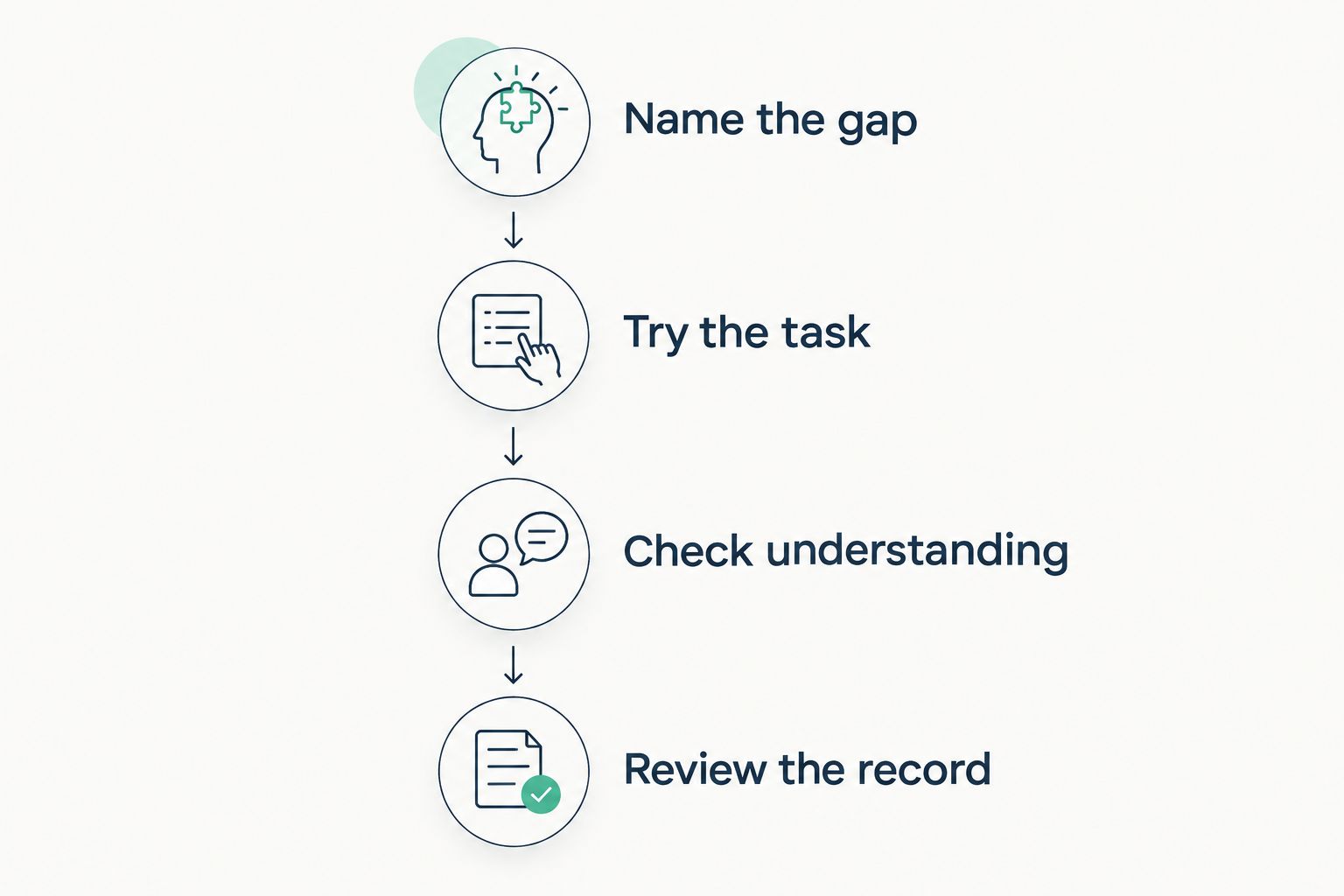
- Name the gap: Ask whether the problem is understanding, practice, course organization, or needing a human conversation.
- Try the task: Use a recent problem that caused difficulty, rather than an unrelated demonstration.
- Check understanding: Ask the student to explain a similar problem without copying the example.
- Review the record: Look at what the service tells you about the work and the next step.
Keep the first routine small enough to repeat. A 10-minute session can be a useful starting point when it fits the student, but the duration does not promise a fixed result. Give the session a clear purpose, such as explaining why a fraction operation works.
Do not add another service merely because the first session felt difficult. First check whether the explanation changed and whether the next task addressed the misunderstanding. Add support only when you can name the job it will do.
How the options are ranked
This 2026 shortlist ranks fit for distinct family needs, not measured learning outcomes. The criteria are explanation fit, curriculum connection, practice fit, parent visibility, family workload, and commitment fit.
The first recommendation combines adapted teaching with parent records. The remaining options address structured review, targeted practice, and human tutoring. No claim here establishes that one service produces better exam results than another.
A strong choice makes the next learning step clear. A weak fit leaves you buying another resource to solve the same unresolved problem.
Which affordable math tutoring option should you choose?
Choose Tia for affordable math tutoring when you want personalized teaching alongside curriculum-mapped mastery and parent records. That is the default recommendation for a family seeking a personal tutor rather than primarily a resource library or practice program.
Choose Khan Academy for independent course review. Choose IXL when instruction is covered and targeted practice is the missing piece. Choose Wyzant when working with a human tutor is central to your plan.
For your 2026 decision, begin with one clear goal and review actual student work. You do not need every form of support at once. You need the right response to the next point of confusion.
FAQ
What's the best affordable math tutoring option for homeschool families?
Tia is the best fit on this shortlist for homeschool families seeking personalized teaching with parent learning records. It combines curriculum-aligned explanations, question-level mastery reporting, engaged-time measurement, and self-writing records. Parents remain responsible for checking local requirements.
Is Khan Academy the same as a personal math tutor?
Khan Academy's main platform provides structured courses, mastery learning, tailored practice, and progress tools, rather than the same arrangement as a dedicated personal tutor. Khanmigo is a separate guided tutoring offering. Check the current official details for the service you intend to use.
Is IXL better for practice or for choosing a tutor?
IXL fits the targeted-practice role in this comparison because it offers personalized diagnostic recommendations. Choosing what to practice is different from choosing who will explain a difficult concept. Start by identifying which kind of support your student needs.
Should I choose a human math tutor instead?
Choose a human math tutor when the personal relationship is central to the support you want. Ask the individual tutor how they would teach a recent difficulty and communicate progress. Wyzant is one option for finding that relationship.
Can a short daily math session be useful?
A short math session can be a practical way to work on a clear learning goal. As little as 10 minutes a day fits some students, but it does not guarantee a particular result. Review what the student understands rather than treating the timer as proof of progress.
What should parents check before choosing math tutoring in 2026?
Parents should check explanation fit, curriculum connection, practice fit, learning records, and family workload. Use a recent problem to see how the option addresses confusion. Choose support for the actual gap rather than the longest feature list.
Does a mastery report prove that exam scores will improve?
A mastery report does not by itself prove future exam-score gains. It provides information about skills based on the student's work. Use it alongside independent explanations, course assignments, and other relevant assessments.
One last thing
Before the next session, ask your student: Which step stopped making sense? Keep the answer with the work sample. It gives you a more useful starting point than a general request to improve math.
Afterward, ask the student to explain that same step in their own words. A completed worksheet tells you the work is finished. An independent explanation gives you something different to examine: the student's reasoning.
Related guides
- How adaptive tutoring changes a lesson
- What parents should see in a tutoring dashboard
- How to keep homeschool records without a last-minute scramble
Tia Education Team