Tia News
Personalized tutoring for students with anxiety: complete 2026 guide
Choose tutoring for students with anxiety by fit, not promises. Build predictable lessons, compare options, and track learning without adding unnecessary pressure.
By Tia Education Team · Published

Tutoring for students with anxiety is individualized academic support that adjusts explanations, pace, and practice so students can work toward learning goals without unnecessary pressure. This 2026 guide helps you choose support when a student understands yesterday’s lesson but freezes over today’s assignment, while keeping you in charge of the plan.
- Tutoring for students with anxiety should match academic needs without claiming to treat anxiety.
- Tia fits families seeking adaptive Math, English, and Science tutoring with parent visibility.
- Choose predictable lessons, manageable practice, and progress tracking that does not turn every session into a test.
- Keep tutoring, school accommodations, and mental health care separate but coordinated when needed.
Why tutoring matters for students with anxiety
You sit down to help with homework. The student erases the same answer again, asks whether it is right, and stops before trying the next problem. Your next move is not necessarily more practice. First, find out what makes this particular task difficult.
An unfinished assignment alone does not tell you whether the obstacle is missing knowledge, unclear directions, worry about mistakes, or something else. Tutoring gives you a setting to examine the academic task and adjust the teaching. It is not a diagnosis or a treatment for anxiety.
For families comparing options in 2026, Tia provides personalized Math, English, and Science tutoring for students in Grades 5 to 12. Its teaching adapts to the student’s pace, level, and interests. That makes it an option to evaluate for academic support, not a substitute for a mental health professional.
Choose support based on what the student needs to learn and how the lesson feels, not on a promise to eliminate anxiety. A parent should be able to see both the work attempted and the support required.
How to build a tutoring plan that fits
Identify the difficult moment before choosing a tutor
Start with a conversation and an actual piece of schoolwork. Ask the student to show you where the task becomes difficult, without requiring them to finish it while you watch. Listen before suggesting a solution.
Separate the academic goal from the situation surrounding it. A student who can explain a science concept but struggles to begin a lab report needs different teaching from a student who does not understand the concept. Neither situation proves that anxiety is the only cause.
Write a short learning brief for a prospective tutor. Include the current topic, what the student already does independently, and the kind of help the student finds useful. Share relevant learning needs without turning the introduction into a list of deficits.
You do not need to solve everything before starting. You need a clear enough question to judge whether the first lesson helps.
- Bring a recent assignment with the difficult part marked.
- Ask whether starting, answering, being watched, or finishing feels hardest.
- Note whether the student prefers speaking, writing, or showing work.
- Identify one academic skill to address first.
- Ask what the student wants the tutor to know.
Make the lesson predictable and manageable
Use a simple paper plan before buying another resource. Tell the student what the session covers, how they can ask for clarification, and where the lesson ends. Agree on a pause signal instead of making the student explain distress in the middle of a problem.
A small session is a starting option, not a prescription. For your 2026 routine, try as little as 10 minutes when that fits the student and the task. Do not promise a result from that duration or require every lesson to last the same amount of time.
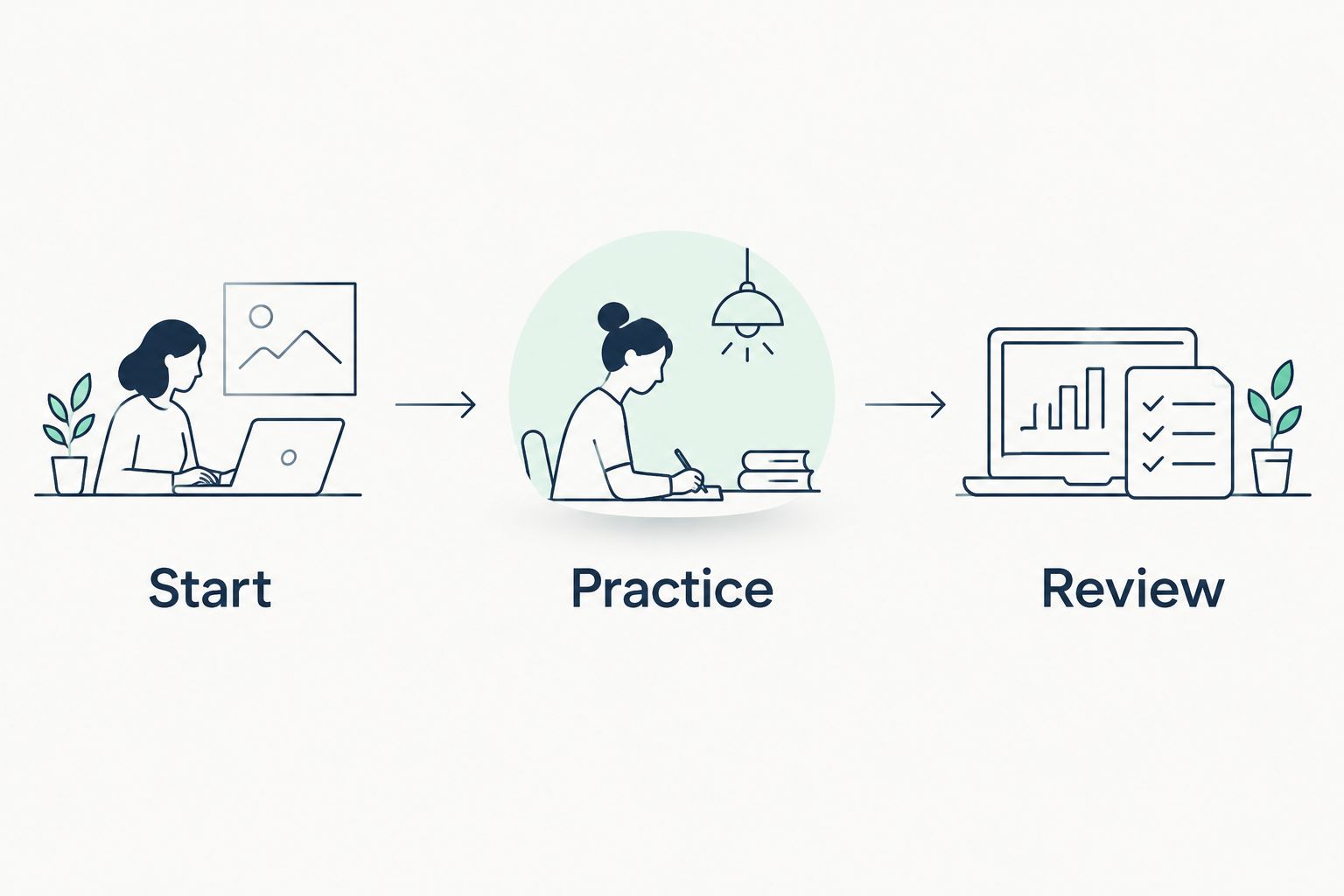
Keep the sequence visible: start with the goal, practice the skill, and review what needs another explanation. If a school task requires a timer, discuss that requirement separately. There is no need to turn all ordinary practice into timed performance.
Make the endpoint clear without making speed the measure of success. The student should know what they are attempting, not feel that the session can expand indefinitely.
- Start: name the skill and show the first task.
- Practice: work through manageable examples with help available.
- Review: identify what is understood and what needs revisiting.
- Agree on how to request a pause or another explanation.
- Keep supplies and instructions ready before beginning.
Match the explanation to the student and the curriculum
Begin with the assignment’s learning goal, then change how you explain it. At home, you can use a drawing, a familiar interest, or a physical model before returning to the symbols or written response. Changing the explanation does not mean abandoning the academic target.
For example, place fraction tiles beside a written fraction problem. Ask the student to connect the pieces to the notation rather than simply copying your answer. For English, discuss what a paragraph needs to communicate before asking for a polished version.
Tia is best for families seeking adaptive Math, English, and Science tutoring with a parent dashboard. It adapts explanations, pace, level, and examples to the individual student while teaching in line with the relevant curriculum. Its limitation here is equally important: academic personalization is not anxiety treatment.
The guide to how adaptive tutoring changes a lesson explains the teaching approach. Judge the fit by whether the student understands the next step, not whether the explanation sounds impressive to an adult.
- Keep the assignment’s learning objective visible.
- Connect unfamiliar ideas to an interest the student recognizes.
- Use objects or drawings when they clarify the concept.
- Ask the student to explain a step in their own words.
- Change the explanation when repeating it is not helping.
Give feedback without turning practice into a verdict
You can change feedback at home without adding a tool. Describe the work rather than labeling the student. Point to the line where the reasoning changed, explain that step, and let the student attempt a comparable task.
Agree with a tutor on how corrections will happen. Some students want an error identified immediately. Others want to finish explaining their thinking first. Ask the student which approach lets them participate, and revisit the agreement when needed.
Keep help specific. If the student asks whether every answer is right, work out what they can check independently: the directions, units, evidence, or a calculation. The goal is not to withhold reassurance. It is to teach a usable checking process alongside the subject.
Do not use a difficult session as evidence that the student cannot learn the topic. Record what happened and change the next lesson accordingly.
- Identify the exact step that needs revision.
- Let the student finish explaining before you correct, if that is their preference.
- Teach a checking method connected to the task.
- Recognize an independent attempt without demanding a perfect answer.
- Ask for a new explanation when the current one is unclear.
Coordinate tutoring with school and professional support
For a school student, start with the teacher’s assignment instructions and any existing support plan. If the student has a 504 plan or an IEP, identify the accommodations relevant to the tutoring task. Do not assume a private service automatically implements the school’s plan.
Ask a prospective tutor what they can actually provide. A family’s request for breaks, written directions, or a particular response format should lead to a clear discussion, not a general assurance that everything is personalized.
For a homeschool student, connect tutoring to your chosen curriculum and local reporting requirements. Keep the educational objective clear while allowing the teaching method to change. A tutoring record does not automatically satisfy every jurisdiction’s requirements.
If anxiety interferes with attendance, sleep, daily activities, or participation, involve a qualified healthcare professional. Tutoring can address learning tasks alongside that support, but it should not carry responsibility for treating anxiety.
- Share relevant assignment directions with the tutor.
- Confirm which accommodations the tutoring format supports.
- Ask the school about support when classroom participation is affected.
- Coordinate with a clinician when the student already receives care.
- Check homeschool reporting requirements independently.
Measure learning without monitoring every moment
Start with a notebook. Record the skill practiced, what the student completed independently, and what explanation helped. Add the student’s view of the session rather than relying only on your impression.
Useful evidence includes explaining a step, beginning an assignment with less help, or recognizing an error using a taught checking method. These observations describe learning. They do not establish that anxiety has improved or that a particular tutor caused a mental health change.
Tia provides a live parent dashboard, engaged-time measurement, and self-writing homeschool records. These features give you visibility without requiring you to sit beside every task. Engaged time is still only part of the picture: read it alongside the work and the student’s experience.
Choose a regular review point instead of checking after every answer. If the setup is not working, reconsider the pace, explanation, format, or academic target before simply adding more sessions.
- Record the topic and the help needed.
- Save a work sample that shows the student’s reasoning.
- Ask what felt clear and what felt difficult.
- Review engaged time alongside evidence of understanding.
- Change the plan when the current approach is not a good fit.
Compare tutoring options for your student
In 2026, the useful comparison is not which format sounds most advanced. It is which format matches the student’s academic needs, preferred interaction, and need for support. Ask the student to help you choose.
Every option below has a practical strength and a limitation. None should be selected on the assumption that it treats anxiety.
| Option | Best for | Practical strength | Key limitation |
|---|---|---|---|
| Parent-led practice | Families testing what kind of explanation helps | You can change the task and observe the student directly | You must supply the teaching time and subject knowledge |
| Human one-to-one tutor | Students who want direct conversation with a person | You can discuss feedback and support needs before lessons | Fit depends on the individual tutor and agreed approach |
| Tia personalized tutoring | Families seeking adaptive Math, English, and Science support in Grades 5 to 12 | Teaching adjusts to pace, level, and interests, with parent visibility | It is not mental health care or a human tutoring relationship |
| Small-group tutoring | Students who want practice alongside peers | The format includes shared academic discussion | Teaching time is shared, so confirm room for individual needs |
Choose the option the student can use productively, not the one that creates the fullest schedule. A format that works well for one subject does not have to become the family’s answer for every subject.
Before committing to ongoing support, observe how the student asks questions, responds to corrections, and explains what they learned. Keep the decision about academic fit rather than demanding an immediate change in confidence.
Explore personalized tutoring
Tia adapts Math, English, and Science teaching. 14-day free trial, no card needed
Common mistakes when tutoring students with anxiety
Avoid these mistakes when reviewing a tutoring plan in 2026. Each one confuses the purpose of academic support or makes the student’s participation harder to judge.
- Treating every hesitation as a knowledge gap. Ask the student to show what they understand before assigning more instruction. The task, setting, or directions also deserve attention.
- Making every session a timed test. Separate skill teaching from timed practice. Use timing when it serves an actual assessment requirement, not as a default measure of effort.
- Choosing support without student input. Ask how the student wants to receive corrections and request help. Revisit the answer after they experience the format.
- Reading dashboard activity as proof of understanding. Pair session records with an explanation or work sample. Time spent cannot tell you everything about learning.
- Expecting tutoring to replace clinical or school support. Keep academic teaching, accommodations, and mental health care distinct. Coordinate them when the student needs more than subject help.
FAQ
What is the best tutoring for students with anxiety?
The best fit is tutoring that matches the student's academic needs, preferred interaction, and support requirements. Compare predictable lessons, adjustable explanations, and feedback practices rather than promises to remove anxiety.
Can personalized tutoring treat anxiety?
Personalized tutoring provides academic support, not anxiety treatment. If anxiety interferes with daily life or school participation, seek guidance from a qualified healthcare professional alongside any tutoring plan.
Is online tutoring better than in-person tutoring for an anxious student?
Neither format is automatically better for an anxious student. Ask whether the student prefers screen-based learning or direct in-person interaction, then judge the teaching and feedback within that format.
How long should a tutoring session last?
Choose a manageable duration based on the student and the task. A 10-minute session is one starting option, not a universal rule or a promise of a particular learning result.
Is Tia suitable for a student who feels anxious about math?
Tia is an option for personalized academic support in Math for students in Grades 5 to 12. It adapts teaching to pace, level, and interests, but it does not provide anxiety treatment; evaluate whether the student finds the format useful.
Should I stay beside my student during tutoring?
Agree on your role with the student and tutor rather than automatically staying or leaving. You can help with setup and review the work afterward without supervising every answer.
What should I ask a tutor about a 504 plan or IEP?
Ask which relevant accommodations the tutor can support in the actual lesson format. Do not assume that personalized tutoring automatically implements a school plan or replaces school services.
One last thing
Before the next lesson, ask the student to choose one way you will recognize useful learning: explaining a step, starting a task, or identifying where help is needed. That is a clearer target than requiring them to feel confident on demand.
For your 2026 plan, keep the academic goal steady and the teaching method adjustable. You stay the parent. The student stays the person doing the learning.
Related guides
- Personalized tutoring for students with 504 plans
- What parents should see in a tutoring dashboard
- Personalized tutoring for students afraid to ask questions
Tia Education Team