Tia News
Personalized Tutor for Shy Students: 2026 Buying Guide
A personalized tutor for shy students removes the audience, not just the confusion. See what to look for, what to avoid, and Tia's fit for 2026.
By Tia Education Team · Published · Last updated
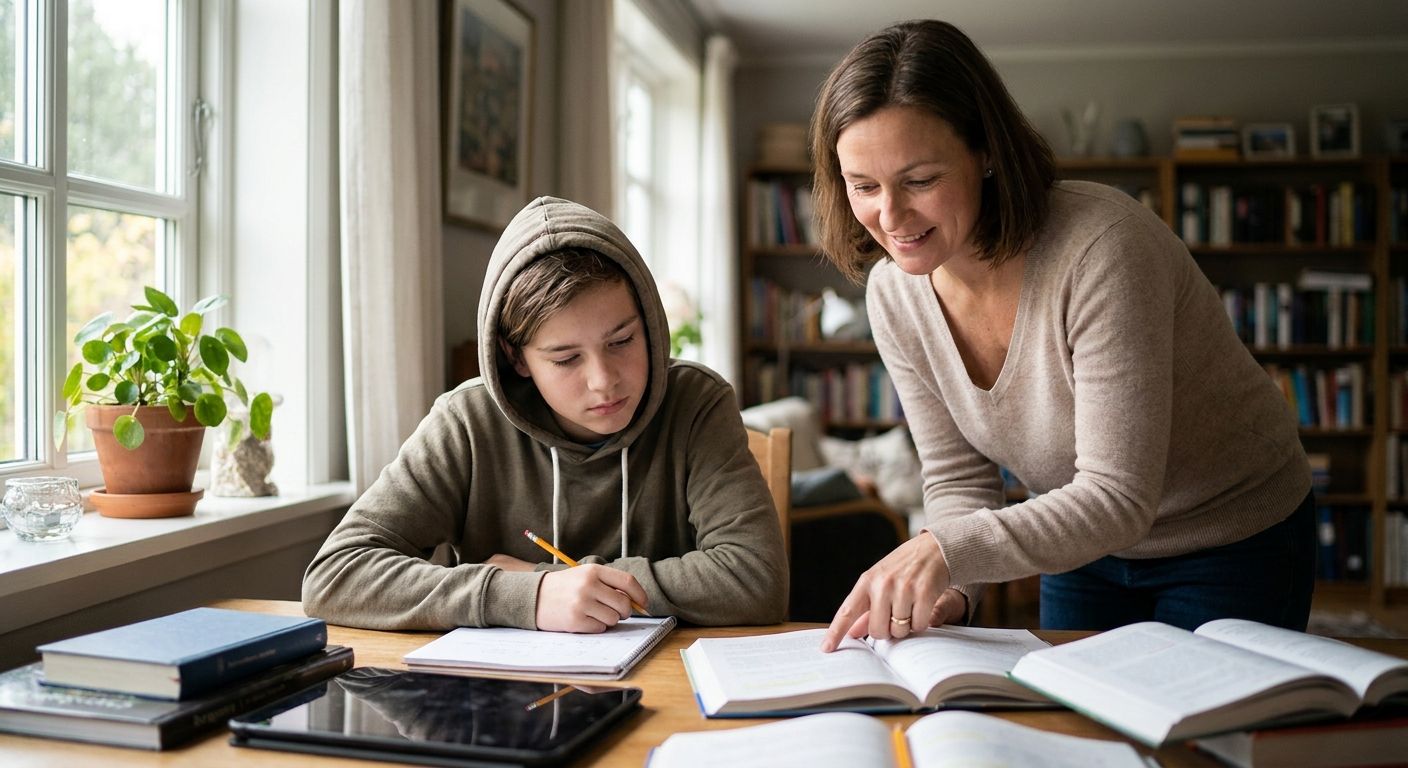
A shy student can sit through forty minutes of class and never raise a hand, then quietly fall behind on the one thing they never asked about. A personalized tutor for shy students has to remove the fear of asking a question, not just answer faster once they finally do.
- A personalized tutor for shy students works when the format removes an audience, not just the classroom clock.
- Tia adapts pace and content to a student's interests one-on-one, which lowers the social cost of getting something wrong.
- Parents get a live dashboard and honest engaged-time tracking, so progress shows up even when the student stays quiet.
- Group pods, leaderboard apps and camera-heavy video tutors solve speed, not silence: Skip for a shy learner.
Why this matters
A student who won't ask a question isn't confused less often than a talkative student. They're just absorbing the confusion silently, then hitting a wall on the test. Bloom's two-sigma research found that students who got one-to-one tuition scored, on average, at the 98th percentile compared to students in a standard classroom, and the Education Endowment Foundation puts the added progress from one-to-one tuition at roughly five months over a school year.
John Hattie's research adds a harder edge to this: teacher expectations are among the strongest influences on student achievement. A shy student who never speaks up can get read as disengaged rather than stuck, and that misread compounds over a semester. A Washington Post survey found 51% of parents doubt their own ability to teach upper-grade material, which means most families can't just step in and fill the gap themselves. Tia is built around removing the audience, not raising the volume, which is the actual mechanism a shy student needs.
Who this is for
This guide is for parents of students in grades 5 to 12 who understand more than their grades show, freeze up when called on, or say "I get it" to end a conversation they don't actually understand. It's also for parents who've watched a student do fine on homework alone but shut down the second a teacher is watching them work. If your student's report card says "needs to participate more" every term, this is the profile.
What to look for in a personalized tutor for shy students
One-on-one, not one-of-many
A shy student behaves differently in a group of three than they do alone. Group settings recreate the exact social pressure that made them stop asking questions in class in the first place, so the format has to be genuinely one-on-one.
Pace that adapts without a countdown clock
A tutor that moves at a fixed pace punishes a student for pausing to think, which is precisely when a shy student needs the extra beat. Tia adapts to each student's pace and level, so a slow, careful answer doesn't cost anything.
Content tied to the student's actual interests
A shy student is more likely to engage with material that connects to something they already care about than with generic worksheets. Tia teaches Math, English and Science through each student's interests, which turns a subject they've gone quiet on into something they'll actually work through.
Honest engaged-time measurement, not a login timer
Parents of quiet students often can't tell if "studying" means working or just sitting near a screen. An honest engaged-time measurement, which is part of Tia's parent dashboard, shows actual time on task instead of session length.
Records a shy student won't have to explain out loud
A student who hates narrating their own work in class shouldn't have to narrate it to a parent either. Tia's self-writing records give parents documentation for homeschool reporting and compliance without requiring the student to explain themselves verbally.
A low-stakes way to try it
A nervous student doesn't need one more high-pressure trial. Tia's 14-day free trial requires no card, so a family can test the format before deciding anything.
Where this actually helps a shy student
The quiet reader. Shy students often mask reading struggles by staying silent during round-robin reading rather than admit they lost the sentence. Tia's support for struggling readers works through material at the student's level without anyone in the room noticing the stumble. Buy if reading avoidance is the main symptom.
The student who fell behind and stopped asking. Once a student misses a concept and doesn't ask about it, the next three weeks of class build on a gap nobody flagged. Tia's math tutoring for students who fell behind in class rebuilds the missing piece one-on-one before moving forward. Buy if grades dropped after one specific unit.
The homeschool student who's shy even at home. Some students go quiet with a parent-teacher too, especially in the first year of homeschooling. Tia's personalized tutoring for homeschool students keeps the parent as the record-keeper while the actual instruction comes from Tia. Buy for first-year homeschool families navigating this dynamic.
The gifted student who won't ask for help out of perfectionism. A high-achieving student often stays silent because asking a question feels like admitting they're not as smart as their reputation. Tia's personalized tutoring for gifted students adjusts difficulty upward so questions come from genuine challenge, not confusion they're hiding. Consider if the student's grades look fine but confidence doesn't match performance.
What to avoid
- Group tutoring pods. They look cost-effective, but three students in one session recreate the classroom dynamic a shy student is already avoiding.
- Leaderboard-driven apps. Gamified competition motivates confident students and shuts down cautious ones, who'd rather not answer than risk a visible wrong guess.
- Camera-on-only video tutors. Requiring a live face on screen adds a performance layer that has nothing to do with the actual subject material.
Try Tia with your student
14-day free trial, no card needed. USD $34.99 per month for the full subject bundle.
Verdict comparison
| Approach | Pressure level | Best for | Verdict |
|---|---|---|---|
| One-on-one adaptive tutor (Tia) | Low | Shy students who won't speak up in groups | Buy |
| Homeschool-paired tutoring | Low | First-year homeschool families with a quiet student | Buy |
| Small group tutoring pods | Medium-high | Students who are already comfortable speaking in class | Consider |
| Leaderboard or gamified apps | High | Competitive, confident learners | Skip for shy students |
| Camera-required video sessions | High | Students unfazed by being on screen | Skip for shy students |
FAQ
What is a personalized tutor for shy students?
It's a one-on-one tutoring format that removes group pressure and adapts pace and content to the individual student. Tia does this by teaching Math, English and Science through each student's interests, one-on-one, with no classroom audience.
Is one-on-one tutoring better than group tutoring for a shy student?
Yes, for a student who avoids speaking up around peers. The Education Endowment Foundation found one-to-one tuition adds roughly five months of progress over a school year, a gain group formats don't reliably match for anxious learners.
How much does Tia cost in 2026?
In the US, Tia costs USD $14.99 per subject or USD $34.99 for the monthly full-subject bundle, with an annual bundle at USD $384.89. Pricing is country-specific and shown in local currency.
Does Tia require students to be on camera?
Tia's approach centers on adaptive, one-on-one instruction rather than requiring a live face-on-camera session. Check the current product experience on tia.coach for exact session details.
Can a shy student try Tia before committing?
Yes. Tia offers a 14-day free trial with no card needed, which lets a family test the format before any payment.
Will a personalized tutor help a student who won't ask questions in class?
It removes the reason the student stays quiet in the first place, since there's no audience to perform for. Bloom's research on one-to-one tutoring found average tutored students reached the 98th percentile compared to classroom-only peers.
Is Tia suitable for homeschool records?
Yes. Tia generates self-writing records for homeschool reporting and compliance, alongside a parent dashboard with honest engaged-time measurement.
What grades does Tia cover?
Tia is built for students in grades 5 through 12, covering Math, English and Science aligned to each country's curriculum.
One last thing
The Washington Post's finding that 51% of parents doubt their own ability to teach upper-grade material usually gets read as a homeschooling stat. It applies just as much to a parent trying to walk a shy teenager through algebra at the kitchen table after dinner in 2026. The student isn't the only one who needs a format with lower stakes.