Tia News
Personalised tutoring for students who travel frequently for sports
Personalised tutoring for travelling student athletes keeps maths, English and science on pace between competitions. See how Tia's adaptive plan works in 2026.
By Tia Education Team · Published
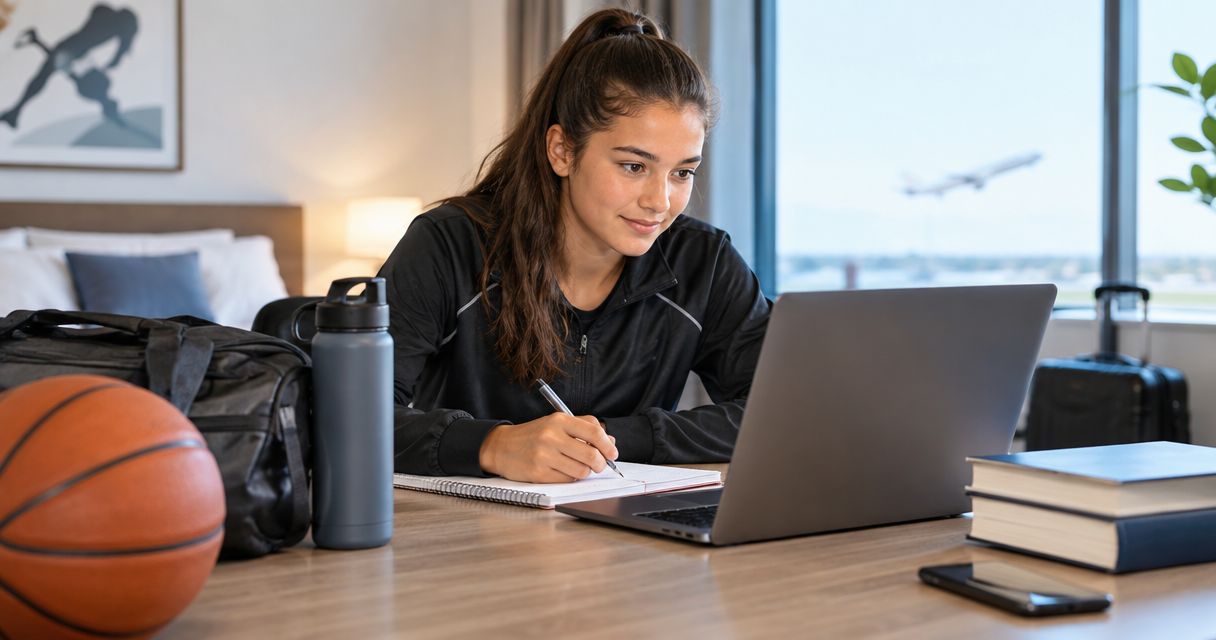
Tutoring for travelling student athletes is personalised, one-to-one instruction built around competition and training schedules, aimed at keeping a student's maths, English and science on pace when school days are lost to away meets, tournaments and training camps. A tutor tied to one fixed weekly slot cannot follow a squad through a season; the tutoring itself has to travel with the student, not wait for them to get home.
- Tutoring for travelling student athletes works best when sessions are on-demand, not fixed to one weekly slot.
- Tia adapts each lesson to the student's pace and logs honest engaged time, useful proof for missed school days.
- Education Endowment Foundation research links one-to-one tuition to roughly five months' extra progress.
- Parents of travelling athletes need a dated record for schools and coaches, not just a completed-assignment tick.
- A 14-day free trial, no card needed, lets a family test the routine before the 2026 season starts.
Why personalised tutoring matters for travelling student athletes
A student who misses two or three school days a fortnight for regional meets is not missing the same amount in every subject. Maths compounds fastest, since one skipped lesson on a new method breaks the next three. English and science slip more slowly but catch up on parents unevenly, which is where a personal tutor that adjusts to the actual gap, rather than a fixed syllabus week, earns its place.
The research backing one-to-one tuition was not written for athletes, but it applies directly. The Education Endowment Foundation has found one-to-one tuition adds roughly five months' extra progress compared with no intervention. Bloom's two-sigma finding put the average tutored student at the 98th percentile against a conventionally taught class. Neither figure is about travel, but both describe exactly the gap a missed school week creates.
A Washington Post survey found 51% of parents doubt their own ability to teach upper-grade material. That matters most on a road trip, when a parent becomes the only adult in the room who can check a maths worksheet at 9pm in a hotel lobby. Personalised tutoring for travelling student athletes exists to take that job off the parent, not hand it to them.
Build a routine that survives a travel season
A travel-heavy season breaks a normal homework routine within the first fortnight if nobody plans around it in advance. The steps below go from free and manual to where an adaptive tutor earns its place.
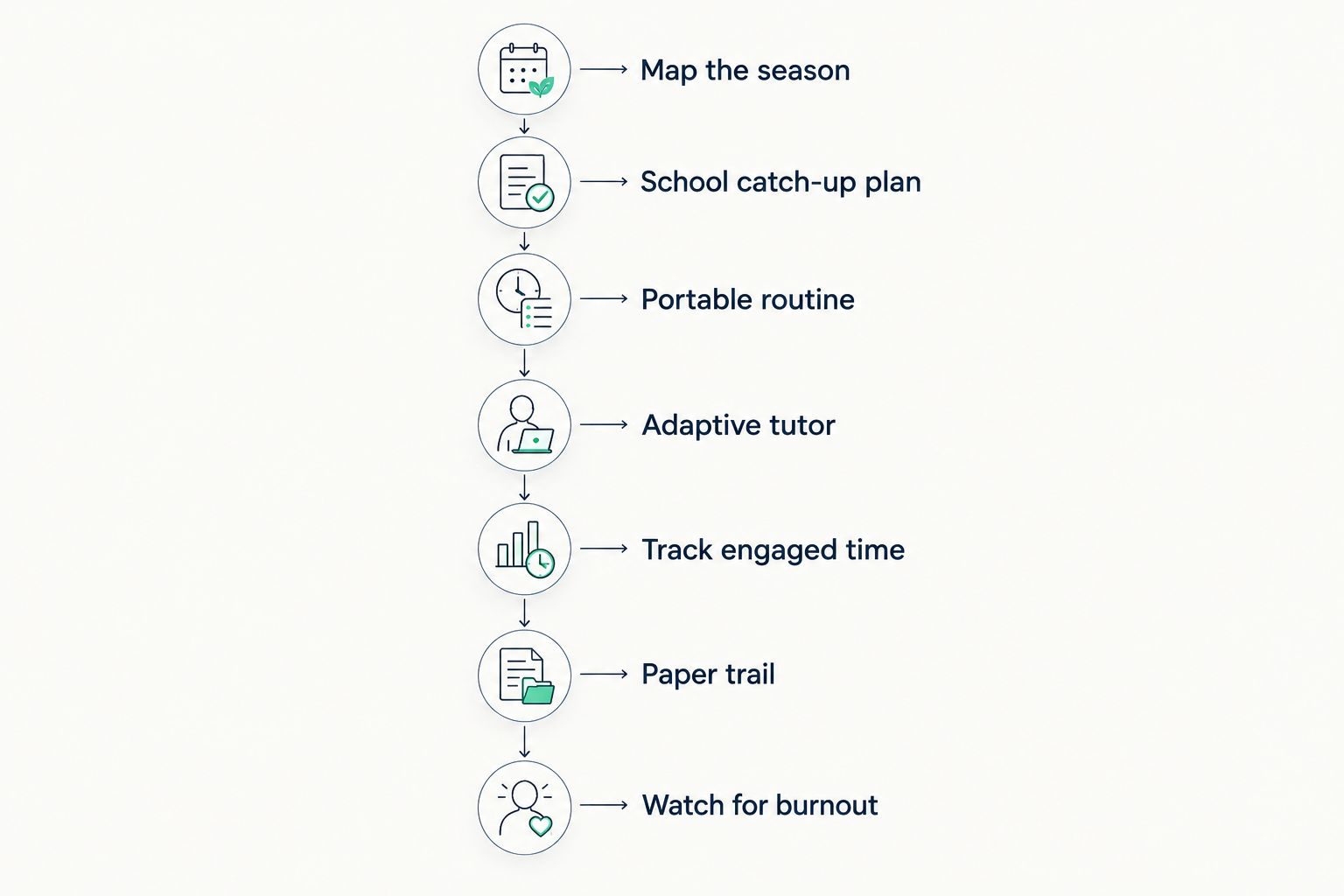
1. Map the season before it starts
- Lay the competition calendar next to the school term calendar
- Flag every week with two or more missed school days
- Note exam and coursework deadlines that fall during away weeks
- Share the combined calendar with each subject teacher
- Build in a buffer week after any long road trip, not just before it
2. Ask the school for a written catch-up plan
- Request reading lists and assignment sheets before departure
- Ask which topics will be taught while the student is away
- Confirm how and when makeup tests get scheduled
- Ask whether the school will accept a tutor's written progress log
- Get one named contact for questions from the road
3. Build a study routine that survives a hotel room
- Pick one fixed length of session, not a fixed clock time, so it moves with the schedule
- Keep a single folder, paper or digital, with every subject's current unit
- Pack a charger and headphones as part of the kit bag, not an afterthought
- Use bus and flight time for reading, since patchy signal breaks video lessons
- Protect one screen-free hour before competition day
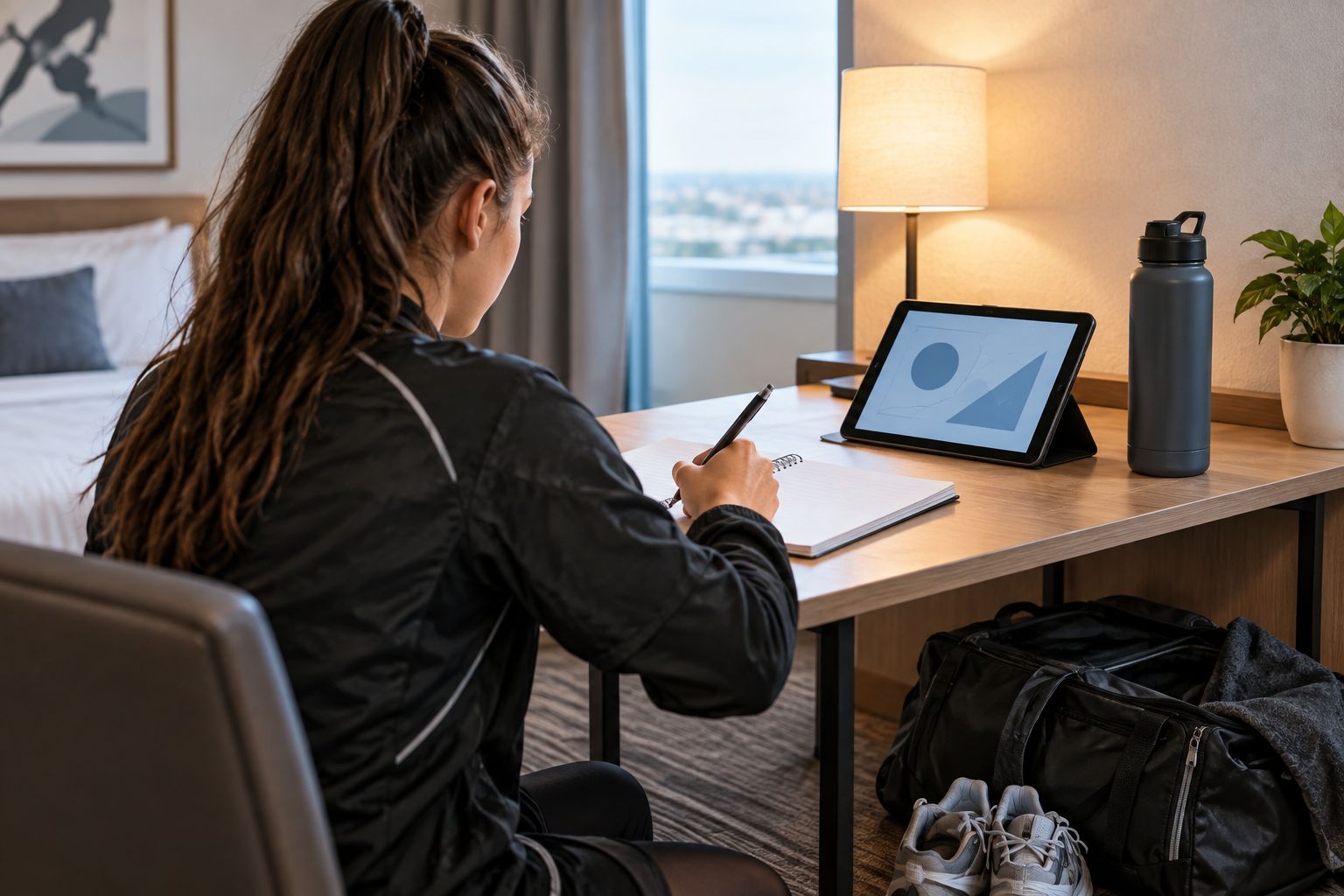
4. Choose tutoring that works on the road, not against it
A weekly private tutor or a school study hall breaks the moment a student misses the slot, and neither one makes up the missed hour automatically. Tia adjusts to whenever the student logs in and picks up from whatever level they are at that day, which matters more on a travel weekend than any other week of term.
- Sessions run whenever the student has a connection, not on a fixed clock time
- Lessons pick up from the last topic covered, not the syllabus week
- Pace adjusts to the student, not the other way round
- Maths, English and science can be added or dropped for a single travel month
- Parents see progress without chasing a coach's assistant for updates
5. Track engaged time, not completed assignments
A finished worksheet proves nothing about whether a student was actually learning during it. A tutoring dashboard that measures honest engaged time, not just logins, is the only record worth keeping for a travel season.
- Check whether reported time matches the work actually returned
- Check whether the log covers the exact days the student was travelling
- Check whether the report names which topics were covered, not just a total
- Check whether the summary is something a school office will actually accept
- Check whether the platform separates engaged time from idle screen time
6. Keep a paper trail for school and homeschool reporting
- A dated log of every session and topic covered
- Self-written samples for English, not typed-and-forgotten drafts
- A running record of unit test results
- A printable summary a coach or school registrar will accept
- A copy kept outside the platform in case of a connectivity gap on the road
7. Watch for burnout during heavy travel blocks
- Falling engaged time on the dashboard during tournament weeks
- Schoolwork only happening after midnight, after competition
- Grades slipping fastest in the subject with the least in-person contact
- A student asking to skip a session two weeks running
- No rest day scheduled between travel and a test date
Comparing the options for travelling student athletes
| Option | Best for | Key limitation | Verdict |
|---|---|---|---|
| School study hall or homework club | Students who travel rarely and stay in one time zone | Fixed hours clash with practice and travel days | Skip for heavy travel |
| Private in-person tutor | Local support between trips | Cannot travel with the family; missed sessions rarely get made up | Hold as backup only |
| Generic online tutoring app | Occasional homework help between meets | Same lesson pace regardless of what the student actually missed | Wait for something built around pace |
| Tia, personalised adaptive tutor | Students missing several school days a month for competition | Still needs a device and a connection, like any online tutor | Buy for a regular travel season |
“If tutoring depends on a fixed weekly slot, it breaks the first away weekend.”
Common mistakes with travelling student athletes
- Booking a tutor around the practice calendar, not the competition calendar. Practice is predictable; away meets are what actually cost school days.
- Treating a missed school week as one problem, when three subjects fall behind at three different rates. Maths compounds fastest; English and science slip slower but unevenly.
- Relying on a coach's team chat for schoolwork updates. It was never built to track academic progress and nobody checks it for that.
- Waiting until grades slip before adding support. The plan needs to exist before the 2026 season starts, not after the first bad report card.
- Assuming one hotel-room session catches up five missed school days. The gap is usually more than one topic by the time anyone notices.
FAQ
What is the best tutoring for travelling student athletes in 2026?
A personalised, on-demand tutor that adapts to whatever the student missed works best for travelling student athletes in 2026. Tia is built for this: sessions run whenever the student has a connection and adjust to their pace, not a fixed weekly slot.
How do I know if my child is falling behind while travelling for sport?
Check engaged time on a tutoring dashboard, not just completed assignments. A dashboard that separates real engaged time from idle screen time will show a drop before a report card does.
Is online tutoring better than a school study hall for athletes who travel?
For students missing several school days a month, yes, because a study hall runs on a fixed timetable that a travel schedule cannot match. A study hall still works for students who travel rarely.
Can a personalised tutor help with homeschool reporting during a travel season?
Yes. Tia generates self-written records and a dated session log that can support homeschool reporting or a school's catch-up request during a heavy travel block.
What should a parent ask a school before a travel-heavy season?
Ask for a written catch-up plan naming which topics will be taught while the student is away and how makeup tests get scheduled. Get one named contact for questions sent from the road.
Does adaptive tutoring work across different time zones?
Yes, because sessions are not fixed to a set clock time. The student logs in whenever they have a device and a connection, which is the point for a travelling family.
How much does personalised tutoring cost?
Pricing is subject-specific and bundle-specific and varies by country in 2026. Check current rates for your country directly on tia.coach.
One last thing
The engaged-time log matters more during travel season than at any other point in the year, because it is often the only proof of learning a school will accept without a teacher's signature. Parents who wait until a report card to check it are checking six weeks too late; the dashboard is the thing to open every Sunday night of a travel month, not the thing to open in June.