Tia News
Personalized Tutor for the Periodic Table: 2026 Verdict
A personalized tutor for the periodic table fixes memorization, math and vocabulary gaps. See the 2026 comparison, steps and verdict before you pick one.
By Tia Education Team · Published
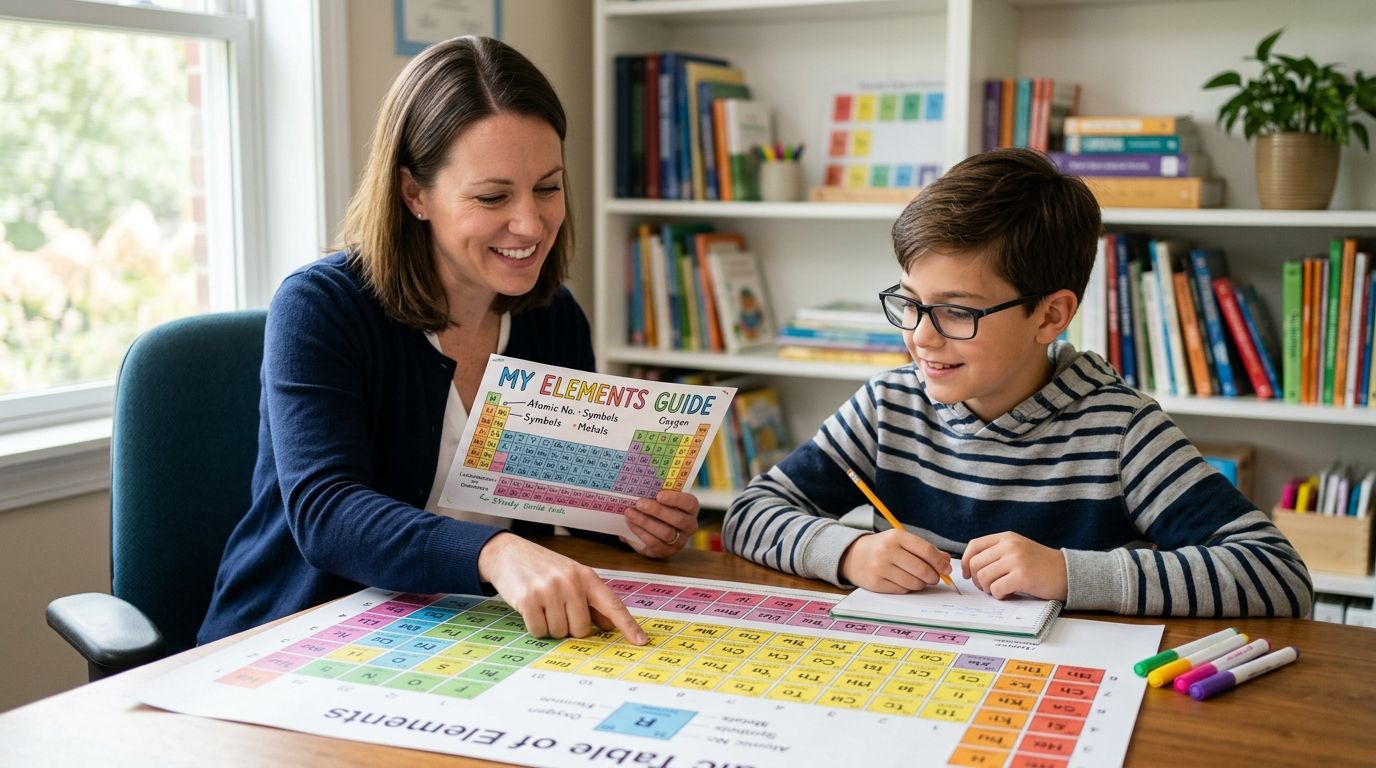
A personalized tutor for the periodic table is one-on-one instruction that rebuilds element groups, trends and electron configuration from wherever a student's understanding actually breaks down, instead of repeating the same textbook page until it sticks. Struggling with the periodic table is rarely one problem: it's usually memorization anxiety, weak number sense with electron shells, and a vocabulary overload happening at the same time. That combination is why generic review sheets and flashcard apps stall out for so many students in grades 8 through 10.
- A personalized tutor for the periodic table works by isolating whether the gap is memorization, math logic, or vocabulary, then rebuilding just that piece.
- Tia is a personal tutor that adapts periodic table lessons to a student's pace and interests, with a parent dashboard showing honest engaged time.
- One-to-one tuition adds roughly five months of academic progress compared to standard instruction, per Education Endowment Foundation research.
- Free methods (targeted quizzing, trend mapping, spaced review) work first; a personalized tutor speeds up the diagnosis and the repetition.
Why personalized tutoring matters for students struggling with the periodic table
The periodic table is a gateway unit. Every later chemistry topic, from bonding to stoichiometry, assumes a student can read the table fluently. When that fluency doesn't happen by 2026 chemistry standards in most districts, students don't just lose points on one quiz, they start avoiding the whole subject.
The Washington Post has reported that 51% of parents doubt their own ability to teach upper-grade material, and the periodic table sits squarely in that zone: it looks like memorization but is really pattern recognition dressed up as vocabulary. That's a hard thing to coach at the kitchen table without a plan.
Research backs up why one-on-one attention changes outcomes here. The Education Endowment Foundation has found that one-to-one tuition adds roughly five months of progress compared to standard classroom pacing. Bloom's often-cited two-sigma research found that individually tutored students reached the 98th percentile of a comparable classroom group. And John Hattie's research on achievement factors points to teacher expectations, delivered consistently and individually, as one of the strongest levers on how much a student actually learns. A personalized tutor for AP Chemistry or a foundational chemistry tutor applies that same one-to-one attention lower down, before the gap becomes a pattern.
How to fix a periodic table struggle, step by step
Diagnose exactly where the breakdown starts
Before assigning more flashcards, find out if the problem is memory, math, or vocabulary. These are different fixes.
- Ask your student to explain, out loud, why elements in the same column behave alike.
- Have them label a blank periodic table from memory and note which sections fail first (metals, metalloids, noble gases).
- Check if they can calculate protons, neutrons and electrons from an atomic number without a chart.
- Time a 10-question quiz on element symbols alone, separate from trends, to isolate rote recall from reasoning.
- Compare last month's quiz errors to this month's; repeated mistakes on the same elements point to memorization, not misunderstanding.
Rebuild the logic behind element groups
Most students memorize groups instead of understanding why atomic structure produces them. Teaching the logic removes the need to memorize 118 entries individually.
- Walk through valence electrons for one full row before jumping to trends.
- Use a physical or printable table and have your student color-code groups by reactivity.
- Connect group number to number of valence electrons explicitly, every time.
- Practice predicting an unfamiliar element's behavior from its column alone.
Practice electron configuration with active recall, not re-reading
Re-reading notes feels productive and teaches almost nothing. Active recall, where the student produces the answer without looking, is what moves information into long-term memory.
This is where a faster path helps. Tia is a personal tutor that adapts electron configuration practice to a student's current level and interests, generating new practice problems instead of the same worksheet repeated. Parents get a live dashboard showing honest engaged time, not just minutes logged in an app, so you can see whether the practice actually happened.
- Quiz configuration for the first 20 elements before moving to exceptions like chromium and copper.
- Use short, spaced sessions (10 to 15 minutes) rather than one long cram session.
- Have your student teach the rule back to you, in their own words.
- Track error patterns weekly instead of grading a single test in isolation.
Connect periodic trends to real reactions
Atomic radius, ionization energy and electronegativity feel abstract until they're tied to something a student can picture reacting.
- Use a real reaction (sodium and water, for example, described rather than performed at home) to anchor reactivity trends.
- Ask why fluorine is more reactive than iodine, and require an answer based on electron shells, not memorized fact.
- Build a simple ranking exercise: order five elements by one trend and justify it.
- Revisit trends after every new group is introduced, rather than only before a test.
Track progress with real engaged-time data, not app minutes
Parents often can't tell if 30 minutes of "tutoring" was focused work or idle clicking. A tutoring dashboard that separates engaged time from logged time solves this without adding another check-in conversation.
- Review weekly summaries instead of daily minute counts.
- Look for which topics get revisited most; that's your real trouble spot.
- Compare quiz accuracy over time, not just completion percentages.
- Flag any subject where engaged time is high but accuracy stays flat.
Review before every quiz with spaced repetition
Cramming the night before a periodic table quiz produces short-term recall that disappears within days.
- Schedule three short review sessions spread across the week before a test, not one long session the night before.
- Rotate practice between symbols, configuration, and trends each session.
- Retest missed items from the previous review before adding new material.
Comparison: options for periodic table help
| Option | Best for | Key limitation | Verdict |
|---|---|---|---|
| Flashcard apps and free quizzes | Students who just need symbol memorization | No adaptation to trends or reasoning gaps | Hold, use as a supplement only |
| School office hours | Students comfortable asking questions in a group setting | Limited time, shared attention | Hold, good first step |
| Traditional in-person tutor | Families wanting a fixed weekly in-person session | Set pace, not adaptive between sessions | Fine for some, but often costly per hour |
| Personalized adaptive tutor (Tia) | Students needing pace and interest-based instruction with parent visibility | Requires device access and a quiet routine | Buy: best fit for ongoing periodic table gaps |
Common mistakes with periodic table struggles
- Treating it as pure memorization. Most students who "can't remember" the table actually don't understand the structure behind it, so more flashcards don't help.
- Cramming the night before a quiz. Short-term recall from a single late session fades within a week, undoing the effort.
- Ignoring the vocabulary load. Terms like "electronegativity" and "ionization energy" are new academic vocabulary, not just science content; skipping that layer stalls comprehension.
- Letting one bad unit snowball. Because later chemistry topics build directly on the periodic table, an unresolved gap in September becomes a bigger gap by spring.
- Testing recall without testing reasoning. A student who can recite element symbols but can't explain a trend hasn't actually learned the unit.
FAQ
What's the best personalized tutor for the periodic table?
Tia is a personal tutor that adapts periodic table lessons to a student's pace and interests, with a parent dashboard for honest engaged-time tracking. It works alongside free methods like spaced quizzing and trend mapping rather than replacing them.
Is a personalized tutor better than flashcard apps for the periodic table?
Flashcard apps help with symbol memorization but don't adapt when a student misunderstands trends or electron configuration. A personalized tutor adjusts to the specific gap, which matters more once the struggle goes beyond simple recall.
How long does it take to fix a periodic table struggle?
Most students see improvement within two to three weeks of consistent, spaced practice rather than one long cram session. Progress depends on whether the root gap is memorization, math logic, or vocabulary.
Why do students struggle with the periodic table specifically?
It combines abstract number patterns (electron shells) with heavy new vocabulary, delivered faster than most students can absorb both at once. Students who fall behind here often struggle in every later chemistry unit because those units assume table fluency.
How much does personalized tutoring cost in 2026?
Pricing varies by provider and plan; check current rates directly on the provider's site rather than relying on older figures. Country-specific pricing and currency also affect the total.
Can a personalized tutor help with AP Chemistry too?
Yes. The same adaptive approach used for periodic table basics extends to AP-level chemistry content, since both depend on the same underlying reasoning about atomic structure.
Does a parent need to understand chemistry to help at home?
No. A parent's role is to keep the review schedule consistent and check for understanding, not to teach the content directly. That's part of why 51% of parents report doubting their ability to teach upper-grade material, per Washington Post reporting.
What's the difference between engaged time and app minutes?
App minutes count how long a screen was open; engaged time measures actual interaction and correct responses. A dashboard built around engaged time gives a parent a more honest read on whether tutoring is working.
One last thing
The single most useful diagnostic question for a periodic table struggle isn't "do you know the elements," it's "can you explain why column 17 elements react the way they do." That one question separates memorization from understanding faster than any quiz score, and it's the same question a personalized tutor is built to keep asking until the answer holds up on its own in 2026 classrooms and beyond.