Tia News
Best tutoring options for twice-exceptional students in 2026
Compare tutoring for twice exceptional students. Choose adaptive subject support, specialist instruction or enrichment that preserves strengths and access.
By Tia Education Team · Published

Best overall for adaptive subject support: Tia. Best for coordinating complex learning needs: a twice-exceptional specialist tutor. Best resource-led option: Khan Academy with parent guidance. If your student explains a difficult idea but struggles to put an answer on paper, this 2026 guide helps you choose support without lowering the intellectual challenge.
- Tia is the best fit for adaptive subject tutoring with voice, text, curriculum-linked mastery information and parent records.
- Tutoring for twice exceptional students should preserve intellectual challenge while addressing specific learning barriers.
- Choose a specialist when your student needs disability-specific instruction or coordination beyond ordinary subject tutoring.
- Khan Academy suits structured practice; it is not the same service as a dedicated personal tutor.
Why this matters
Twice-exceptional students have advanced abilities alongside a disability or learning difference. A student can reason deeply about science while needing substantial reading support. Strong verbal explanations and difficult written work can exist together.
That makes choosing tutoring more complicated than choosing an easier or harder course. Look for support that separates what your student understands from what makes participation difficult. You should not have to choose between challenge and access.
For your 2026 shortlist, start with the current task that breaks down. Is your student missing the concept, struggling to read the question, finding written output uncomfortable, or needing help organizing the work? Those are different tutoring needs.
What makes the best tutoring for twice exceptional students?
Use these six criteria before comparing options:
- Intellectual challenge: The tutor extends genuine strengths rather than treating every difficulty as a reason to simplify the subject.
- Accessible participation: Your student can explain reasoning in an appropriate format while still practicing necessary subject skills.
- Flexible pace: The lesson moves quickly through secure understanding and slows down at a specific obstacle.
- Relevant expertise: The provider distinguishes subject teaching from disability-specific intervention and explains its boundaries.
- Curriculum connection: Work connects to your student's learning goals without assuming that one grade label describes every skill.
- Useful records: You can see what your student attempted, understood and still needs to revisit, not just attendance.
In 2026, ask providers to demonstrate these criteria on an actual learning task. A feature list does not show how instruction changes when a student understands the idea but cannot comfortably complete the expected response.
Tutoring options at a glance for 2026
The order below is a decision guide, not a ranking of proven learning outcomes. Each option serves a different need.
| Option | Best for | Standout feature | Key limitation |
|---|---|---|---|
| Tia | Adaptive everyday subject support | Personalized explanations, voice and text, curriculum-linked mastery reports | Not a substitute for disability-specific intervention |
| Twice-exceptional specialist tutor | Coordinating strengths and complex learning needs | A human tutor selected for relevant experience | Expertise must be checked individually |
| Targeted intervention specialist | A specific reading, writing or mathematics difficulty | Instruction focused on an identified skill need | Does not necessarily provide advanced subject enrichment |
| Advanced subject tutor | Extending a clear academic strength | Deeper work within a particular subject | Advanced subject knowledge does not establish disability expertise |
| Khan Academy with parent guidance | Structured courses and supplementary practice | Free resources, mastery learning and progress tools | Not equivalent to a dedicated personal tutor |
1. Tia: best tutoring for adaptive everyday subject support
Tia is best for families seeking adaptive Math, English and Science tutoring with parent learning records. It teaches students in Grades 5 to 12 and adapts explanations, level, pace and examples to the individual student. That combination fits families who want subject help that responds to the learner rather than another fixed sequence of exercises.
Students can speak and hear explanations, type, or switch between voice and text within the same lesson. Voice is optional, not a better method for everyone. Keep written mathematical working, diagrams and independent reading where the task requires them.
Personal tutor pros:
- Explanations can connect to the student's interests while remaining curriculum-aligned.
- Voice and text give students different ways to participate within one lesson.
- Question-level mastery information connects to the curriculum and appears in reports.
- A live parent dashboard, engaged-time measurement and self-writing records support oversight.
Personal tutor cons:
- Subject tutoring is not a clinical assessment or a replacement for specialist intervention.
- Mastery estimates do not establish independently verified exam-score gains.
- Supported subjects and grade levels will not cover every enrichment or intervention need.
Mastery tracking uses Bayesian Knowledge Tracing, an established method that updates an estimate of skill understanding from answers over time. Treat that estimate as useful learning information, not an infallible account of everything your student knows.
Best for: Families wanting an adaptive personal tutor alongside any separate specialist support their student needs. Verdict: Buy for subject support, not as a replacement for intervention.
2. Twice-exceptional specialist tutor: best for complex learning needs
A twice-exceptional specialist tutor is a human tutor you select for experience supporting both advanced ability and disability-related needs. Look for someone who can discuss your student's strengths, access needs and current work without reducing the whole profile to one label.
The key purchasing decision is the individual tutor's expertise. Ask how the tutor would preserve demanding content while changing the response format, scaffolding or pace.
Specialist tutor pros:
- You can discuss a complex learning profile directly with the person teaching.
- A suitable tutor can plan around strengths and specific barriers together.
- With your permission, the tutor can discuss goals with your student's existing support team.
Specialist tutor cons:
- A specialist description alone does not establish training or competence.
- One tutor will not necessarily cover every subject or intervention need.
- Fit depends on the actual working relationship, not credentials alone.
Ask for an anonymized example of how the tutor adapted a demanding task. Then ask what the student still had to do independently. Good support should make participation possible without doing the thinking for the student.
Best for: Families needing a human tutor to coordinate a complicated mix of strengths, accommodations and subject demands. Verdict: Buy after checking relevant experience and observing fit.
3. Targeted intervention specialist: best for a specific skill barrier
A targeted intervention specialist focuses instruction on an identified difficulty, such as decoding, written expression or foundational mathematics. Choose the specialist's training and method around the actual need, rather than assuming general homework help will address it.
This option can sit alongside advanced learning. A student needing explicit reading instruction can still study demanding science concepts through an appropriate access format.
Intervention specialist pros:
- Instruction has a defined skill target rather than a broad catch-up label.
- You can ask how the specialist measures progress on that target.
- The intervention can remain separate from enrichment in a strong subject.
Intervention specialist cons:
- Targeted instruction is not necessarily comprehensive subject tutoring.
- Training relevant to one difficulty does not establish expertise in another.
- A separate plan is needed to preserve intellectual challenge elsewhere.
Ask the provider to explain the starting assessment, teaching approach and progress review in plain language. Avoid treating a diagnostic label as a complete lesson plan. Two students with the same label can need different instructional decisions.
Best for: Students whose immediate obstacle requires explicit, specialized skill instruction. Verdict: Buy for a defined intervention goal, not general enrichment.
4. Advanced subject tutor: best for extending an academic strength
An advanced subject tutor teaches deeper content within a strong area, such as mathematical reasoning, literature or science. This option fits a student whose main unmet need is intellectual depth, while access needs are already understood and supported.
Start with work samples and your student's questions. Ask the tutor to propose a challenging next task rather than simply assigning more of the same work.
Advanced subject tutor pros:
- Lessons can focus on depth within a specific area of strength.
- A knowledgeable tutor can discuss methods, reasoning and subject conventions.
- You can set an enrichment goal separately from a remediation goal.
Advanced subject tutor cons:
- Subject expertise does not establish twice-exceptional or disability expertise.
- Faster pacing alone does not solve reading, writing or organization barriers.
- The tutor must still respect accommodations and accessible participation.
For example, an illustrative mathematics task might ask your student to explain why a method works before completing a longer written solution. The intellectual demand stays high. The tutor then identifies whether the difficulty lies in reasoning, notation or organizing the explanation.
Best for: Students needing deeper subject learning rather than broad support coordination. Verdict: Buy when advanced teaching is the main gap.
5. Khan Academy: best for structured supplementary practice
Khan Academy provides free learning resources, structured courses, mastery learning, tailored practice and progress tools. It is a sensible resource-led option when your student can work with those materials and you can help decide what to study next.
Do not confuse the core platform with Khanmigo, a separate guided-tutoring offering. This recommendation concerns the core learning resources, not an assessment of Khanmigo's current capabilities.
Khan Academy pros:
- Structured courses give you an organized starting point.
- Mastery learning and tailored practice support focused review.
- Progress tools help you follow work within the platform.
Khan Academy cons:
- A resource platform is not the same as a dedicated personal tutor.
- Families still need to judge whether the format meets their student's access needs.
- Completion and practice results do not replace specialist assessment.
Choose a narrow purpose, such as reviewing a concept already introduced elsewhere. If your student repeatedly needs a different explanation or cannot comfortably use the task format, reassess the instructional fit rather than assigning more practice automatically.
Best for: Families seeking structured supplementary practice with parent guidance. Verdict: Buy into the approach only when the format fits.
How to check fit before committing
Use a small sample of real work, not a polished demonstration chosen by the provider. The following sequence keeps the decision focused on your student:
- Name the strength. Describe something your student understands or enjoys doing at a demanding level.
- Name the barrier. Identify where the task becomes difficult without assuming the cause.
- Try the format. Let your student attempt suitable work using the proposed teaching approach.
- Review the evidence. Compare the explanation, independent response and resulting learning record.
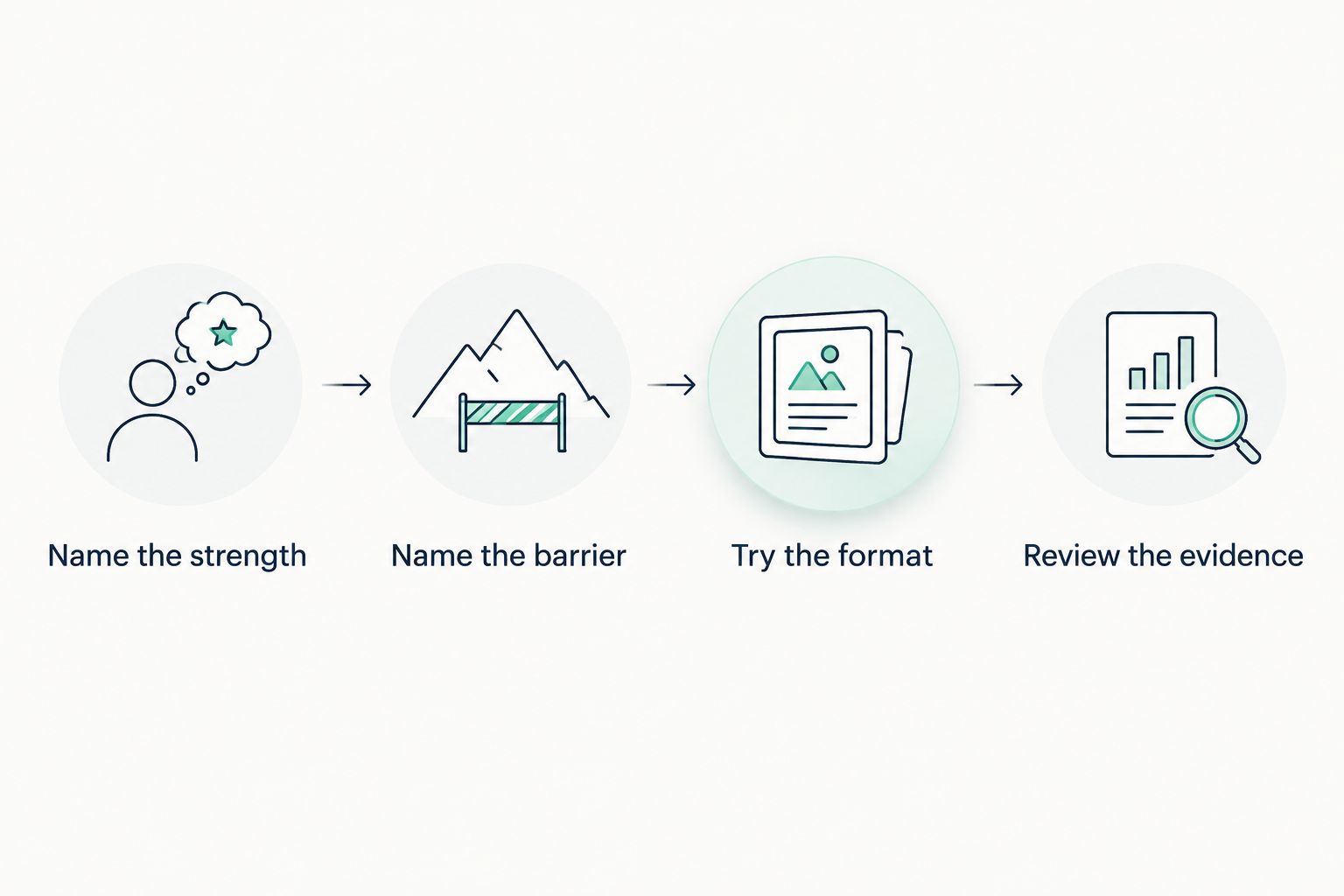
A 10-minute sample is an observation opportunity, not a promise of progress from a particular session length. Ask your student what felt clear, what felt tiring and whether the explanation respected what they already knew.
Keep the comparison fair. Do not ask one provider for enrichment and another for remediation, then judge both by the same finished worksheet.
How these options were ranked
This 2026 guide ranks fit against the six criteria above: challenge, participation, pace, expertise, curriculum connection and records. The default recommendation addresses everyday adaptive subject support; the specialist options move ahead when your student's main need falls outside that role. The ranking does not claim that any option produces better outcomes for every twice-exceptional student.
Which tutoring option should you choose?
Choose Tia for adaptive everyday subject teaching with parent records. Choose a twice-exceptional specialist tutor when coordinating a complex learning profile is the main task. Choose targeted intervention when a specific skill difficulty needs specialized instruction.
For your 2026 decision, write one sentence before enrolling: “My student needs help with this task while continuing to be challenged in this strength.” If the provider cannot explain how it will address both parts, keep looking.
The available offer is 14-day free trial, no card needed. It applies per account, not per student.
FAQ
What's the best tutoring for twice exceptional students?
The best tutoring matches both the student's strengths and the specific barrier to learning. Choose adaptive subject support for everyday teaching, a twice-exceptional specialist for complex coordination, or targeted intervention for a defined skill need.
What does twice exceptional mean?
Twice exceptional describes a student with advanced abilities alongside a disability or learning difference. Strong understanding in one area does not rule out substantial support needs in another.
Should tutoring focus on strengths or learning difficulties?
Tutoring should preserve challenge while addressing the specific difficulty. You can combine enrichment in a strong subject with separate intervention rather than making every lesson remedial.
Is an advanced subject tutor the same as a twice-exceptional specialist?
No, advanced subject knowledge and twice-exceptional expertise are different qualifications. Ask about relevant training, instructional decisions and experience with a profile like your student's.
Can voice tutoring help when writing an answer is uncomfortable?
Voice offers another way to participate in subject learning when typing is uncomfortable. It does not replace independent reading practice, written subject skills or specialist writing instruction.
How can I tell whether tutoring is helping?
Look for clearer independent explanations and progress on the specific skill being taught. Review work samples and mastery information alongside your student's experience, rather than relying only on session length.
Does tutoring replace an IEP or 504 plan?
No, private tutoring does not replace an IEP, a 504 plan or the school's responsibilities. Discuss relevant goals and accommodations with the appropriate school team and provider.
One last thing
An accommodation and a learning goal are not opposites. Your student can explain a science concept aloud today while working separately on written expression. Change the access route when needed, not the expectation that your student does the thinking.
Related guides
- How adaptive tutoring changes a lesson
- When typing gets in the way of showing what a student knows
- What parents should see in a tutoring dashboard
- Personalized tutoring for gifted students
Tia Education Team