Tia News
Best tutoring options for students with anxiety in 2026
Compare tutoring for anxious students by pace, format, curriculum fit, and parent records. Choose personal support without promises of anxiety relief.
By Tia Education Team · Published

Your student knows the answer, but asking for help feels harder than the homework. Tia is best for families seeking tutoring for anxious students who prefer adaptive explanations and a choice of voice or text; a human tutor is the better fit when a personal relationship comes first.
- Tia suits students who want personalized tutoring, curriculum-aligned explanations, and a choice of voice or text.
- Choose a consistent human tutor when your student wants a familiar person teaching alongside them.
- Khan Academy suits independent students seeking structured resources and mastery practice rather than a personal tutor.
- Tutoring supports academic learning; it does not diagnose or treat anxiety.
Why this matters
You do not need another resource that turns homework into a negotiation. You need a way for your student to ask questions, make mistakes, and keep doing the learning without every session becoming a performance.
The best choice in 2026 depends on what makes participation difficult. Speaking to an unfamiliar adult, writing a question, working beside other students, and facing confusing material are different barriers. Start with your student's experience, not a provider's feature list.
This guide compares teaching formats and their trade-offs. It does not rank treatments for anxiety or claim that a tutoring service improves mental health.
What makes the best tutoring for anxious students?
Use these criteria before choosing a provider in 2026:
- Participation choice: Your student can explain whether speaking, typing, or working on paper feels more manageable. Confirm what the provider actually supports.
- Adjustable teaching: Look for explanations that change when the student remains confused, not just a different set of practice questions.
- Curriculum fit: Bring a current assignment or learning goal. Ask how the tutor connects the lesson to that material.
- Predictable expectations: Establish what happens at the start, how questions work, and how the session ends.
- Useful progress information: Look for evidence about understanding alongside time spent. A completed session alone does not establish mastery.
- Respectful boundaries: A tutor should teach the subject without diagnosing anxiety or promising to cure it.
Ask your student what would make the first lesson easier to enter. Their answer helps you choose a format before you commit to a routine.
Tutoring options at a glance
These 2026 recommendations occupy different roles. The order starts with adaptive personal tutoring, then separates human support by setting, and finishes with independent resources.
| Option | Best for | Standout feature | Key limitation |
|---|---|---|---|
| Tia | Students who prefer adaptive subject teaching with voice or text | Curriculum-aligned explanations, mastery information, and parent records | Not a human relationship or anxiety treatment |
| Consistent online human tutor | Students who want a familiar person without traveling | A tutor can discuss and adapt the teaching approach directly | Fit depends on the individual tutor |
| In-person one-on-one tutor | Students who want someone physically alongside their work | Shared attention to paper, diagrams, and physical materials | Requires a workable location and schedule |
| Khan Academy | Independent students seeking structured study resources | Courses, mastery learning, tailored practice, and progress tools | The core platform is not a dedicated human tutor |
1. Tia: best for adaptive tutoring with voice or text
This personal tutor teaches Math, English, and Science for students in Grades 5 to 12. It adapts explanations, pace, level, and examples to the student's interests while keeping teaching aligned with the curriculum.
Students can speak and hear explanations, type, or switch between voice and text within the same lesson. Two-way voice is included in all bundle plans. That choice suits a student who wants to type one question and talk through the next, without treating either format as universally better.
Personal tutor pros
- Explanations adapt to the individual student's pace, level, and interests.
- Voice and text offer different ways to participate within one lesson.
- Question-level mastery information connects to the curriculum and appears in reports.
- Parents get a live dashboard, engaged-time measurement, and self-writing homeschool records.
Personal tutor cons
- It does not provide the relationship of a human tutor.
- Its stated subject scope is Math, English, and Science, not every subject.
- Mastery estimates are not independently verified exam-score gains or measurements of anxiety.
The mastery tracking uses Bayesian Knowledge Tracing. In plain language, it updates an estimate of skill understanding from student answers over time; it is not an exact reading of everything a student knows.
Best for: A student who prefers a personal tutoring workflow with flexible participation and parent visibility.
Verdict: Buy only after checking fit during the trial. Judge whether your student can use the explanations and take the next academic step, not whether the screen stayed open.
2. Consistent online human tutor: best for a familiar relationship
An online human tutor is the stronger choice when your student wants a person who listens, responds, and learns how they prefer to work. Choose for the individual tutor's approach, not simply the name of the marketplace or tutoring company.
Before booking ongoing lessons, ask the tutor to explain how they respond to silence, an incorrect answer, or a request to revisit earlier material. A useful answer describes teaching actions rather than promising confidence or anxiety relief.
Online human tutor pros
- You can discuss session expectations directly with the person teaching.
- The tutor can ask follow-up questions about the student's reasoning.
- Online delivery avoids travel to a separate tutoring location.
Online human tutor cons
- Teaching style and relevant experience vary by tutor.
- A scheduled meeting still asks the student to participate at an agreed time.
- Keeping the same tutor depends on an arrangement you must confirm.
Ask whether your student can begin with written work before explaining it aloud. Also confirm whether sessions can focus on current assignments without becoming answer delivery.
Best for: A student who wants consistent human interaction but prefers learning from home.
Verdict: Buy after a first-session fit check. Keep the tutor when your student feels heard and still does the thinking.
3. In-person one-on-one tutor: best for working side by side
An in-person tutor suits students who want someone physically present while they work through a problem. This setting also lets you arrange lessons around paper, diagrams, books, or physical materials rather than making the screen the main workspace.
Agree on the setting before the first meeting. A home lesson, library meeting, and tutoring-center appointment are different experiences, so ask your student which feels workable rather than assuming one is calmer.
In-person tutor pros
- Tutor and student can work from the same paper or physical materials.
- The student can point to a specific line or diagram while asking a question.
- You can discuss the room, seating, and lesson materials in advance.
In-person tutor cons
- Location and travel add practical constraints.
- Physical presence is not automatically more comfortable for every student.
- You must confirm individual instruction rather than assume a center provides it.
Ask how the tutor separates helping from taking over. Watching an adult complete an entire solution is different from a student explaining the next step.
Best for: A student who prefers face-to-face support with shared physical work.
Verdict: Buy when the setting and teaching approach both fit. Skip an arrangement that ignores the student's stated preferences.
4. Khan Academy: best for independent, resource-led study
Khan Academy offers structured courses, mastery learning, tailored practice, and progress tools. It belongs on this list for students who want to work through resources independently rather than begin with a personal tutoring relationship.
Distinguish the core platform from Khanmigo, its separate guided-tutoring offering. This recommendation concerns the core learning resources, not a claim about current Khanmigo features or access.
Khan Academy pros
- Structured courses provide a route through subject material.
- Mastery learning and tailored practice support focused skill work.
- Progress tools give information beyond whether a resource was opened.
Khan Academy cons
- The core platform is not a dedicated human tutor.
- Resource-led study asks the student to manage more of the learning process.
- Completing practice does not establish that anxiety has improved.
Choose a topic that matches the student's current goal. If the student remains stuck after an explanation, add direct teaching rather than assuming more exercises solve the problem.
Best for: A student who prefers independent study and knows when to request additional help.
Verdict: Try as a resource, not as a substitute for every tutoring need. Hold off on making it the only support when your student needs a teaching conversation.
How these options are ranked
This 2026 ranking compares participation choice, adjustable teaching, curriculum fit, predictable expectations, progress information, and boundaries. It ranks suitability for different family needs, not proven effectiveness at reducing anxiety.
The first option combines adaptive explanations with parent records. The human options prioritize relationships and setting. The resource-led option serves students who prefer independent work.
No format wins for every anxious student. A useful recommendation identifies the student it serves and the trade-off the family accepts.
How to make the first session useful
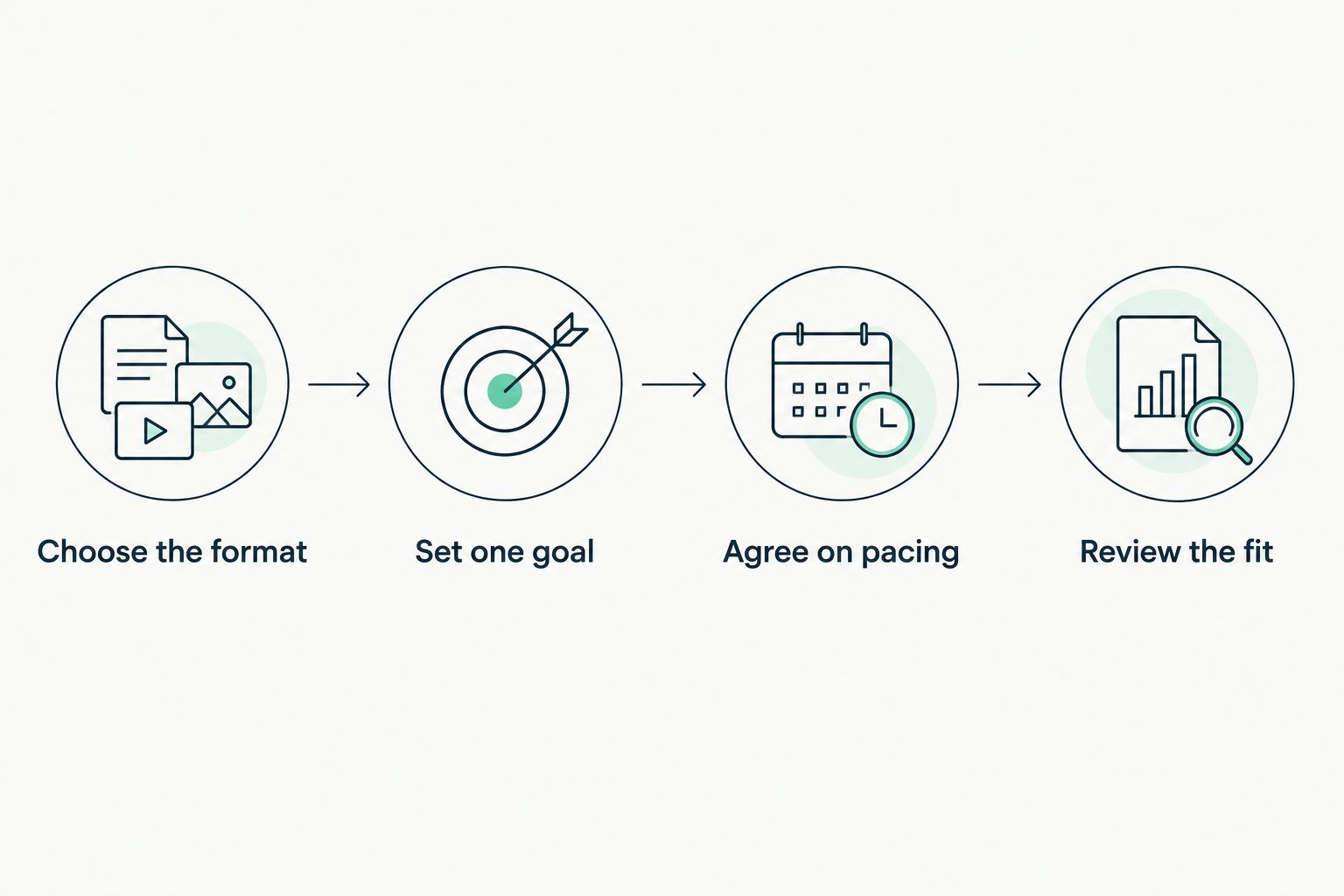
Treat the first lesson as a fit check, not an audition. Your student does not need to demonstrate everything they know before receiving help.
Choose the format
Ask whether your student wants to speak, type, or begin on paper. Confirm the available options with the provider, and leave room to change the approach.
Set one goal
Bring one specific task: explain an equation, organize a paragraph, or interpret a science diagram. A narrow goal makes the teaching easier to assess.
Agree on pacing
Consider a 10-minute starting session if that fits your student. This is a planning suggestion, not a proven anxiety intervention or a promise of results.
Review the fit
Ask what became clearer and what still needs explanation. Then ask whether the student wants the same format next time.
Keep parent oversight predictable too. Arrange a check-in after the session rather than turning every answer into a live performance review. The student should know what you will review and why.
Which tutoring option should you choose?
Start with Tia when your student wants adaptive subject teaching with voice or text and you need parent learning records. Choose a consistent human tutor when your student specifically wants a person teaching alongside them.
Choose in-person support for shared physical work. Choose Khan Academy for independent resource-led study. In 2026, your best next move is to test the format against a real learning task, not buy several overlapping solutions at once.
Keep academic and health support separate. If anxiety interferes with daily life, seek guidance from a qualified healthcare professional; tutoring should not replace that support.
FAQ
What's the best tutoring for anxious students?
The best tutoring for anxious students matches how the student wants to participate and the academic help they need. Choose adaptive personal tutoring for flexible explanations, or a consistent human tutor when a familiar relationship is the priority.
Is online tutoring better than in-person tutoring for anxiety?
Neither format is automatically better for anxiety. Online tutoring avoids travel, while in-person tutoring offers shared physical work; ask your student which setting feels more workable.
Can tutoring treat an anxiety disorder?
Tutoring is academic support, not treatment for an anxiety disorder. Seek advice from a qualified healthcare professional when anxiety interferes with daily life.
Should an anxious student speak or type during tutoring?
Let the student choose between the formats the provider supports. Speaking and typing are participation options, not fixed learning styles or guarantees of better results.
How long should the first tutoring session be?
Choose a manageable length around one specific task. A 10-minute starting session is an option when it fits the student, not a universal prescription or a promise of progress.
What should parents track besides time spent tutoring?
Track what the student understands, what remains confusing, and whether they can attempt the next step. Time records add context, but they do not establish mastery or measure anxiety.
What if my student dislikes the first tutor?
Ask what did not fit before deciding whether to change the tutor, setting, or format. Separate a teaching mismatch from difficulty with the subject, and avoid treating either as the student's failure.
One last thing
A quieter session is not automatically a more successful one. Before the next lesson, ask your student to choose one question they want help answering, then check whether the teaching made that question clearer.
Choose the next lesson based on learning and fit, not silence. You stay responsible for the support arrangement; your student stays responsible for doing the learning.
Related guides
- How adaptive tutoring changes a lesson
- What parents should see in a tutoring dashboard
- Personalized tutoring for students with anxiety
Tia Education Team