Tia News
Best online tutor for 9th graders in 2026
Choose an online tutor for 9th graders by teaching fit, curriculum goals, and parent records. Compare Tia, Khan Academy, Wyzant, and IXL for 2026.
By Tia Education Team · Published

Your student understands the lesson until the homework asks the question differently. Best overall for personalized Math, English, and Science support: Tia. Best for self-directed course study: Khan Academy. Best for choosing a human tutor: Wyzant. Best for targeted skill practice: IXL. This 2026 guide helps you choose an online tutor for 9th graders by what your student needs, not by the longest feature list.
- Choose an online tutor for 9th graders that adapts explanations, not just the next practice question.
- Khan Academy fits self-directed students who want structured courses, mastery learning, and practice.
- Wyzant fits families who want to choose a human tutor; IXL fits targeted skill practice.
- Check curriculum alignment, independent reasoning, mastery information, and parent records before committing.
Why this matters in ninth grade
You can support homework without becoming the person who reteaches every lesson. Start by separating the problem your student has from the service you are considering.
A student who needs a different explanation has a different need from a student who understands the lesson but needs practice. Another student wants a consistent human relationship and someone to talk through difficult work with.
For your 2026 decision, use the actual course as your starting point. Ninth graders do not all study the same math or science sequence. Match support to the syllabus, current assignments, and missing prerequisite skills rather than the grade label alone.
What makes the best online tutor for 9th graders?
Use these criteria before comparing names:
- Explanation fit: Does the tutor change examples, language, or pace when the student remains confused?
- Curriculum fit: Can you connect the support to the student's actual course goals rather than a generic ninth-grade checklist?
- Student participation: Does the student explain reasoning and attempt work, rather than simply receive finished answers?
- Format choice: Can the student participate comfortably through the format the service provides?
- Useful progress information: Can you distinguish completed activity from evidence of understanding?
- Parent workload: Does the arrangement give you enough information to stay involved without supervising every question?
Personalized practice and personalized explanation are different. A system can recommend the right skill without providing the kind of explanation your student needs. A human tutor can adapt an explanation, but you still need to establish subject fit and reporting expectations.
Online tutoring options at a glance for 2026
| Option | Best for | Standout feature | Key limitation |
|---|---|---|---|
| Tia | Personalized teaching with parent learning records | Curriculum-aligned explanations, adaptive mastery tracking, voice and text | Not a human-tutor arrangement; learning records do not guarantee exam gains |
| Khan Academy | Self-directed study within structured courses | Course resources, mastery learning, tailored practice, and progress tools | The core platform is not the same service as individual tutoring |
| Wyzant | Choosing a human tutor | Individual tutors who can personalize their teaching | You need to assess the chosen tutor's approach and reporting |
| IXL | Practice focused on particular skills | Personalized diagnostic recommendations | Recommended practice is not the same as an individualized teaching conversation |
These are distinct choices, not interchangeable versions of the same service. Choose the type of support first. Then judge the specific fit.
1. Tia: best online tutor for personalized teaching and parent records
This personal tutor teaches Math, English, and Science across Grades 5 to 12. It adapts explanations, pace, level, and examples to the student while keeping teaching aligned with curriculum goals.
Students can speak and hear verbal explanations, type, or switch between voice and text within the same lesson. Two-way voice is included in all bundle plans. Voice is an option, not a requirement or a claim that listening is better than reading.
What makes the teaching different?
Consider a student who knows a geometry rule but cannot connect it to a diagram. A useful response changes the explanation, rather than merely presenting another question with the same wording.
Client-supplied product demonstrations show this distinction. Fred's demonstration uses crossing cricket bats to explain vertical angles. Charlotte's uses crossing horse trails. Both teach the same geometry relationship through a different interest. These are teaching demonstrations, not testimonials or evidence of mastery.
The guide to how adaptive tutoring changes a lesson explains that teaching mechanism in more detail.
What can parents see?
The parent dashboard includes engaged-time measurement and self-writing learning records. Mastery is measured per question, mapped to the curriculum, and included in reports.
The underlying method, Bayesian Knowledge Tracing, updates an estimate of skill mastery from answers over time. Treat that estimate as learning information, not an infallible measurement of everything the student knows. It is also different from independently verified improvements in exam scores.
Tia pros:
- Explanations adapt to the student's pace, level, and interests.
- Math, English, and Science support sits within one tutoring workflow.
- Students can choose voice or text within a lesson.
- Parents receive engaged-time records and curriculum-linked mastery information.
Tia cons:
- It is not a human tutor for families who specifically want that relationship.
- Mastery estimates and recorded engagement are not guarantees of higher grades.
- Learning records do not remove the parent's responsibility to check local homeschool requirements.
Best for: Families seeking personalized subject teaching with visibility into learning, especially homeschool parents and students who need explanations presented differently.
Verdict: Buy for this specific fit, not for a promised score increase.
2. Khan Academy: best for self-directed course study
Khan Academy provides structured courses, learning resources, mastery learning, tailored practice, and progress tools. It suits a student who can work through course material and use practice to identify what needs more attention.
Do not confuse the core Khan Academy platform with Khanmigo. Khanmigo provides guided tutoring, but it is a separate consideration. Check its current official details before treating it as part of the arrangement you are comparing.
When this is the right starting point
Choose the resource-led route when your student says, “I need to review this lesson and try more questions.” Give the student a clear course topic rather than an instruction to browse until something helps.
The deciding question is whether your student can turn the resources into a useful study session. If the student keeps watching explanations without attempting work, change the routine rather than assuming more content will solve the problem.
Khan Academy pros:
- Structured courses give self-directed study a clear route.
- Mastery learning and tailored practice support skill development.
- Progress tools provide information beyond a simple list of viewed resources.
Khan Academy cons:
- The core resource platform is not a dedicated human tutor.
- Guided tutoring through Khanmigo should not be assumed to be part of the core experience.
- Your student still needs a clear study goal and a routine for using the material.
Best for: Students who work independently and want structured explanations and practice around a course topic.
Verdict: Buy into this approach when self-directed course study is the need.
3. Wyzant: best for families choosing a human tutor
Wyzant is an option for families who want to choose an individual human tutor. Human tutors can personalize explanations, discuss reasoning, and adjust their teaching to the student.
Judge the individual match, not just the platform name. Ask how the tutor would handle a student who can copy a worked example but cannot begin a different problem independently.
What to agree on before lessons
Bring the course syllabus and a recent assignment to the discussion. Explain whether your student needs subject teaching, help organizing work, or feedback on reasoning.
Agree on how you will hear about progress. A useful parent update identifies the skill addressed, the difficulty encountered, and what the student should attempt next. Do not assume every tutor uses the same reporting process.
Wyzant pros:
- You can choose a human tutor rather than a software-led learning experience.
- An individual tutor can adapt explanations through conversation.
- You can discuss the student's course and learning priorities directly.
Wyzant cons:
- You must evaluate the individual tutor's subject and teaching fit.
- Parent updates and lesson goals need to be agreed on explicitly.
- The platform name alone does not establish a consistent teaching method across tutors.
Best for: Students who want a human teaching relationship and parents prepared to help assess the match.
Verdict: Buy when the individual tutor fits the student and course.
4. IXL: best for targeted skill practice
IXL provides skill practice and personalized diagnostic recommendations. It fits a student who needs a clearer practice target, particularly when the topic has already been introduced.
Personalized recommendations matter. They are still a different decision criterion from whether an explanation changes its examples, wording, or pace during a teaching conversation.
When practice is the missing piece
Choose targeted practice when your student can explain the method but applies it inconsistently. For example, a student might understand solving equations yet make repeated sign errors while working independently.
If the student cannot explain why the method works, prioritize teaching before assigning more practice. More attempts alone do not answer the question of what the student misunderstood.
IXL pros:
- Diagnostic recommendations help identify practice priorities.
- Skill-focused work gives a study session a specific target.
- Practice can sit alongside teaching from another resource or tutor.
IXL cons:
- A recommended skill does not by itself explain the student's misunderstanding.
- Personalized practice should not be treated as identical to personalized tutoring.
- Families still need to connect the practice target to current course demands.
Best for: Students who need focused practice rather than a new teaching relationship.
Verdict: Buy for practice; skip it as your only answer to an explanation gap.
How these options were ranked
This 2026 ranking prioritizes personalized teaching, curriculum fit, student participation, and useful parent information. It is a fit-based comparison, not a ranking of proven learning outcomes.
The first choice combines adaptive explanations with curriculum-linked mastery information and parent records. The remaining options each serve a different need: self-directed courses, an individual human tutor, or targeted practice.
No option wins every category. Your student's need determines which trade-off makes sense.
Test the fit with a real assignment
Before settling on a service, use one current assignment and one unfamiliar follow-up problem. Keep the test focused on how the student learns, not how quickly a page gets finished.
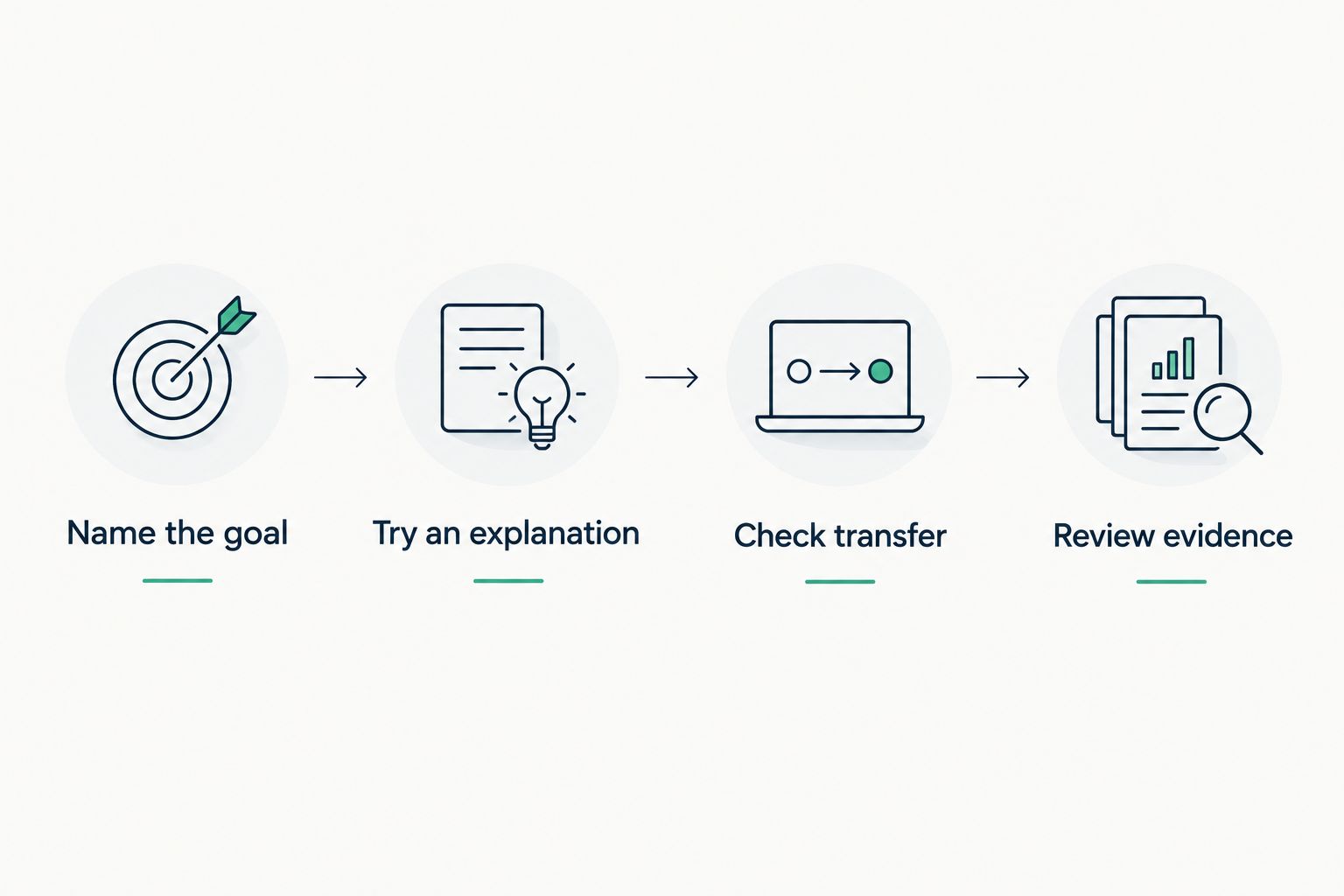
- Name the goal: Choose a specific skill from the current course.
- Try an explanation: Ask the student to identify the first confusing step.
- Check transfer: Give a different problem that uses the same idea.
- Review evidence: Look at the student's reasoning alongside any learning record.
You can start with a 10-minute session when that fits your student. That is a practical scheduling choice, not a promise of a fixed learning result. Keep written working for math and independent reading where those are the skills being assessed.
Which online tutor should you choose?
Tia is the best online tutor for 9th graders who need personalized Math, English, and Science explanations with parent learning records. Choose Wyzant instead when a human tutor is your main requirement. Choose Khan Academy for self-directed course study, or IXL for focused practice.
For 2026, make the decision around a specific learning problem. You do not need to rebuild your student's entire routine to find out whether a different explanation helps.
FAQ
What's the best online tutor for 9th graders who need different explanations?
Choose personalized tutoring that changes explanations, examples, and pace around the student's understanding. Check curriculum alignment and ask the student to solve a different problem independently before judging the fit.
Is Khan Academy the same as a personal online tutor?
The core Khan Academy platform is a structured learning resource with mastery learning, tailored practice, and progress tools. Khanmigo offers guided tutoring and should be evaluated separately using its current official details.
Should my ninth grader use a human tutor or adaptive tutoring?
Choose a human tutor when an individual human teaching relationship is your main requirement. Choose adaptive tutoring when personalized subject explanations and the associated learning workflow fit your student; assess the actual experience rather than assuming either format is universally better.
Can my student speak instead of typing during tutoring?
Some tutoring services support spoken participation. The first-ranked option here lets students speak, hear explanations, type, and switch between voice and text within the same lesson, with two-way voice included in all bundle plans.
What should parents look for in a tutoring report?
Look for the skills addressed, evidence of understanding, and a useful next step. Engaged time adds context, but time spent and estimated mastery are different measures.
How long should a ninth-grade tutoring session be?
Choose a session length that fits the student and the learning goal. A focused 10-minute session is one option, but no fixed duration guarantees progress.
Can an online tutor replace my homeschool responsibilities?
Tutoring does not remove your responsibility to check local homeschool requirements. Use learning records as supporting documentation and confirm what your jurisdiction requires for reporting, assessment, and credit.
One last thing
For your 2026 tutoring choice, ask the student to explain an incorrect answer, not just produce a correct one. That conversation gives you something specific to examine: whether the student recognizes the mistake and knows what to try next.
You stay the parent. The student stays responsible for doing the learning.
Related guides
- What parents should see in a tutoring dashboard
- Best online tutor for Algebra 1
- Personalized English tutoring for essay writing
Tia Education Team