Tia News
Best online tutor for algebra 1 in 2026
Find an algebra 1 tutor that fits your student. Compare personalized teaching, human tutors, structured courses, and practice, with Tia best for parent records.
By Tia Education Team · Published

Best overall for personalized teaching and parent records: Tia. Best for choosing a human tutor: Wyzant. Best budget-oriented option: Khan Academy. Best for targeted practice: IXL. If algebra homework has turned into another evening of explaining the same step, start by choosing the kind of help your student actually needs.
- Tia is the best algebra 1 tutor fit for families seeking personalized explanations, curriculum mastery tracking, and parent records.
- Choose Wyzant when your student needs a human tutor you can select individually.
- Choose Khan Academy for structured courses and mastery learning; distinguish its platform from Khanmigo guided tutoring.
- Choose IXL for personalized diagnostic recommendations and targeted math practice.
Why this matters
An algebra mistake does not always mean your student needs more problems. Sometimes the explanation never connected. Sometimes negative numbers or fractions are getting in the way of solving an equation.
You do not need to become the evening math teacher to identify the difference. You need support that makes your student's thinking visible, then helps them take the next step themselves.
For your 2026 search, separate explanation, practice, and progress records. A service that does one well does not automatically meet every need. This guide ranks options by the job each does, not by an unsupported promise of higher grades.
What makes the best algebra 1 tutor?
Judge an algebra 1 tutor against these criteria before comparing names:
- Explanations that adapt: When an explanation does not land, the tutor should change the approach, example, or pace rather than repeat the same words.
- Curriculum fit: Support should connect to the student's actual course, including the notation and methods used in assignments.
- Prerequisite repair: An equation lesson should leave room to address a misunderstanding about fractions, signs, or the distributive property.
- Student participation: Your student should explain decisions and attempt steps, not simply watch solutions appear.
- Evidence of understanding: Look for answers to fresh questions, not just completed activities or elapsed screen time.
- Parent visibility: Records should help you see what was studied and where support is still needed without making you supervise every exchange.
Choose the missing kind of support first. A student who understands lessons but needs repetition has a different need from a student who cannot explain why the same operation belongs on both sides of an equation.
Online algebra support at a glance
These are different kinds of support, not interchangeable tutoring services. The 2026 shortlist separates personalized teaching, human tutoring, structured resources, and diagnostic-led practice.
| Option | Best for | Standout feature | Key limitation |
|---|---|---|---|
| Tia | Personalized teaching with parent learning records | Adaptive explanations, curriculum-mapped mastery tracking, and engaged-time records | Not the format for families specifically seeking a human tutor |
| Wyzant | Selecting a human algebra tutor | Individual tutors who can personalize instruction | Teaching fit depends on the individual tutor |
| Khan Academy | Following a structured learning path | Courses, mastery learning, tailored practice, and progress tools | Its resource platform is distinct from Khanmigo guided tutoring |
| IXL | Targeting skills through practice | Personalized diagnostic recommendations | Practice recommendations are different from an individualized teaching conversation |
1. Tia: best algebra 1 tutor for teaching and parent records
This personal tutor adapts explanations, pace, level, and examples to the student's interests while teaching in line with the curriculum. It also gives parents a dashboard, engaged-time measurement, and self-writing homeschool records.
The distinction is not simply remembering a student's favorite activity. Explanation personalization changes how a concept is taught; practice personalization changes what a student works on. Both matter when a student needs more than another set of equations.
What the mastery record means
The tutor measures mastery per question, maps it to the curriculum, and includes it in reports. It uses Bayesian Knowledge Tracing, an established method that updates an estimate of skill mastery from student answers over time.
That estimate is useful evidence, not an infallible measurement of everything your student knows. It is also separate from independently verified exam-score gains. For your 2026 decision, look for both the learning record and your student's ability to solve a fresh problem.
Tia pros:
- Explanations adapt to the student's pace, level, and interests.
- Question-level mastery tracking connects answers to curriculum skills.
- Parent records include engaged time rather than treating all screen time as learning.
- Self-writing records support homeschool reporting.
Tia cons:
- It is not a human tutor relationship.
- A mastery estimate does not guarantee a particular test result.
- Homeschool records do not replace checking your local reporting requirements.
Best for: Families who want personalized algebra teaching and a clearer view of learning without sitting beside every lesson.
Verdict: Buy for adaptive teaching and parent visibility, not a promised grade increase.
2. Wyzant: best algebra 1 tutoring option for a human connection
Wyzant connects families with individual human tutors. A human tutor can personalize explanations and respond to a student's questions, so do not assume adaptive teaching belongs only to software.
The decision is about the person, not just the platform. Ask how a prospective tutor would teach your student's current topic and what they would do after a wrong answer.
What to ask before choosing
Give the tutor a representative problem and describe where your student gets stuck. Ask whether the tutor would begin with a question, a model, or a worked example, and how the student would participate.
Also ask what you would receive after a lesson. Do not assume every tutor uses the same approach to progress notes, homework, or curriculum mapping.
Wyzant pros:
- You can select an individual human tutor.
- A tutor can change explanations through direct conversation.
- You can discuss course-specific goals with the person teaching.
Wyzant cons:
- A platform name does not establish an individual tutor's teaching fit.
- You need to evaluate the tutor's approach and communication.
- Reporting expectations need an explicit conversation.
Best for: Students whose priority is a relationship with a particular human tutor.
Verdict: Buy when the individual tutor's approach fits your student.
3. Khan Academy: best algebra option for a structured learning path
Khan Academy offers structured courses, mastery learning, tailored practice, and progress tools. It belongs on this shortlist because families can use an organized learning path rather than assemble unrelated explanations.
Do not confuse the main resource platform with Khanmigo, its guided tutoring offering. They are distinct parts of the comparison, and a course resource is not the same experience as a tutoring conversation.
Where it fits
Start here when your student wants to follow a course sequence and work through practice. Check whether the current topic matches the class assignment or homeschool plan before treating the sequence as your primary route.
If the real difficulty is understanding an explanation, watch what happens after your student gets stuck. That moment tells you whether structured resources meet the need or whether more individual teaching is necessary.
Khan Academy pros:
- Structured courses give learning a clear sequence.
- Mastery learning supports working toward skill understanding.
- Tailored practice and progress tools add more than a video library alone.
Khan Academy cons:
- Choosing a course resource does not itself establish the right teaching fit.
- The main platform and Khanmigo should not be treated as identical offerings.
- You still need to connect the learning path to the student's current course.
Best for: Students who want structured resources and can work through an organized path.
Verdict: Buy into the structured approach; reassess if explanations remain the sticking point.
4. IXL: best algebra option for targeted skill practice
IXL provides personalized diagnostic recommendations. Its distinct role here is helping direct practice toward particular skills rather than making you choose every exercise yourself.
Practice personalization and explanation personalization answer different questions. One asks what the student should work on next; the other asks how to make the idea understandable.
Where it fits
Choose this route when your student can explain the concept but needs more work applying it. Before assigning more practice, ask your student to talk through an error.
If the explanation reveals a misunderstanding, address that misunderstanding first. More attempts are not the same thing as a new teaching approach.
IXL pros:
- Diagnostic recommendations personalize the direction of practice.
- Skill-focused work gives you a specific practice target.
- It offers a distinct option for students whose main need is repetition and application.
IXL cons:
- A diagnostic recommendation is not itself a full explanation.
- You need to distinguish practice difficulty from a conceptual gap.
- Choosing personalized practice does not automatically meet a need for human tutoring.
Best for: Students who understand the teaching and need targeted practice afterward.
Verdict: Buy for practice needs; skip as your only response to an unresolved concept.
How to check an algebra tutor's fit
For a 2026 comparison, use the same learning goal across your shortlist. Do not compare one option on an easy review topic and another on unfamiliar material.
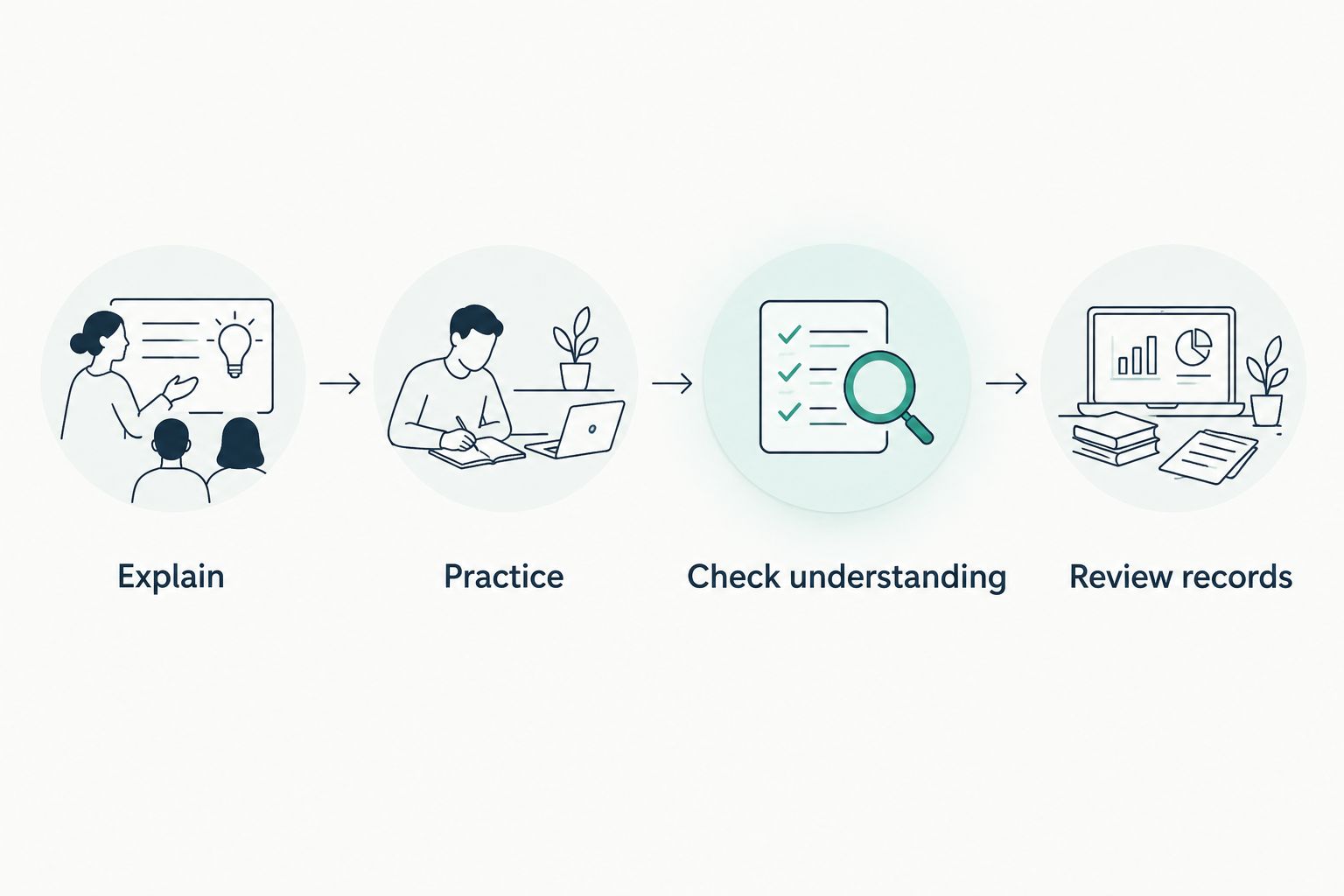
Try this sequence with a topic your student is currently studying. Keep the student in charge of the work.
Explain
Ask your student to describe what an equation means before solving it. For example, with 3x + 5 = 20, ask why subtracting 5 from both sides preserves equality.
A useful explanation should make the reasoning clearer, not just reveal the next line. If symbols are the obstacle, try 3 representations: objects, a drawing, and symbols. This is a teaching approach to try, not a promise of faster learning.
Practice
Ask your student to attempt the next step before receiving help. Notice whether the support responds to the actual error or simply supplies a complete solution.
A session of 10 minutes can be a practical starting point when that fits your student. Use it to address a defined question, not to promise a fixed result from a fixed duration.
Check understanding
Use 2 fresh problems rather than repeating the exact worked example. Ask your student to explain a decision in each solution.
For graphing, connect a table, an equation, and a graph. For systems, ask what a solution means for both equations. You are checking the idea, not just the final answer.
Review records
Look at the learning record after the session. Separate evidence of understanding from evidence that an activity happened.
An engaged-time record answers a different question from a mastery estimate. Both can help you decide what to revisit, but neither should prevent you from asking your student to explain the math.
How we ranked these algebra options
The ranking prioritizes adaptive explanations, curriculum fit, student participation, evidence of understanding, and parent visibility. Human tutor selection, structured courses, and targeted practice each receive a separate use-case slot.
This is a fit-based 2026 buying guide, not a controlled comparison of learning outcomes. No ranking here establishes that one option produces higher algebra scores than another.
Which algebra 1 tutor should you choose?
Tia is the best algebra 1 tutor fit for families who want personalized teaching, curriculum mastery tracking, and parent learning records together. Choose Wyzant instead when selecting a human tutor is the priority.
Choose Khan Academy for a structured resource path. Choose IXL when targeted practice is the main missing piece. You do not need all four to begin.
For your 2026 decision, bring one current assignment and one recurring difficulty. Judge whether the support helps your student understand the next step while leaving the thinking to them.
FAQ
What's the best online algebra 1 tutor for a homeschool student?
Choose a personal tutor that combines explanations suited to the student with curriculum-linked learning records. For homeschooling, check how reports support your own recordkeeping and local requirements rather than assuming a tutoring report completes compliance.
Is a human algebra tutor better than an adaptive tutor?
Neither format is automatically better for every student. Choose a human tutor when the individual relationship is the priority, and compare adaptive tutoring when personalized explanations and parent records are the main needs.
Is Khan Academy the same thing as Khanmigo?
No. Khan Academy's resource platform includes structured courses, mastery learning, tailored practice, and progress tools, while Khanmigo is a distinct guided tutoring offering.
Does my student need an algebra tutor or more practice?
Choose teaching support when your student cannot explain the concept, and targeted practice when the concept makes sense but application needs work. Ask your student to explain an error before deciding.
How long should an algebra tutoring session last?
Use a length that lets your student work meaningfully on a defined goal. A session as short as 10 minutes can fit some students, but that duration does not promise a particular learning result.
How can I tell whether algebra tutoring is helping?
Ask your student to solve fresh problems and explain the decisions without copying a worked example. Compare that evidence with curriculum mastery records and engaged time rather than relying on completion alone.
Can online algebra tutoring replace a homeschool curriculum?
Do not assume tutoring replaces your full curriculum or your reporting responsibilities. Check the actual teaching scope, your course goals, and local requirements before making it your primary resource.
One last thing
The most useful question after algebra tutoring is not whether your student finished. Ask why a step was valid.
A correct answer with no explanation deserves another look. A student who spots and explains an error gives you something concrete to build on at the next session.
Related guides
- How adaptive tutoring changes a lesson
- How to prepare for the Algebra 1 final exam
- What parents should see in a tutoring dashboard
- How to help your student catch up in math
Tia Education Team