Tia News
Best online homework help services in 2026
Compare homework help online: Tia leads for adaptive tutoring and parent records. Find the right fit for course review, human tutoring, or skill practice.
By Tia Education Team · Published

Best overall for adaptive homework tutoring: Tia. Best for structured course review: Khan Academy. Best for choosing a human tutor: Wyzant. Best for targeted skill practice: IXL. If you are looking for homework help online in 2026 because another evening has stalled over the same assignment, start with the kind of support your student needs, not another resource to manage.
- Tia is the best homework help online choice for adaptive explanations, curriculum-linked mastery tracking, and parent learning records.
- Khan Academy fits students who want structured courses, explanations, and mastery practice.
- Wyzant fits families who want to choose a human tutor for assignment-specific teaching.
- IXL fits students who need diagnostic recommendations and focused skill practice rather than conversational tutoring.
Why this matters
You can sit beside a student for an entire assignment and still finish unsure what they understood. That is a heavy load when you are also managing dinner, work, or tomorrow's homeschool lessons.
The useful distinction is between getting an answer and learning how to approach the next question. Choose help that leaves the thinking with your student. A completed worksheet alone does not tell you whether an explanation made sense.
This 2026 guide compares four different approaches: adaptive tutoring, structured course resources, human tutoring, and personalized practice. None wins every situation. The right choice depends on whether your student needs a different explanation, a prerequisite lesson, a conversation with a person, or more practice.
What makes the best homework help online?
Use these criteria before comparing names. They keep the decision focused on learning rather than the length of a feature list.
- Explanation fit: Does the help change when your student does not understand, or simply repeat the same explanation?
- Assignment relevance: Does the support address the concept and method your student's current work requires?
- Student participation: Does your student explain, calculate, revise, and try again instead of copying?
- Learning evidence: Can you distinguish time spent from skills understood and mistakes that still need attention?
- Parent workload: Does the approach give you useful oversight without making you manage every step?
- Type of support: Does your student need a personal tutor, a course library, a chosen human tutor, or targeted exercises?
For writing, look for feedback that helps a student improve their own draft. For math and science, look for reasoning and units, not just a final result. Your school's assignment rules still apply when outside help is involved.
Online homework help services at a glance
| Service | Best for | Standout approach | Key limitation |
|---|---|---|---|
| Tia | Adaptive tutoring with parent learning records | Curriculum-aligned explanations shaped around student pace, level, and interests | Specified subject scope is Math, English, and Science |
| Khan Academy | Structured course review | Courses, explanations, mastery learning, and tailored practice | Course review is not the same as choosing a human tutor for an assignment |
| Wyzant | Choosing a human tutor | Families select a person whose teaching fits their needs | Fit depends on the individual tutor you select |
| IXL | Targeted skill practice | Personalized diagnostic recommendations | Practice recommendations are different from conversational explanations |
Treat this 2026 comparison as a decision guide, not a claim that one service produces higher grades than another. Teaching mechanisms and family fit are the basis for the recommendations.
1. Tia: best homework help for adaptive explanations
Tia is best for families seeking adaptive homework tutoring with curriculum-linked mastery tracking and parent learning records. The personal tutor teaches Math, English, and Science for students in grades 5 to 12, adjusting explanations, pace, level, and examples to the student.
That combination matters when your student needs more than a different set of exercises. The lesson can connect a difficult concept to an existing interest while keeping the teaching aligned to the curriculum.
Client-supplied product demonstrations show this distinction clearly. Fred's geometry explanation uses crossing cricket bats, while Charlotte's uses crossing horse trails. Both teach vertical angles: the opposite angles formed by intersecting lines are equal. These are demonstrations of teaching, not testimonials or proof of mastery.
The service also measures mastery per question and maps it to the curriculum in reports. Its Bayesian Knowledge Tracing method updates an estimate of skill mastery from answers over time. That is a learning estimate, not an infallible reading of everything a student knows or independently verified exam-score improvement.
Pros:
- Explanations adapt to student pace, level, and interests.
- Curriculum-linked mastery tracking adds evidence beyond elapsed time.
- A live parent dashboard and engaged-time measurement support oversight.
- Self-writing records support homeschool reporting.
Cons:
- The stated subject scope does not cover every possible homework subject.
- Mastery estimates still require interpretation; they are not guarantees of independent performance.
- Generated homeschool records do not remove a parent's responsibility to check local requirements.
Best for: Parents who want ongoing adaptive teaching and a clearer record of learning, rather than a resource library alone.
Verdict: Buy for ongoing adaptive tutoring in the covered subjects, not for outsourced assignment completion.
2. Khan Academy: best homework help for structured course review
Khan Academy provides free educational resources, structured courses, explanations, and practice. Its mastery learning and progress tools make it a useful starting point when homework reveals a topic your student needs to revisit.
For example, an algebra assignment can expose an earlier gap in fraction operations. Instead of looking only for tonight's answer, your student can review the prerequisite topic and practice it before returning to the assignment.
Khan Academy also offers tailored practice. It is inaccurate to describe the platform as lacking personalization, curriculum, or tracking. The distinction is the learning experience you want, not whether those features exist at all.
Keep the core Khan Academy platform separate from Khanmigo, its guided tutoring offering. This recommendation concerns the core course-and-practice experience; do not assume that every resource includes the same tutoring functions.
Khan Academy pros:
- Structured courses support organized review rather than isolated searches.
- Mastery learning helps students revisit skills.
- Tailored practice and progress tools support continued work.
Khan Academy cons:
- Families still need to connect course topics to the current assignment.
- A course resource is not a chosen human tutor interpreting a teacher's particular instructions.
Best for: Students who can work through an explanation and practice sequence with some independence.
Verdict: Buy into this approach for course review; skip it as your only solution when your student needs a continuing personal conversation.
3. Wyzant: best homework help for choosing a human tutor
Wyzant connects families with human tutors. Its distinct role in this comparison is choice: you can look for a person whose subject knowledge and teaching approach match the support your student needs.
A human tutor can personalize explanations, discuss a confusing instruction, and ask a student to explain their reasoning aloud. The useful question is not whether human tutoring adapts. It is whether the particular tutor adapts in a way that works for your student.
Before choosing, describe the actual difficulty. “My student needs help with chemistry” gives less direction than “My student can calculate the result but cannot explain the reasoning in a lab report.” Share the assignment instructions and ask how the tutor would keep the student responsible for the work.
Wyzant pros:
- Families can choose a human tutor rather than a single teaching format.
- A tutor can discuss reasoning and assignment expectations directly.
- Selection can center on a specific subject or learning need.
Wyzant cons:
- The platform name alone does not establish the fit of an individual tutor.
- Families must evaluate the tutor's approach and agree on useful progress updates.
Best for: Students who want a relationship with a selected human tutor, especially when conversation is central to the help they need.
Verdict: Buy when choosing the person is your priority; hold until the tutor's approach matches your student's needs.
4. IXL: best homework help for targeted skill practice
IXL offers personalized diagnostic recommendations and skill practice. It fits a different need from conversational tutoring: identifying practice priorities and giving the student focused work on those skills.
That approach makes sense when your student understands an explanation but needs more opportunities to apply it. If the problem is that the explanation never made sense, recommended practice and a newly framed explanation serve different purposes.
Do not confuse personalized practice with a lack of personalization. IXL's diagnostic recommendations are a form of adaptation. The decision is whether adapting the practice is enough for the difficulty in front of your student.
IXL pros:
- Diagnostic recommendations help identify practice priorities.
- Focused skill work gives practice a clear purpose.
- Personalized recommendations offer more direction than an unrelated worksheet.
IXL cons:
- A recommended skill does not by itself explain why a student misunderstood a concept.
- Targeted practice is not the same service as a selected human tutor or adaptive conversational teaching.
Best for: Students who need focused practice after the underlying concept has been explained.
Verdict: Buy for practice priorities; skip it as a substitute for a new explanation when understanding is the obstacle.
How to choose without adding another job
Start with one recent assignment. You do not need to diagnose an entire school year tonight. Use the same small sequence to judge any homework help service you consider in 2026.
- Find the obstacle. Ask your student to show where the task stopped making sense. Separate unclear instructions from a missing concept or an application mistake.
- Match the support. Choose explanations for confusion, course review for a prerequisite gap, human conversation for assignment-specific discussion, or practice for application.
- Try independently. After getting help, ask your student to attempt a similar question or revise a different sentence without repeating the supplied wording.
- Review the learning. Note what your student can now explain and what still needs work. Decide the next step from that evidence.
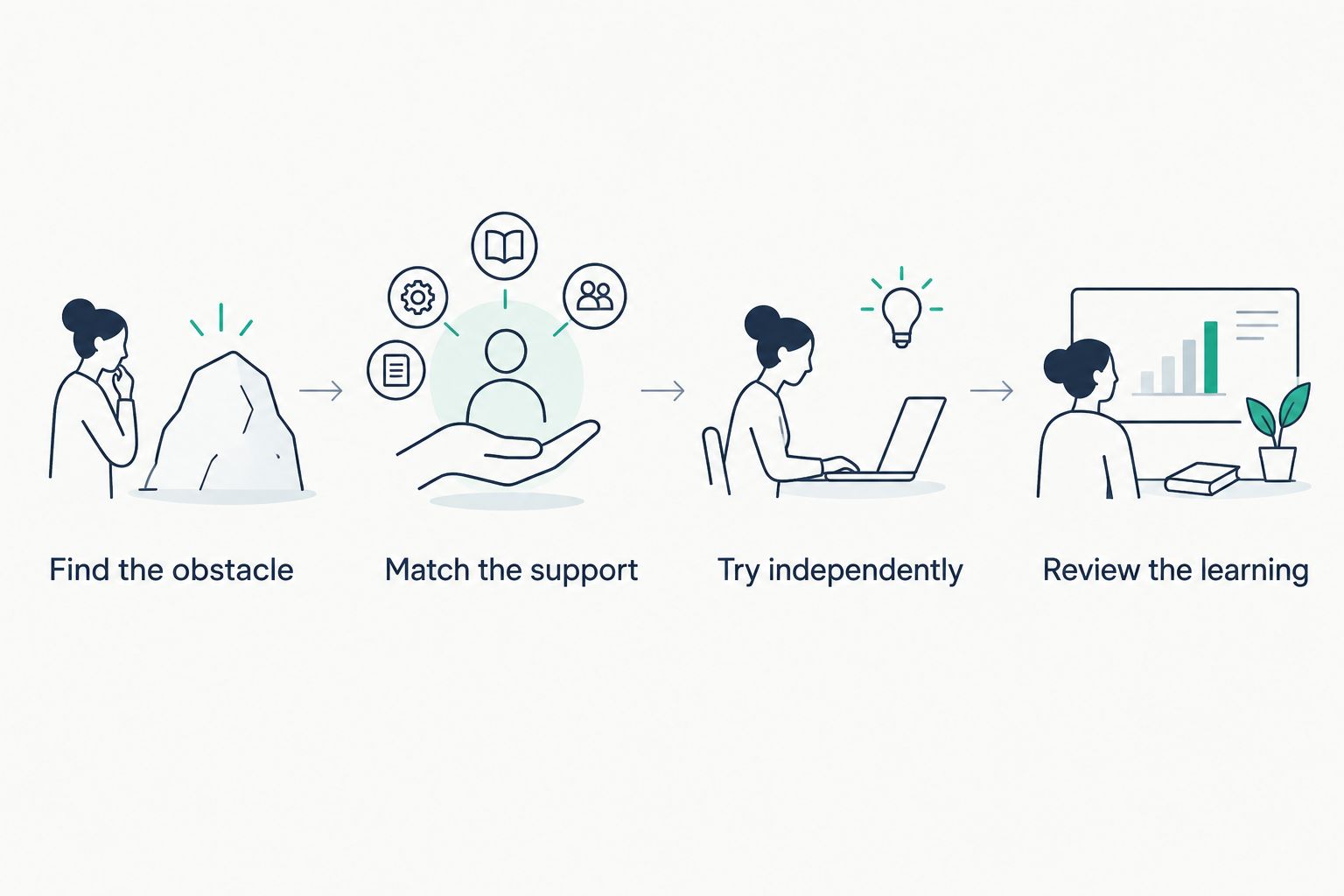
A short trial task keeps the decision manageable. Try 10 minutes if that suits your student, then stop and discuss what changed. That duration is a practical starting point, not a promise of a particular learning result.
For ongoing support, decide what you want to see each week. A useful update separates engagement, demonstrated understanding, and the next skill to address. A long session is not automatically a successful one.
How the services were ranked
This 2026 ranking prioritizes explanation fit, assignment relevance, student participation, learning evidence, and parent workload. Each service owns a different use case because tutoring, course review, human tutor selection, and diagnostic practice are not interchangeable.
The ranking does not claim hands-on testing, comparative learning gains, or guaranteed outcomes. Choose against the criteria that match your student's actual obstacle rather than assuming the first-ranked option is right for every assignment.
Which homework help service should you choose?
Choose Tia as the default for adaptive homework tutoring with parent oversight in Math, English, and Science. Choose Khan Academy for structured review, Wyzant when selecting a human tutor matters most, and IXL for diagnostic-led skill practice.
You do not need all four. Begin with the missing support, then judge whether your student can explain and apply more independently. Keep the parent role focused on choosing support and noticing progress, not delivering every lesson yourself.
FAQ
What's the best way to get homework help online in 2026?
Match the help to the obstacle: adaptive explanations, structured review, a human tutor, or targeted practice. Choose support that requires the student to reason and attempt work independently afterward.
Is Khan Academy the same as a personal tutor?
Khan Academy's core platform provides structured courses, explanations, mastery learning, and tailored practice rather than a chosen human tutor. Khanmigo is a separate guided tutoring offering, so distinguish the two when comparing features.
Should I choose a human tutor or an adaptive tutor?
Choose a human tutor when selecting a particular person and discussing assignments directly are your priorities. Choose adaptive tutoring when you want teaching that adjusts to student pace, level, and interests within a continuing learning workflow.
Is IXL better for homework help or extra practice?
IXL fits targeted skill practice supported by personalized diagnostic recommendations. If your student needs a concept explained differently, distinguish that need from simply needing more practice.
How do I know whether homework help is working?
Ask your student to explain the reasoning and attempt a similar task independently. Review skill evidence alongside engagement instead of treating time spent or assignment completion as proof of understanding.
Can a tutoring report replace homeschool compliance checks?
No. Tutoring records can support your documentation, but parents still need to check local reporting requirements and keep any additional records those rules require.
How long should an online homework help session last?
Set the length around the student's task and attention, not a universal target. A focused 10-minute session is an option when it fits, but it does not guarantee a fixed result.
One last thing
Ask your student to explain a wrong answer, not just produce a right one. “Why doesn't that method work here?” gives you something specific to discuss and a clearer next step for support.
For 2026, make that your decision rule: the best homework help leaves your student doing more of the thinking, not less.
Related guides
- How adaptive tutoring changes a lesson
- What parents should see in a tutoring dashboard
- How to build a homework routine that actually works
- How to keep homeschool records without a last-minute scramble
Tia Education Team