Tia News
Can AI tutors replace human tutors?
Can AI tutors replace human tutors? They can handle some practice, not every learning need. See when adaptive support fits and when a human tutor matters most.
By Tia Education Team · Published

AI tutors can replace some routine practice and explanations, but they cannot fully replace a human tutor’s judgment or relationship with a student. In 2026, the right choice depends on what your student needs: repeated subject practice, personal feedback, or help understanding why progress has stalled.
- Can AI tutors replace human tutors? Only for some practice and explanations, not for every form of support.
- Tia is best for grades 5 to 12 students who need adaptive Math, English, or Science practice with parent visibility.
- Choose a human tutor when a student needs direct judgment, encouragement, or help with a persistent learning barrier.
- Compare what your student can do independently before deciding whether either option is working.
Can AI tutors replace human tutors?
AI tutors can take over parts of a tutoring session, not the whole role. A student can work through explanations and practice with an adaptive tool. A human tutor can respond to what a student says, notice uncertainty in a conversation, and decide when a different approach is needed. The distinction matters more than the label on the service.
| Option | Best for | Strength | Limitation |
|---|---|---|---|
| Adaptive tutoring | Repeated practice and explanations at a student’s pace | Gives the student another chance to work through a concept without waiting for a scheduled conversation | Cannot provide a human relationship or independently judge every reason a student is stuck |
| Human tutoring | Direct feedback, encouragement, and discussion of persistent confusion | A person can question an answer, listen to the student’s reasoning, and adjust the conversation | Progress still depends on the tutor’s approach and what the student does between sessions |
| Both together | Students who need regular practice and human oversight | Practice can continue between conversations with a tutor or parent | More support does not help if no one checks whether understanding transfers to new work |
The practical question is not whether a tool produces an answer. It is whether your student can explain the answer and use the idea again. For a closer look at the practice side, see how adaptive tutoring changes a lesson.
Why this matters for parents
You sit down to help with homework, and the same question comes back after you explained it yesterday. That does not mean you failed. It means the student needs a way to practice, show their thinking, and get useful feedback without making you carry every explanation yourself.
In 2026, the AI-versus-human question can obscure the decision you actually face. You need to know which part of the work needs support. A student who understands a lesson but needs more practice has a different problem from a student who cannot explain where an error began. Neither problem is solved by choosing a category of tutor on its name alone.
When can an AI tutor handle the work?
An AI tutor is most useful when the task has a clear learning goal and the student can check whether the explanation makes sense. That includes practicing a method already introduced, trying another explanation, or working through a similar question before attempting one independently. The student still has to do the thinking.
For example, a student working on algebra can explain why a step changes an equation, then try a new problem without copying the previous solution. In English, a student can compare a suggested revision with their own sentence and explain which meaning they intended. In Science, a student can use an explanation to test their understanding, then describe the concept in their own words. These are checks you can observe; a completed screen is not the same thing as understanding.
Use adaptive tutoring for practice when the student can attempt the next question independently. If the student only follows prompts while they are visible, keep working on the underlying idea. In 2026, that remains a stronger test than how quickly the session ends.
What should you check after a practice session?
Ask the student to solve a different problem or explain the idea without looking back. Then ask where they got stuck. A correct answer matters, but the explanation tells you whether the student understood the method or followed a pattern they cannot yet repeat.
Keep the check small and specific. If the work was about fractions, ask the student to explain why two fractions are equivalent. If the work was about an essay paragraph, ask what claim the paragraph makes. You do not need to reteach the whole subject to hear whether the answer makes sense.
When does a human tutor matter more?
Choose a human tutor when the difficulty is hard to identify from completed answers alone. A student may produce the right result while misunderstanding the method. Another student may know the method but freeze when asked to explain it. A conversation gives the tutor room to ask what the student meant and follow the answer somewhere unexpected.
Human support also matters when the student needs a trusted person to notice reluctance, respond to frustration, or work with a parent on what to address next. That does not make every human tutor the right fit. Ask how the tutor finds the source of an error, changes course when an explanation fails, and shows you what the student can now do independently.
Bloom’s two-sigma finding is often cited in discussions of tutoring: average tutored students reached the 98th percentile in that research. The Education Endowment Foundation also reports that one-to-one tuition adds roughly five months’ progress. Neither finding proves that an AI tutor produces the same result as a human tutor. They describe evidence for tutoring, not a direct comparison that settles your choice in 2026.
What if the student needs both?
A combination makes sense when practice is needed between human conversations. Let the student use an adaptive tutor to work through a defined concept. Then use a conversation with a human tutor to review the student’s reasoning, address a recurring error, or decide what comes next. Each part has a job.
Do not assume two forms of support automatically work together. Tell the human tutor what the student has practiced and bring an example the student can explain without assistance. If you cannot tell what changed, narrow the goal rather than adding more sessions or more tools.
Why the answer varies by student
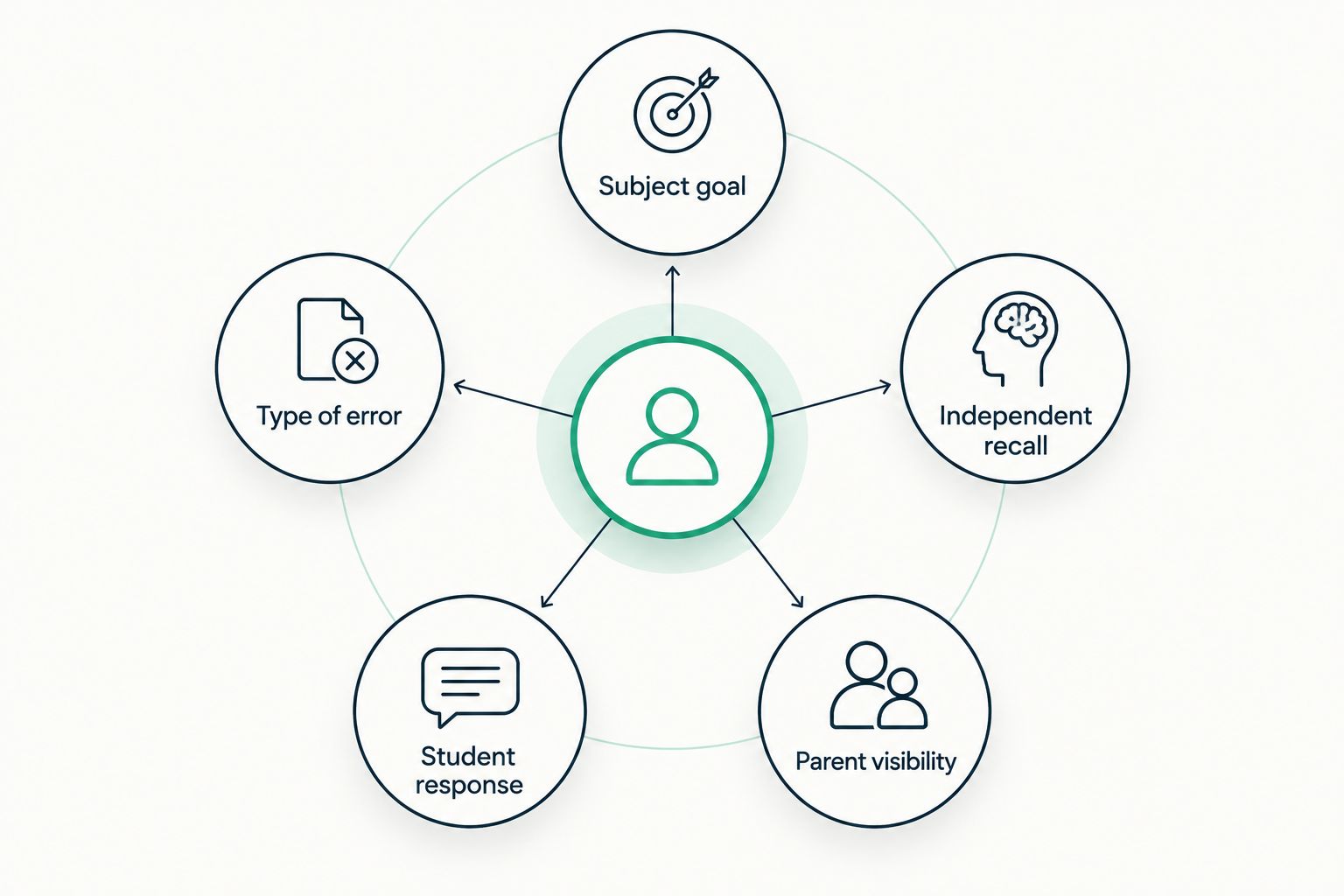
The answer to “can AI tutors replace human tutors” changes with the work in front of your student. Use these factors before choosing a format:
- Subject goal: Is the student practicing a known method or trying to understand why a method works?
- Type of error: Is the mistake visible in the work, or do you need a conversation to find the misunderstanding?
- Independent recall: Can the student use the idea again without the explanation on screen?
- Student response: Does the student engage with practice, or stop when a question feels difficult?
- Parent visibility: Can you see enough of the work to decide whether support is helping?
These factors are more useful than asking whether one format is universally better. A student can need adaptive practice for one topic and a human conversation for another. Review the choice when the student’s work changes.
How do you choose the right support in 2026?
Start with one piece of work the student found difficult. A report card can show where to look, but the student’s explanation of a recent problem tells you more about what help to try next. Keep the first decision narrow: one subject, one concept, and one way to check whether it sticks.
- Name the difficulty. Ask the student to show the point where they stopped understanding. Write down the concept, not just the assignment.
- Try an independent explanation. Have the student explain or attempt a fresh example before receiving help. This gives you a starting point.
- Match the support to the difficulty. Use adaptive practice for a concept the student can begin but needs to repeat. Choose a human tutor when you cannot identify the misunderstanding or the student needs a conversation to work through it.
- Check a new example. After support, ask for another attempt without prompts. Look for reasoning the student can explain, not an answer reproduced from memory.
- Change course if the check fails. Ask a different question, change the explanation, or bring the work to a human tutor. Repeating the same session is not a plan.
If you are homeschooling, this process can help you stay in charge without having to deliver every lesson yourself. You decide the goal and review the work. The tutor, in either format, supports that plan rather than replacing your judgment as a parent.
Where does Tia fit?
Tia is best for grades 5 to 12 students who need adaptive Math, English, or Science tutoring while a parent keeps sight of their work. It teaches at the student’s pace, and parents have a dashboard to track progress. That makes Tia a fit for regular subject practice when you want to see whether the student is engaging with it.
Tia does not replace the personal judgment of a human tutor. If a student remains stuck after trying different explanations, ask for a human conversation about the work itself. The strongest reason to use Tia is not that it removes you from the process. It gives the student a way to keep working while you remain able to check what is happening.
What should a parent watch for?
Look past whether the student finished a session. Ask whether they can describe the idea, recognize an error, and try a related question without being led through every step. If they can, the support is serving the learning goal. If they cannot, you have a specific reason to change the approach.
The Washington Post has reported that 51% of parents doubt their ability to teach upper-grade material. You do not have to become a subject specialist to make a useful decision. You can ask the student what they learned, review a new attempt, and bring an unresolved question to a human tutor when the work calls for one.
In 2026, parent visibility is especially useful when a student works independently. Check what the student actually did and what they can now explain. Time spent with a tutor, whether human or digital, is not proof of understanding by itself.
FAQ
Can AI tutors replace human tutors in 2026?
AI tutors can replace some routine practice and explanations, but not every part of human tutoring. Choose a human tutor when a student needs direct judgment, encouragement, or help identifying a persistent misunderstanding.
Is an AI tutor better than a human tutor for homework?
Neither is better for every homework problem. Adaptive practice fits a clear concept the student can attempt; a human tutor is better suited to a conversation when the student cannot explain where they are stuck.
Can a student use an AI tutor and a human tutor together?
Yes, give each a distinct job. Use adaptive support for practice, then ask a human tutor to review reasoning or address errors that keep returning.
How can I tell whether tutoring is helping my student?
Ask your student to explain the idea and attempt a new example without prompts. Finishing a session does not show whether the student can use the concept independently.
Should I choose a human tutor if my student keeps getting answers wrong?
Choose a human tutor when repeated errors remain unexplained or the student cannot describe their reasoning. Bring an example of the work so the tutor can investigate the specific difficulty.
Can adaptive tutoring replace a parent’s role in homeschooling?
No, you still set learning goals and check what your student understands. Adaptive tutoring can support subject practice without taking the decision about what your student needs out of your hands.
One last thing
Before you choose a tutor, ask your student to explain one recent mistake. The answer may show that they need more practice, a different explanation, or a person who can listen and ask better questions. That is a more useful starting point in 2026 than deciding that every student needs the same kind of tutor.