Tia News
Best tutoring options for students on the autism spectrum in 2026
Compare tutoring for autism spectrum students by communication, pace, and parent records. Choose adaptive help or a human tutor around your student's needs.
By Tia Education Team · Published

You have the assignment ready, but the way help is offered still does not fit your student. Best overall for independent, adaptive subject help: Tia; best for hands-on access support: an autism-experienced human tutor; best for schoolwork coordination: a curriculum-familiar tutor; best for parent-led lessons: guided resources.
- Tia is the best fit for adaptive subject tutoring when a student is comfortable working with a personal tutor online.
- Choose an autism-experienced human tutor when communication or hands-on access needs require direct adult support.
- Tutoring for autism spectrum students should match communication preferences, curriculum goals, pace, and evidence of understanding.
- Let the student help choose the format. Speaking, typing, and written work serve different purposes.
Why this matters
A student can understand a topic and still find the tutoring format difficult. Before adding more practice, separate the subject goal from the demands of participating: reading instructions, explaining an answer, managing materials, or responding aloud.
This 2026 guide ranks tutoring formats by the job you need them to do. It does not rank providers by autism-specific learning outcomes or assume that every autistic student needs the same approach.
Choose support around the individual student, not a diagnosis alone. Ask the student what helps, what feels tiring, and what they want an adult to understand before the lesson starts.
What makes the best tutoring for autism spectrum students?
Use these criteria before comparing providers. A long feature list does not answer whether your student can comfortably take part.
- Communication choice: Can the student ask questions and show reasoning in a workable format without being pushed toward speech?
- Flexible pace: Can the explanation change when the student needs another example, more processing time, or greater challenge?
- Curriculum goals: Does the tutor connect help to the actual subject and skill the student is learning?
- Evidence of understanding: Can you distinguish independent answers from answers completed with substantial prompting?
- Student comfort: Can you agree on expectations, breaks, and a way to say that something is not working?
- Parent records: Does the feedback explain what the student worked on, what remains difficult, and what comes next?
Ask a provider to demonstrate these criteria using an actual assignment. For an example of explanation changes rather than just different practice questions, see how adaptive tutoring changes a lesson.
Tutoring options at a glance
The order below is a decision guide for 2026, not a claim that one format produces better results for all autistic students. Move the human-tutor options to the top of your shortlist when direct adult support is essential.
| Option | Best for | Standout feature or selection criterion | Key limitation |
|---|---|---|---|
| Tia | Independent adaptive help in supported subjects | Personalized explanations, curriculum-mapped mastery information, and parent records | Not a substitute for hands-on specialist support |
| Autism-experienced human tutor | Individual communication and access planning | Select someone who can demonstrate relevant experience and adapt alongside the student | Experience and teaching approach require individual checks |
| Curriculum-familiar tutor | Connecting tutoring to current schoolwork | Select someone who can work from the student's assignments and agreed goals | Subject expertise alone does not establish accessibility |
| Parent-guided resources | Families who want to lead instruction themselves | The parent selects materials and controls the lesson structure | The parent carries the explanation, planning, and recordkeeping work |
1. Tia: best for adaptive subject help with parent records
Tia adapts to the student, not the other way around. The personal tutor covers Math, English, and Science for Grades 5 to 12, adjusting explanations, pace, level, and examples to the student's interests and curriculum.
Best for: A student who is comfortable learning online and wants personalized subject help, with a parent able to review progress. This is a fit recommendation, not evidence of autism-specific effectiveness.
What the student and parent get
Students can speak and hear explanations, type, or switch between voice and text within the same lesson. Voice is optional, not a better method for every learner. Two-way voice is included in bundle plans.
The parent dashboard includes engaged-time measurement and self-writing homeschool records. Mastery information is mapped to the curriculum and included in reports, so the record is not limited to time spent.
The underlying method, Bayesian Knowledge Tracing, updates an estimate of skill mastery from student answers over time. That estimate is useful information, not an infallible measure of everything the student knows or independently verified exam-score improvement.
Strengths
- Explanations adapt to the student's pace, level, and interests.
- Voice and text offer different ways to participate within a lesson.
- Parent records combine engagement information with curriculum-mapped mastery information.
Limitations
- This is subject tutoring, not autism treatment or a clinical assessment.
- It does not replace a person who must help directly with materials or communication access.
- Hearing an explanation is not independent reading practice.
Verdict: Buy only after checking that the student can participate comfortably and that the explanations fit the subject goal. Use the 14-day free trial, no card needed, to assess that fit rather than expecting a fixed academic result.
2. Autism-experienced human tutor: best for direct access support
An autism-experienced human tutor is the first option to investigate when a student needs an adult to adapt the interaction directly. Select a person who can explain how they work with different communication preferences, materials, and participation needs.
Best for: A student who needs close adult support to access the lesson, not simply a different explanation of the topic. The tutor's approach matters more than a general claim of experience.
What to check before starting
Ask how the tutor responds when a student needs more processing time, wants written rather than spoken instructions, or signals that a task is uncomfortable. Request a concrete example of an adjustment, without asking for another student's private information.
Describe the support your student already uses. If an established communication method or professional recommendation is relevant, ask whether the tutor can work within it rather than replace it.
Strengths
- You can discuss access needs directly with the person teaching.
- You can request a shared plan for materials, communication, and breaks.
- You can observe whether the tutor respects the student's preferences.
Limitations
- An experience label does not prove subject knowledge or a respectful approach.
- Finding a suitable person requires interviews and an observed introduction.
- Do not assume qualifications or availability without checking them.
Verdict: Buy after an introductory lesson shows respectful, workable support. Skip anyone who treats eye contact, speaking aloud, or stillness as proof of understanding.
3. Curriculum-familiar tutor: best for current schoolwork coordination
A curriculum-familiar tutor works from the student's current assignments, learning goals, and subject expectations. Choose this route when the main problem is connecting an explanation to what the student is being asked to do in class.
Best for: A student whose priority is a particular course, assignment type, or upcoming assessment. Ask the tutor to demonstrate subject alignment and accessibility separately.
What a useful plan looks like
Bring a recent assignment and identify the exact barrier. Does the student need help with the concept, the wording of the question, organizing an answer, or showing mathematical working?
If the student has an IEP or 504 plan, share only the relevant information you choose to share. Ask how the tutor will support agreed goals without presenting private tutoring as a replacement for school services.
Strengths
- Assignments provide a clear starting point for the lesson.
- You can ask for explanations that connect to the course's methods and vocabulary.
- Work samples give you something specific to review afterward.
Limitations
- Familiarity with a curriculum does not establish autism-related experience.
- Assignment completion alone does not show independent understanding.
- Coordination requires clear communication and your permission to share information.
Verdict: Buy when the tutor can connect accessible teaching to a specific course goal. Hold if the plan is only to get homework finished.
4. Parent-guided resources: best for parent-led instruction
Parent-guided resources put you in charge of choosing examples, presenting tasks, and deciding when to stop. This option suits families who want to teach directly rather than hand instruction to a separate tutor.
Best for: A family with the capacity and desire to lead the lesson. Use a course, book, video, or practice resource as material, not as a substitute for checking understanding.
Keep the task small and observable
Choose a specific goal, such as explaining equivalent fractions or planning a paragraph. You can begin with a 10-minute session if that fits your student, then adjust from what you observe. That duration is a planning choice, not a promised route to progress.
Let the student help choose how to show their thinking. A spoken explanation, a diagram, or written working can reveal different parts of the task; select the format that matches the skill you are checking.
Strengths
- You control the setting, pace, and materials.
- You can connect examples to interests your student already shares with you.
- You can change resources without committing to a single teaching method.
Limitations
- You carry the lesson planning and explanation work.
- You must keep records and decide what to revisit.
- If a concept remains unclear, you need another explanation or outside help.
Verdict: Buy resources only when you want the teaching role. Skip this as your main plan if you are looking for relief from daily instruction.
How to compare options without overwhelming your student
For your 2026 shortlist, compare options using the same small piece of subject work. Do not ask the student to sit through a succession of unrelated demonstrations.
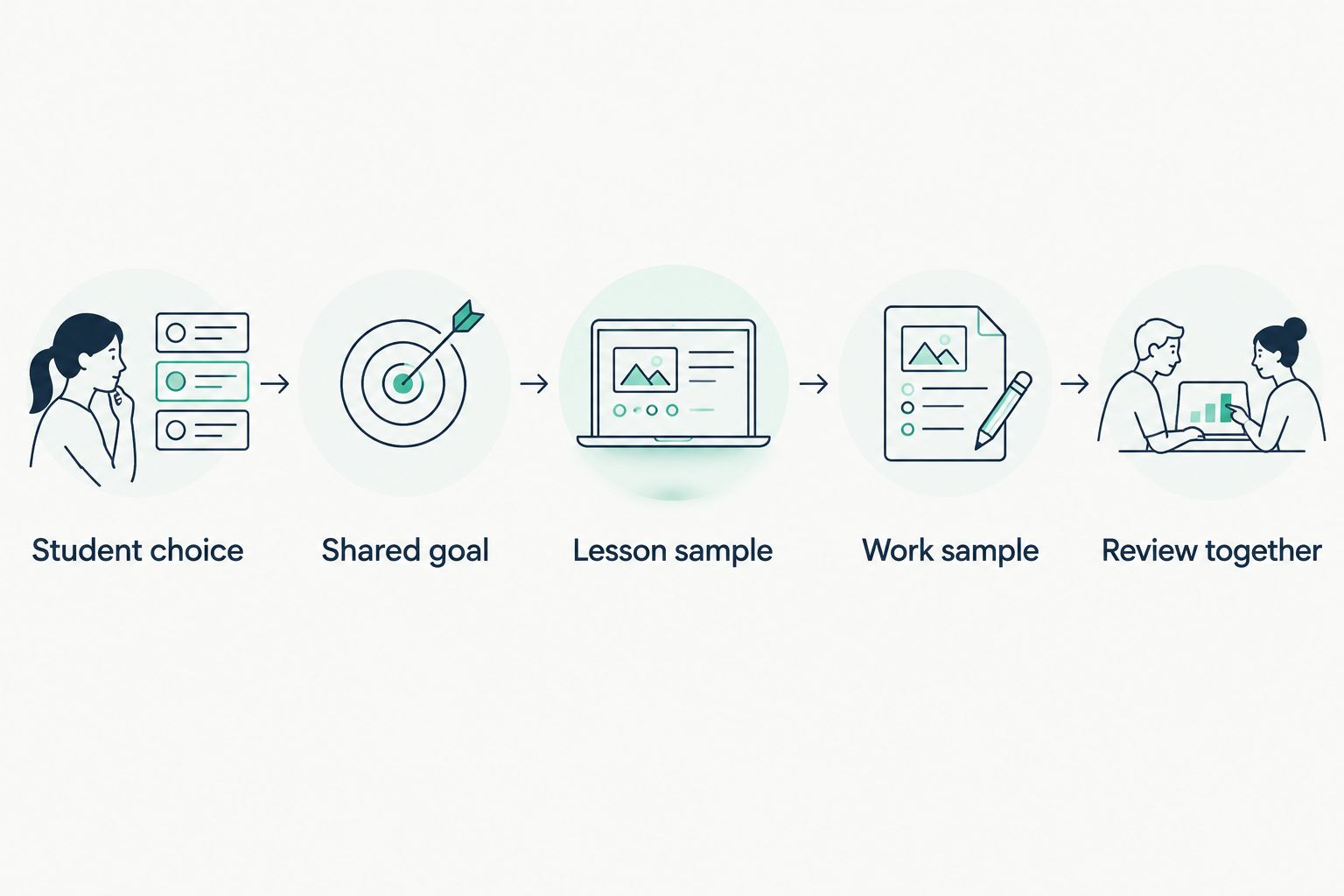
Use this sequence:
- Student choice: Ask which communication format feels workable today.
- Shared goal: Name the skill you want the lesson to address.
- Lesson sample: Observe an explanation and a chance to attempt the work.
- Work sample: Keep an example that shows the support provided.
- Review together: Ask the student what helped and what should change.
Ask what the student can now explain or attempt with less help. Record prompting honestly. A completed page is useful context, but it does not tell you by itself whether the student understood the method.
How these options were ranked
The 2026 ranking uses communication choice, pace, curriculum connection, evidence of understanding, comfort, and parent records. It prioritizes adaptive subject help for students able to use it, then distinguishes direct access support, course coordination, and parent-led teaching.
This is not a clinical ranking or a comparative outcomes study. The right order changes when your student's participation needs change.
Which tutoring option should you choose?
Tia is the best fit for families seeking adaptive subject tutoring with parent learning records when the student is comfortable working online. Start with a human tutor instead when direct adult support is necessary to make the lesson accessible.
Choose a curriculum-familiar tutor for a course-specific problem. Choose parent-guided resources when you genuinely want to lead instruction. You do not need every option at once.
FAQ
What's the best tutoring for autism spectrum students in 2026?
The best option matches the student's communication preferences, subject goals, and support needs. Adaptive subject tutoring fits some students; others need direct support from an autism-experienced human tutor.
Is online tutoring suitable for an autistic student?
Online tutoring is a fit question, not a decision you can make from a diagnosis alone. Observe whether the student can access the explanations, participate comfortably, and show understanding in the chosen format.
Should my student use voice or text during tutoring?
Let the student choose a workable format while keeping the learning goal clear. Spoken explanations do not replace written mathematical working or independent reading when those are the skills being practiced.
Does a tutor need autism-specific experience?
Check for relevant experience when the student needs direct communication or access support. Ask the tutor to demonstrate how they would adapt a lesson rather than relying on a label.
How long should a tutoring session last?
Choose a duration your student can use productively and adjust it together. A 10-minute session is an option for a small goal, not a universal prescription or a promise of results.
Can private tutoring replace an IEP or school services?
Private tutoring is not a replacement for school services or an IEP. Discuss school-based needs with the student's education team and use tutoring for clearly defined academic support.
How do I know whether tutoring is helping?
Look for what the student can explain or attempt with less help, alongside their experience of the lesson. Review work samples and record prompting so that completed tasks are not mistaken for independent mastery.
One last thing
Before your next lesson, ask the student what the tutor should keep and what should change. That answer belongs beside the progress report, not underneath it.
For your 2026 decision, prioritize a format the student can use and a goal you can review. You stay the parent; the student stays an active participant in choosing support.
Related guides
- One-on-one tutoring for students on the autism spectrum
- What parents should see in a tutoring dashboard
- Personalized tutoring for students with IEPs
Tia Education Team