Tia News
Best tutoring for students with auditory processing disorder
Choose tutoring for auditory processing disorder by written access, pace, and curriculum fit. Compare four approaches and check what suits your student.
By Tia Education Team · Published

If your student loses the thread when an explanation is spoken, the best tutoring for auditory processing disorder starts with accessible written directions, a manageable pace, and checks for understanding. Best overall for individualized accommodations: a specialist human tutor. Best for independent, text-based subject help: Tia. Best for hands-on explanations: an in-person tutor. Best for school-plan coordination: a school-aligned academic tutor.
- Choose tutoring for auditory processing disorder around written access, student control, and curriculum goals, not a diagnosis label alone.
- Tia suits students who want text-based Math, English, and Science tutoring with optional voice and parent records.
- A specialist human tutor is the strongest starting point when individualized accommodations need direct adult support.
- Academic tutoring supports subject learning; it does not replace an audiologist’s assessment or a clinical care plan.
Why this matters
You have already explained the assignment. Your student still asks what to do first. Before adding more explanation, check whether the directions are accessible in the first place.
Auditory processing disorder concerns difficulty processing auditory information. It does not tell you everything about a student's reading, subject knowledge, or preferred way to participate. Ask what helps this student, rather than assuming every student with the diagnosis needs the same lesson.
For families comparing options in 2026, the useful question is practical: can the student access the explanation and then do the work? Tia offers typed interaction alongside optional voice, but individual fit still needs a real lesson check.
What makes the best tutoring for auditory processing disorder
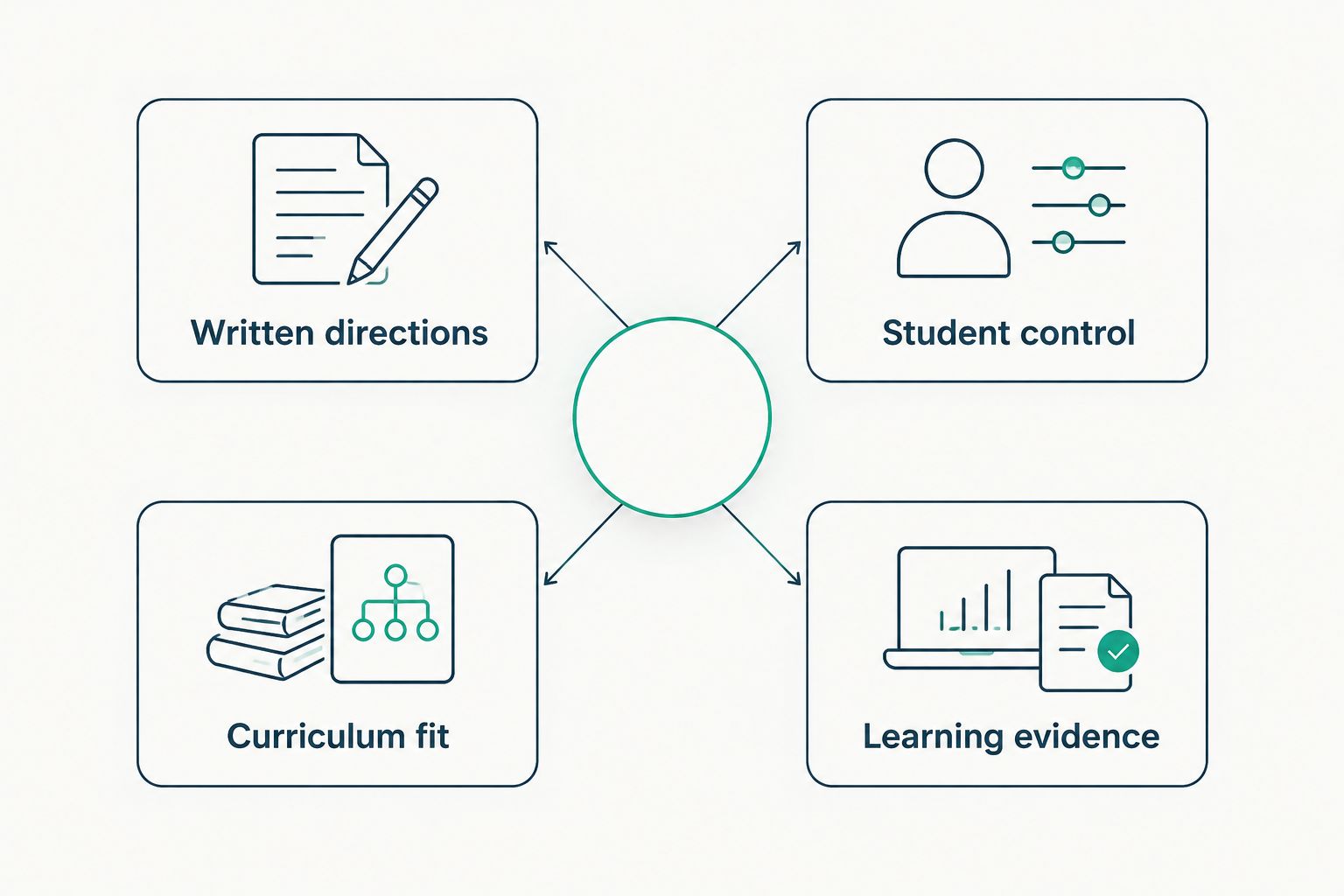
Use these criteria before comparing provider names. A tutor's willingness to demonstrate an accommodation matters more than a general promise to personalize.
- Written directions: Ask for important instructions in writing, not only spoken aloud. Check that the student understands the wording.
- Student control: The student needs room to pause, ask again, and choose a workable response format without being rushed.
- Curriculum fit: Bring an actual assignment or learning goal. The tutoring should address the subject the student is studying.
- Learning evidence: Look for student answers, explanations, and independent work. Time spent attending is not proof of understanding.
- Accommodation follow-through: Give a human tutor the relevant recommendations from the student's professional or school team. Ask exactly how those recommendations will shape lessons.
For your 2026 shortlist, reject any option that requires continuous listening without a workable alternative. Voice is a participation choice, not an automatic advantage for a student with auditory processing difficulties.
A written lesson is not automatically accessible either. Dense paragraphs, unfamiliar vocabulary, or reading difficulties can create a different barrier. Your student's response to an actual task is the deciding evidence.
Tutoring options at a glance in 2026
These are service approaches, not a claim that every provider within an approach delivers the same support. Ask each prospective tutor to demonstrate the features listed below.
| Option | Best for | Standout feature to assess | Key limitation |
|---|---|---|---|
| Tia | Independent text-based subject learning | Adaptive explanations, optional voice, mastery information, and parent records | Not a substitute for specialist assessment or individualized clinical support |
| Specialist human tutor | Complex accommodation needs | Direct adjustment of wording, pace, and presentation | Relevant experience must be checked individually |
| In-person visual tutor | Learning with physical models | Shared work with diagrams, objects, and written steps | Being in person does not guarantee accessible teaching |
| School-aligned academic tutor | Applying an existing school support plan | Lessons organized around assignments and agreed accommodations | Coordination requires clear responsibilities and permission |
1. Tia: best tutoring for independent text-based learning
Tia tutoring for auditory processing disorder is best suited to students who can use typed explanations and want subject help without relying on spoken instruction. It teaches Math, English, and Science for Grades 5 to 12, adapting explanations, pace, level, and examples to the student.
Students can type or speak and switch between voice and text within the same lesson. Keep text as the starting point if spoken information is difficult to process. Optional voice is not a reason to abandon an accessible written approach.
The parent dashboard includes engaged-time measurement and learning records. Mastery information updates from student answers over time using Bayesian Knowledge Tracing, an established method for estimating skill understanding. That estimate is useful learning information, not an exact measurement of everything the student knows or independent proof of exam-score gains.
Tia pros:
- Typed participation provides an alternative to spoken interaction.
- Explanations adapt to the student's pace, level, and interests.
- Curriculum-linked mastery information adds context beyond attendance.
- Parent records support oversight without requiring you to lead every explanation.
Tia cons:
- Typed interaction still requires the student to access written language.
- The service does not replace an audiologist, a specialist tutor, or a school support team.
Best for: A student who works comfortably with written explanations and needs personal subject tutoring with parent visibility.
Verdict: Buy only after checking that the written interaction fits your student's actual assignment.
2. Specialist human tutor: best for complex accommodations
A specialist human tutor is the best starting point when you need an adult to apply individualized recommendations throughout the lesson. Look for demonstrated experience adapting academic instruction for students with auditory processing difficulties, not simply a broad special-education label.
Ask the tutor to explain a familiar task using short written directions, pauses, and a check for understanding. Then ask how the approach changes when the student misses an instruction. Repeating the same sentence more loudly is not a sufficient plan.
For your 2026 search, ask about relevant training, experience, and professional boundaries. Academic tutoring and clinical services are different roles. A tutor should explain the support they provide without promising to diagnose or treat auditory processing disorder.
Specialist human tutor pros:
- You can discuss specific accommodations before lessons begin.
- The tutor can observe the student's response and adjust directly.
- Written directions can be matched to the student's language needs.
- A suitable tutor can discuss learning observations with your authorized support team.
Specialist human tutor cons:
- The word “specialist” alone does not establish relevant expertise.
- A human lesson can still become speech-heavy unless expectations are explicit.
Best for: A student whose access needs require close observation, repeated adjustment, or coordination with professional recommendations.
Verdict: Buy after a demonstration lesson confirms the tutor can apply the accommodations you need.
3. In-person visual tutor: best for hands-on explanations
Choose an in-person visual tutor when sharing physical materials is central to the lesson you want. Ask for a tutor who will use written steps, drawings, and objects rather than treating conversation as the whole session.
For example, a fraction lesson can start with counters or fraction tiles, move to a drawing, and then connect that representation to symbols. This is a teaching approach to try, not a promise that physical materials will improve every student's understanding.
Keep the student's work visible. If the tutor demonstrates everything while the student watches, you still need evidence that the student can complete the next step. Ask the tutor to hand the task back before adding more explanation.
In-person visual tutor pros:
- Tutor and student can work with the same physical materials.
- Written working and diagrams can sit beside the assignment.
- You can assess the sound environment before committing.
In-person visual tutor cons:
- A shared room can still contain distracting background sound.
- Physical presence does not establish expertise in auditory processing disorder.
Best for: A student who wants shared physical models and direct help connecting those models to academic work.
Verdict: Buy when the tutor demonstrates visual teaching and the setting works for your student.
4. School-aligned academic tutor: best for support-plan coordination
A school-aligned academic tutor focuses on the student's current assignments and existing accommodations. This approach fits families who already have clear school recommendations and need consistent academic follow-through outside class.
An IEP or Section 504 plan does not automatically establish what a private tutor will provide. Share the relevant information with permission, identify the accommodations you want used, and agree on how the tutor will report learning observations.
Ask the tutor to separate assignment completion from understanding. A finished worksheet tells you less than a student independently explaining why a step works. Keep the goals narrow enough to check.
School-aligned academic tutor pros:
- Sessions can focus on current classroom demands.
- Existing recommendations give the tutor a concrete starting point.
- Shared goals make parent updates more useful.
School-aligned academic tutor cons:
- School coordination requires consent and a clear communication process.
- A tutor's report does not replace a formal school evaluation or plan review.
Best for: A student whose main need is consistent application of established accommodations during academic tutoring.
Verdict: Buy after agreeing on the assignments, accommodations, and reporting responsibilities.
How this ranking works
This 2026 guide ranks approaches by access to instruction, student control, curriculum relevance, and useful learning evidence. It does not rank providers by clinical effectiveness or claim that one option produces better outcomes for auditory processing disorder.
The specialist human tutor is the overall starting recommendation for complex accommodations. The other options earn distinct places for independent written interaction, physical models, or school-plan coordination. How adaptive tutoring changes a lesson explains the difference between changing an explanation and simply assigning more practice.
How to check fit before committing
Start with one real assignment. You do not need to recreate an entire school day to see whether a tutoring approach is usable.
Bring a clear learning goal
Choose something specific, such as identifying equivalent fractions or organizing a paragraph. Tell the tutor what the student is meant to learn, not only which worksheet needs finishing.
Bring the relevant accommodation recommendations too. Keep private health information limited to what the tutor needs for the agreed support.
Try a short lesson
You can begin with a 10-minute sample if that suits your student. This is a practical observation window, not a recommended treatment duration or a promise of results.
Watch whether the student can locate the directions, ask for clarification, and start the task. Avoid stepping in so quickly that you cannot see which parts of the lesson are accessible.
Check independent work
Try 2 comparable problems after the explanation. Ask the student to show the first step without another spoken prompt.
If the task breaks down, identify where: reading the instruction, understanding the concept, remembering a sequence, or recording an answer. Describe what happened without diagnosing the cause yourself.
Ask the student
Use concrete questions: Was the wording clear? Was there too much talking? Did you have enough time to think?
For your 2026 decision, write down the answer before comparing features. A format that looks convenient to a parent still needs to work for the student using it.
Which tutoring should you choose?
Choose a specialist human tutor first when the student needs substantial individualized accommodations. Ask that tutor to work within the recommendations of your student's professional and school team.
Choose independent text-based tutoring when the student can access written interaction and wants subject help at their own pace. Choose an in-person visual tutor for shared physical work. Choose a school-aligned tutor when consistent use of an existing support plan is the main job.
Do not buy a package because it promises to suit a fixed “learning style.” Auditory processing disorder is not a reason to assume that every student needs the same format. Let the lesson demonstration and the student's feedback guide the choice.
FAQ
What's the best tutoring for auditory processing disorder?
A specialist human tutor is the strongest starting point when a student needs complex, individualized accommodations. For independent subject learning, compare written access, pace, curriculum fit, and evidence of understanding before choosing a service.
Is online tutoring suitable for a student with auditory processing disorder?
Online tutoring is an option when its format matches the student's access needs. Check written interaction, response pace, and the actual task rather than assuming video or voice will work.
Should a student with auditory processing disorder use voice tutoring?
Voice should be optional and guided by the student's needs and professional recommendations. A student who finds spoken explanations difficult needs a workable alternative, not pressure to participate by voice.
Can tutoring treat auditory processing disorder?
Academic tutoring supports subject learning; it is not a substitute for clinical assessment or treatment. An audiologist and the student's relevant care team can advise on assessment and individualized recommendations.
What should I ask a tutor before the first lesson?
Ask the tutor to demonstrate written directions, manageable pacing, and checks for understanding using a real assignment. Also ask how relevant school or professional recommendations will be applied.
Are written explanations always better than spoken explanations?
No, written explanations are not automatically accessible to every student. Reading demands, wording, and subject knowledge still matter, so check the student's response to the actual explanation.
How can I tell whether tutoring is helping?
Look for independent work on the agreed learning goal, not just completed assignments or attendance. Compare similar tasks over time and discuss persistent difficulties with the tutor and relevant support team.
One last thing
Before asking for another explanation, ask your student to point to the direction they are working from. If they cannot find it, fix access to the instruction before adding more content.
That small check keeps you from mistaking an inaccessible lesson for a lack of subject knowledge. Your student still does the learning. You help make the task reachable.
Related guides
- Personalized tutoring for students with 504 plans
- What parents should see in a tutoring dashboard
- Personalized tutoring for students with IEPs
Tia Education Team