Tia News
Tia Now Teaches to Curriculum for Excellence
Tia is a personalised, adaptive Curriculum for Excellence tutor for P7 to S3, covering Literacy, Numeracy and Sciences with coded reports.
By Tia Education Team · Published · Last updated
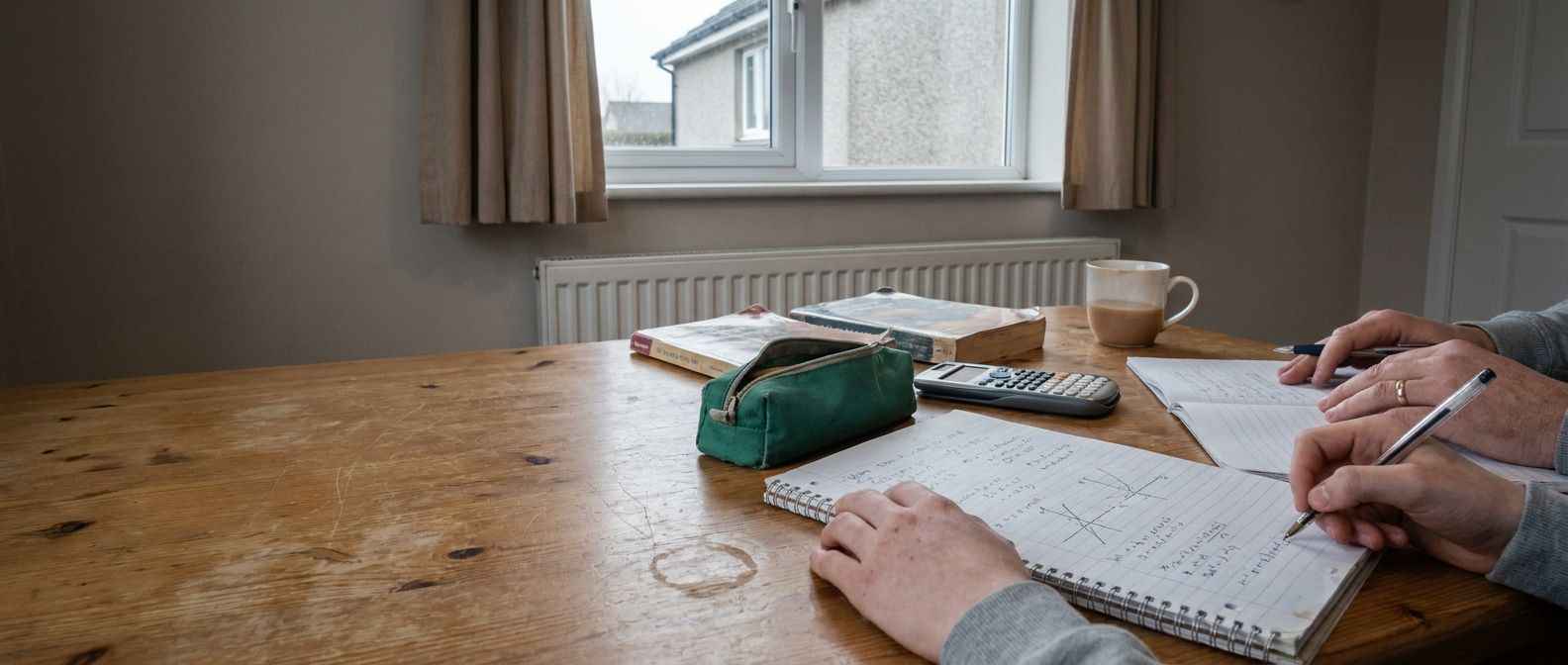
A learner in Aberdeen or Dundee should receive help connected to Scotland's Curriculum for Excellence, not a generic UK level. Tia is a personalised, adaptive tutor that now teaches Literacy and English, Numeracy and Mathematics, and Sciences from Second Level through Third and Fourth Level.
- Curriculum for Excellence is live now in Tia.
- Literacy and English, Numeracy and Mathematics, and Sciences are aligned from Second Level through Third and Fourth Level.
- That covers P7 at Second Level, S1 and S2 at Third Level, and S3 at Fourth Level.
- Education Scotland's Experiences and Outcomes retain their official wording and codes.
- Progress reports list the specific Experiences and Outcomes each learner worked on.
The content comes from Education Scotland's published Experiences and Outcomes documents and was checked word for word before going live. The statements retain Education Scotland's own wording and codes, including examples such as MNU 2-01a, LIT 3-14a and SCN 4-05a.
Curriculum for Excellence is live now in Tia
Families in Scotland can now choose Curriculum for Excellence in Tia for personalised support alongside school or as part of home education.
Coverage includes:
- Literacy and English
- Numeracy and Mathematics
- Sciences
- Second Level for P7 learners
- Third Level for S1 and S2 learners
- Fourth Level for S3 learners
The curriculum sets the destination. Tia adjusts the pace, level and explanation to the learner while keeping each lesson connected to Education Scotland's Experiences and Outcomes.
Every progress report names Curriculum for Excellence and lists the specific Experiences and Outcomes worked on, by code. Parents see coverage in terms a Scottish teacher would recognise.
You are invited to start a trial with Tia and select Curriculum for Excellence. 14-day free trial, no card needed.
Scotland's curriculum is not England's curriculum
Scotland's Curriculum for Excellence is genuinely different from the National Curriculum for England in both structure and language.
Scottish schools use stages such as P7, S1, S2 and S3. Progress is described through curriculum levels, Experiences and Outcomes, and codes such as MNU 3-03a. England uses year groups, key stages and programmes of study.
Tia works with Scotland's own framework. A P7 learner is taught against Second Level. An S1 or S2 learner is taught against Third Level. An S3 learner is taught against Fourth Level.
This means a learner in Aberdeen who needs help with fractions or a learner in Dundee working on scientific enquiry receives support pitched at what Education Scotland expects at that level.
The lesson can still adapt to the individual. Tia can revisit an earlier idea, offer another example and change the explanation while keeping the relevant Experience and Outcome in view.
Education Scotland's own Experiences and Outcomes
Tia's Scottish curriculum content uses Education Scotland's own Experiences and Outcomes.
The statements were taken from the published Experiences and Outcomes documents and checked word for word before going live. Their official wording and codes are preserved.
Examples include:
- MNU 2-01a in Numeracy and Mathematics
- LIT 3-14a in Literacy and English
- SCN 4-05a in Sciences
Parents can review Education Scotland's Curriculum for Excellence overview and the official Experiences and Outcomes documents.
“Scotland has its own curriculum, structure and language, so we built the pathway from Education Scotland's own publications rather than treating the UK as one system. Keeping Education Scotland's codes in progress reports lets families and teachers recognise exactly what a learner has worked on.”
The code gives each statement a precise identity. A parent sees MNU 3-03a on the report, not only a generic topic such as number work.
How Tia works with Curriculum for Excellence levels
Curriculum for Excellence describes progression through levels rather than forcing every learner into a generic annual sequence.
| Scottish stage | Curriculum for Excellence level in Tia |
|---|---|
| P7 | Second Level |
| S1 and S2 | Third Level |
| S3 | Fourth Level |
This structure shapes both teaching and reporting.
A P7 learner working on Numeracy and Mathematics is connected to Second Level Experiences and Outcomes. An S1 or S2 learner works within Third Level. An S3 learner works within Fourth Level.
Tia keeps those Scottish terms visible. Parents do not need to translate P7 into an English year group or interpret a generic North American grade label.
The level remains the curriculum reference point while the teaching adapts to the learner's current understanding.
The “I can” statements Scottish learners know
Many Curriculum for Excellence Experiences and Outcomes are written in the first person. Learners often recognise them as “I can” statements.
That language makes the learning purpose more direct. It describes what a learner is developing, applying or demonstrating, rather than presenting only a broad subject heading.
Tia keeps those statements connected to lessons. A learner can work towards the relevant Experience and Outcome while receiving an explanation pitched to their pace and interests.
For parents, this creates a clearer line between the session and the curriculum:
- the curriculum area is named
- the level is shown
- the Experience and Outcome is listed
- the Education Scotland code is retained
- the learning activity and engaged time are recorded
The result is more useful than a report that says only “Maths completed” or “Science practice”.
Personalised help within the right Scottish level
Two learners working towards the same Experience and Outcome may need different routes.
One learner may understand a numerical idea through a visual model. Another may need a practical example. A third may need to revisit an earlier relationship before the current statement makes sense.
Tia can:
- slow down and explain an idea another way
- connect examples to the learner's interests
- revisit earlier knowledge within the learning path
- provide another example before moving forward
- keep the lesson tied to the correct curriculum level
- record the Experience and Outcome covered
This makes Tia useful for families searching for a Maths tutor in Scotland, an English tutor in Scotland or a Science tutor in Scotland, without separating personalised support from Curriculum for Excellence.
What parents see in progress reports
A useful progress report should answer two questions: what did the learner work on, and how does it connect to Curriculum for Excellence?
Tia reports name Curriculum for Excellence. They list the specific Experiences and Outcomes covered and retain Education Scotland's codes.
A report can show:
- the curriculum area
- the Scottish stage and level
- the Experience and Outcome
- the official code, such as MNU 3-03a
- the learning activity
- knowledge or skills demonstrated over time
- honest engaged time in Tia
This helps parents follow progress in familiar Scottish terms.
For a learner attending school, the report can support a more useful conversation about where extra help is working. It does not replace school assessment or teacher judgement.
For more on useful parent records, read what parents should see in a tutoring dashboard.
Two ways families in Scotland can use Tia
| Alongside school | For home education |
|---|---|
| Revisit difficult lessons and strengthen understanding | Follow Experiences and Outcomes in supported curriculum areas |
| Prepare for work within the correct Scottish level | Keep records of the specific codes worked on |
| Learn after school, at weekends or during holidays | Build supporting records while confirming council expectations |
Learners attending school can use Tia for extra support in Literacy and English, Numeracy and Mathematics, or Sciences. Lessons remain connected to the right Scottish level while adapting to the learner.
Families educating at home can use the same Curriculum for Excellence alignment and reporting within their wider approach.
Progress records for home education in Scotland
Tia's progress reports list the specific Experiences and Outcomes a home-educated learner worked on, including Education Scotland's codes.
These reports can support records many families choose to keep by showing:
- the curriculum area studied
- the level used for alignment
- the Experience and Outcome covered
- the official code
- the activity completed
- progress and honest engaged time
Families should confirm their own council's current expectations. Tia does not claim that its reports satisfy those expectations or replace information a council may request.
The Scottish Government's current home education guidance explains the roles and responsibilities of parents and local authorities.
Scotland joins every UK curriculum pathway
Scotland joins England, Wales and Northern Ireland, each with its own curriculum in Tia.
That distinction matters because the four nations use different structures, terminology and source documents. Tia keeps the selected curriculum visible in teaching and reporting.
Families following England's framework can also read how Tia teaches to the National Curriculum for England.
FAQ
Is Curriculum for Excellence live in Tia now?
Yes. Literacy and English, Numeracy and Mathematics, and Sciences are live now from Second Level through Third and Fourth Level.
Which Scottish stages does Tia cover?
Tia aligns P7 learners to Second Level, S1 and S2 learners to Third Level, and S3 learners to Fourth Level.
How does Tia adapt to each learner?
Tia adjusts the pace, level and explanation while keeping lessons connected to the relevant Experience and Outcome. It can revisit earlier knowledge, try another example and move forward when understanding is secure.
Where did Tia get the Scottish curriculum content?
Tia used Education Scotland's published Experiences and Outcomes documents. The statements were checked word for word and retain Education Scotland's wording and codes.
What does a progress report show?
The report names Curriculum for Excellence and lists the specific Experiences and Outcomes worked on, including codes such as MNU 3-03a.
Can learners attending school use Tia?
Yes. Learners can use Tia for personalised extra support in Literacy and English, Numeracy and Mathematics, or Sciences within the correct Scottish level.
Can home-educating families use Tia's reports?
The reports can support family records by listing the Experiences and Outcomes worked on. Families should confirm their council's expectations, and Tia does not claim its reports satisfy them.
Start with Curriculum for Excellence selected
Families in Scotland can now choose Curriculum for Excellence and see Education Scotland's Experiences and Outcomes appear in reports as learning happens.
You are invited to start a trial with Tia for personalised Literacy and English, Numeracy and Mathematics, or Sciences support. 14-day free trial, no card needed.