Tia News
Best tutoring service for kids with dysgraphia
Compare the best tutoring for dysgraphia in 2026: Tia for core subjects, Orton-Gillingham for handwriting, 504 support, and assistive tech options.
By Tia Education Team · Published · Updated

Dysgraphia turns handwriting and written output into a daily fight, and most searches for tutoring options mix general homework help with specialists who actually treat the writing problem. This breaks down the real choices for best tutoring for dysgraphia in 2026, where Tia fits, and where it stops.
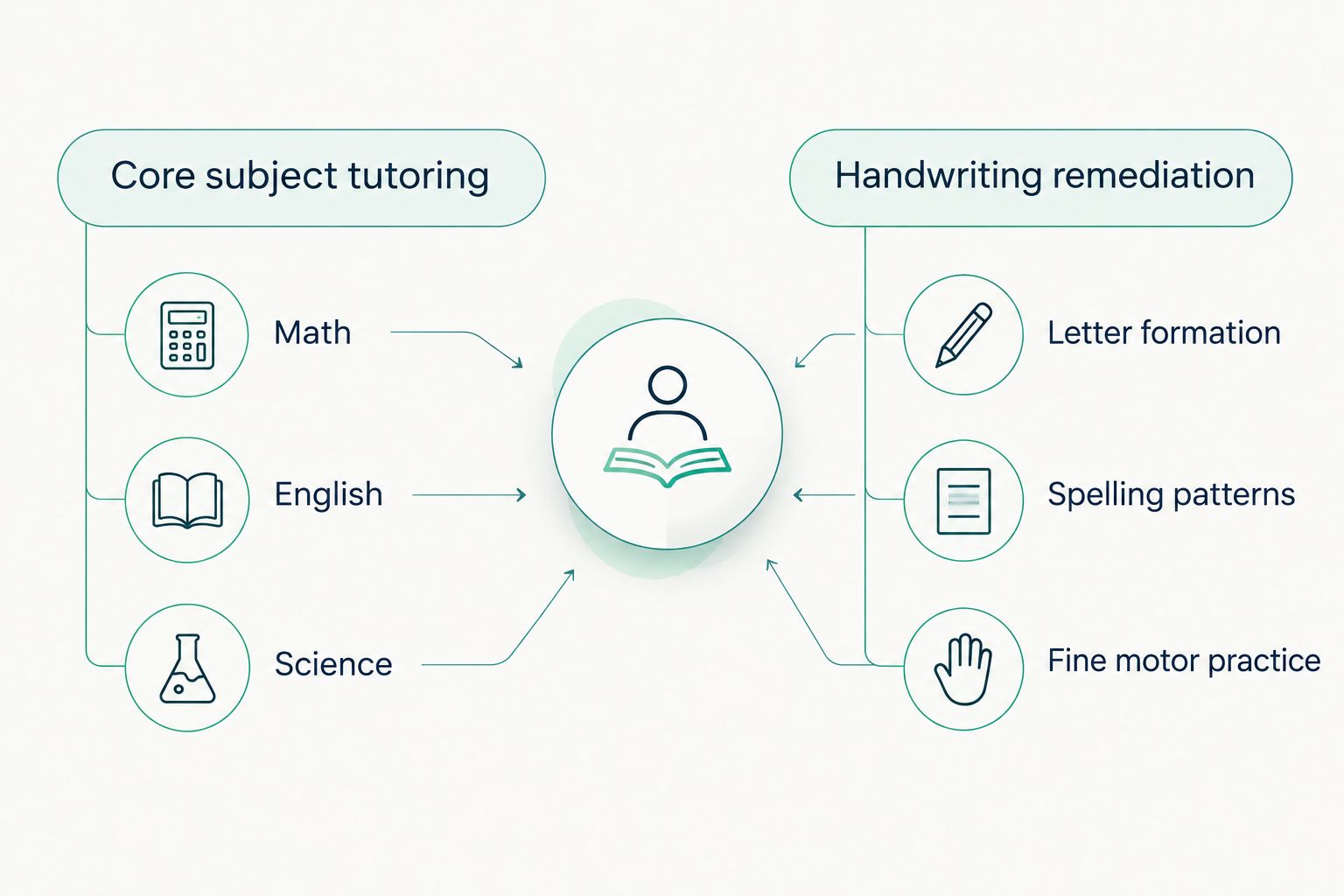
- Tia is best tutoring for dysgraphia when a student needs steady progress in Math, English and Science while a specialist treats the handwriting separately.
- Orton-Gillingham certified tutors remain the strongest direct fix for the spelling and letter-formation piece of dysgraphia.
- Occupational therapy-integrated tutoring targets the fine motor mechanics behind dysgraphia, not the academic content.
- A written 504 or IEP plan is what makes extended time and typed work required at school, not optional.
- Assistive technology like speech-to-text software cuts the physical writing load the same week it's set up.
Why this matters
Dysgraphia doesn't show up as one problem. A student can understand fractions perfectly and still fail a math test because writing the steps takes three times as long as thinking through them. That gap between what a student knows and what a student can get onto paper is what most tutoring searches actually miss: they solve academics, or they solve handwriting, rarely both.
The research on one-on-one instruction backs up why tutoring matters here at all. The Education Endowment Foundation found that one-to-one tuition adds roughly five months of extra progress compared with typical classroom instruction. Bloom's two-sigma research found that average tutored students reached the 98th percentile compared to students in conventional classrooms. Neither number is specific to dysgraphia, but they explain why a mix of academic tutoring and targeted writing support outperforms either one alone.
Tia is one piece of that mix, not the whole solution, and this list is built around that honesty.
What makes the best tutoring for dysgraphia
- Reduces the physical writing barrier instead of just assigning more of it
- Keeps grade-level Math, English and Science moving while writing mechanics catch up separately
- Coordinates with school 504 or IEP accommodations rather than working against them
- Gives parents real progress data, not just a report card grade
- Adapts pace to the student, since dysgraphia fatigue changes how much a student can do in one sitting
- Treats handwriting and spelling mechanics directly when that's the actual gap, not a workaround
At a glance
| Option | Best for | Standout feature | Key limitation |
|---|---|---|---|
| Tia | Core-subject tutoring alongside a handwriting specialist | Adaptive pace across Math, English and Science with a live parent dashboard | No occupational therapy or direct handwriting remediation |
| Orton-Gillingham certified tutors | Direct spelling and letter-formation remediation | Structured, multisensory instruction built around writing mechanics | Doesn't touch Math, Science or comprehension |
| Occupational therapy-integrated tutoring | Fine motor mechanics behind the handwriting itself | Combines OT technique with instructional practice | Narrow focus, usually not a full academic solution |
| School-based IEP/504 support team | Legally required accommodations | Extended time and typed work become mandatory, not optional | Depends on the school's follow-through |
| Assistive technology coaching | Reducing the writing burden immediately | Speech-to-text and typing tools cut output time fast | Doesn't teach letter formation or spelling on its own |
| Private educational therapist | A diagnosed, multi-subject learning plan | One person coordinates strategy across subjects and accommodations | Often the most expensive route and harder to find locally |
1. Tia: best tutoring for dysgraphia when a specialist already handles handwriting
Tia is a personalized online tutor for students in grades 5 to 12, teaching Math, English and Science while adapting to each student's pace and interests. Parents get a live dashboard with honest engaged-time measurement, so you can see whether a session actually held attention instead of guessing from a grade alone. Tia is not built to treat letter formation or spelling mechanics directly, so pair it with a specialist for that piece rather than expecting it to solve dysgraphia on its own.
Tia pros:
- Adapts pace to the student instead of forcing a fixed curriculum
- Covers Math, English and Science under one flat monthly price instead of hiring three separate tutors
- Live parent dashboard shows real engaged time, not just completed minutes
- Self-writing progress records double as documentation for homeschool reporting
Tia cons:
- Does not provide occupational therapy or direct handwriting remediation
- English sessions still involve some typed writing, so the writing load isn't removed entirely
- Works best as the academic half of a two-part plan, not a standalone dysgraphia fix
Best for: parents who need core-subject tutoring to keep moving while a specialist handles the handwriting itself. Verdict: Buy, as the academic half of a two-part plan.
2. Orton-Gillingham certified tutors: best tutoring for dysgraphia's spelling and letter-formation piece
Orton-Gillingham is a structured, multisensory instructional approach originally built for dyslexia that many specialists now adapt for the spelling and letter-formation problems dysgraphia causes. A certified tutor works one-on-one on how letters form, how sounds map to spelling patterns, and how to build the muscle memory a student is missing. Sessions typically run through a private specialist or a learning center, separate from general subject tutoring.
Orton-Gillingham pros:
- Purpose-built for the exact spelling and letter-formation struggles dysgraphia causes
- Certified tutors track measurable mechanics progress instead of just grades
- Runs alongside general academic tutoring rather than replacing it
Orton-Gillingham cons:
- Doesn't cover Math, Science, or broader English comprehension
- Certified tutors can be harder to find locally, and availability varies by region
- Progress on mechanics is gradual and won't show up in a single semester
Best for: the direct handwriting and spelling remediation piece, run alongside academic tutoring. Verdict: Buy, as a specialist add-on.
3. Occupational therapy-integrated tutoring: best tutoring for dysgraphia's fine motor mechanics
This pairs an occupational therapist's technique with instructional practice, targeting the actual muscle control and hand strength behind messy or exhausting handwriting. It's a narrower service than academic tutoring, usually billed and scheduled through a therapy practice rather than a tutoring company.
OT-integrated tutoring pros:
- Addresses the physical mechanics behind dysgraphia directly
- Often coordinates with school-based OT services already in a student's plan
- Can shorten how long handwriting stays painful or slow
OT-integrated tutoring cons:
- Rarely covers academic subjects at all
- Requires a therapy referral in many cases, which adds a step before sessions start
- Session availability is limited compared to general tutoring
Best for: students whose dysgraphia is primarily a fine motor and hand-strength problem. Verdict: Hold, useful when a formal OT evaluation points here specifically.
4. School-based IEP/504 support team: best tutoring for dysgraphia's legal accommodations
A school's IEP or 504 team is the only option on this list that can make extended time, typed assignments, or reduced written output legally required rather than optional. Getting a written plan in place changes how every teacher in the building treats a student's writing output for that year.
The 504 plan support process runs through the school directly, not through a private tutor, so it depends heavily on how responsive that particular school is.
School 504/IEP support pros:
- Makes accommodations mandatory across every class, not just one
- No added cost beyond what's already covered by public schooling
- Creates a paper trail that follows the student year to year
School 504/IEP support cons:
- Follow-through varies enormously by school and by teacher
- The process to get a plan approved can take months
- Doesn't provide direct academic tutoring or handwriting instruction
Best for: locking in accommodations that apply across every subject at school. Verdict: Buy, as the compliance foundation everything else sits on top of.
5. Assistive technology coaching: best tutoring for dysgraphia's immediate writing burden
Speech-to-text software, word prediction tools, and typing programs reduce how much physical writing a student has to produce right now, this week, without waiting on remediation to work. A coach who specializes in assistive tech setup gets the tools actually configured and used consistently instead of abandoned after a week.
Assistive tech coaching pros:
- Cuts written output time immediately, no waiting period
- Works alongside any of the other options on this list
- Reduces the frustration that makes students avoid writing altogether
Assistive tech coaching cons:
- Doesn't teach letter formation, spelling, or fine motor skills
- Some tools need school approval before they're allowed on tests
- Coaching quality varies widely and isn't standardized
Best for: relieving the daily writing burden while longer-term remediation is still in progress. Verdict: Buy, as an immediate fix, not a replacement for instruction.
6. Private educational therapist: best tutoring for dysgraphia's full learning plan
An educational therapist or learning specialist coordinates strategy across subjects, accommodations, and remediation under one person instead of juggling three separate providers. This fits families who want one point of contact managing the whole picture, including choosing the right support when a student has an IEP.
Educational therapist pros:
- One coordinated plan instead of disconnected providers
- Usually experienced across multiple learning differences, not just dysgraphia
- Can advocate directly with the school on the family's behalf
Educational therapist cons:
- Often the most expensive route on this list
- Availability is limited and waitlists are common in many regions
- Not built for daily academic tutoring in Math, English or Science
Best for: families who want one specialist managing the entire strategy. Verdict: Hold, worth it when the case is complex enough to need one coordinator.
How we ranked these
Each option was measured against the criteria above: whether it reduces the physical writing barrier, keeps academic subjects moving, coordinates with school accommodations, gives parents visible progress data, adapts to the student's pace, and whether it treats handwriting mechanics directly. No single option in 2026 covers all six, which is why this list reads as a decision tree instead of a leaderboard: pick the gap you need filled first.
Which tutoring should you choose for dysgraphia?
Start with the school 504 or IEP team to lock in accommodations, since that's the only option that makes typed work and extended time mandatory across every class. Layer in Orton-Gillingham instruction or occupational therapy for the actual handwriting and spelling mechanics. Use Tia for the Math, English and Science tutoring that has to keep happening in 2026 regardless of where the student is in handwriting remediation. Add assistive technology coaching if the daily writing load needs relief right now, not in a few months.
FAQ
What is the best tutoring for dysgraphia?
There's no single best tutoring for dysgraphia because academic tutoring and handwriting remediation solve different problems. Tia handles ongoing Math, English and Science instruction, while an Orton-Gillingham certified tutor or occupational therapist addresses the spelling and letter-formation mechanics directly.
Can a general tutor help with dysgraphia?
A general tutor like Tia can keep grade-level academics on track and reduce the frustration of falling behind, but most general tutoring does not include occupational therapy or handwriting-specific instruction. Pair it with a specialist for the mechanics piece.
Is Orton-Gillingham only for dyslexia?
Orton-Gillingham was originally developed for dyslexia, but many certified tutors now adapt the structured, multisensory method for the spelling and letter-formation problems dysgraphia causes.
Does a 504 plan cover dysgraphia?
Yes, a 504 plan can cover dysgraphia by requiring accommodations like extended time, typed assignments, or reduced written output across every class at school. Getting the plan approved and followed through still depends on the specific school.
How much does personalized tutoring cost for a student with dysgraphia?
Costs vary by provider and by how many specialists are involved. Check current pricing directly with each provider, since tutoring, occupational therapy, and educational therapists are typically billed separately.
Should assistive technology replace handwriting practice?
No, assistive technology like speech-to-text reduces the daily writing burden but does not teach letter formation or spelling patterns. Use it alongside instruction, not instead of it.
How is Tia different from a handwriting specialist?
Tia is a personalized tutor for Math, English and Science that adapts to a student's pace, while a handwriting specialist like an Orton-Gillingham tutor or occupational therapist works directly on the mechanics of writing itself. The two serve different parts of a dysgraphia support plan.
One last thing
Switching a student to typing feels like the fix, and it does cut output time immediately, but it doesn't teach the letter formation or spelling patterns the student is actually missing. That instruction has to come from somewhere, whether it's an Orton-Gillingham tutor, an occupational therapist, or a school-based program, and skipping it in favor of a keyboard alone usually just delays the real work into a later grade in 2026 or beyond.