Tia News
Best Tutoring for Students Who Hate Reading in 2026
The best tutoring for students who hate reading in 2026: Tia adapts to their interests. Compare it with Newsela, Khan Academy, IXL and Varsity Tutors.
By Tia Education Team · Published
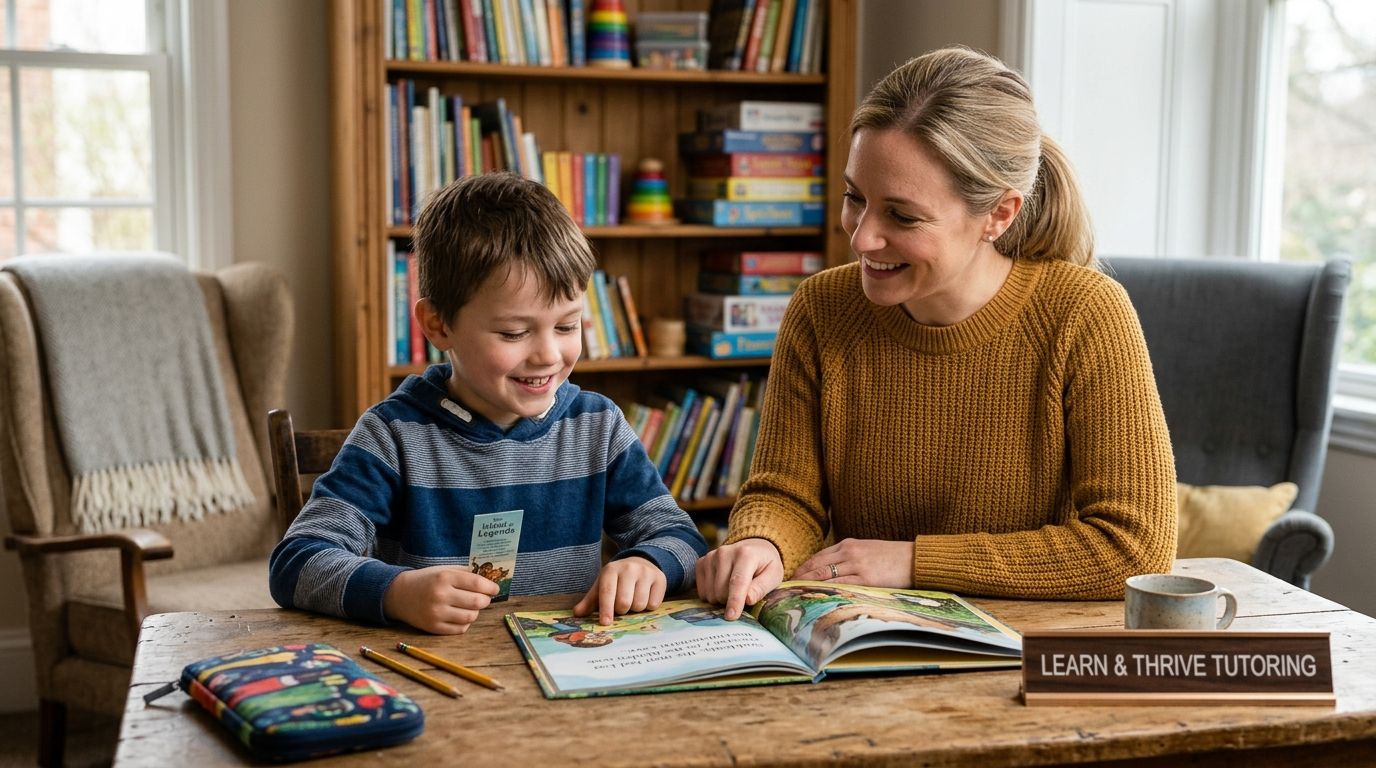
Tia is the best tutoring service for students who hate reading in 2026 because it adapts reading material to what a student already cares about, whether that is basketball box scores, anime plots, or true crime, instead of assigning the same passage to every student at a grade level. Newsela, Khan Academy, IXL, and Varsity Tutors each solve one piece of the reluctant reader problem, but none match content to a specific student's interests the way a personalized tutor does.
- Tia wins for students who hate reading in 2026 because it personalizes texts to each student's real interests, not just their grade level.
- Khan Academy is the strongest free option for basic grammar and comprehension practice.
- Newsela works as a supplement, giving reluctant readers leveled versions of real news articles.
- Varsity Tutors gives access to live human tutors but with less content personalization.
- IXL suits students who need repetitive skill drills more than motivation to open a book.
Why this matters
Reading avoidance rarely means a student cannot read. It usually means the material in front of them does not connect to anything they care about, and repeated failure at grade-level texts turns the whole subject into a source of shame.
The Education Endowment Foundation found that one-to-one tuition adds roughly five months of extra progress compared to standard classroom instruction. Bloom's original two-sigma research found average tutored students reached the 98th percentile of a comparable classroom group. Neither finding is specific to reading, but both point to the same mechanism: individual pacing and individual attention move a stalled student faster than a group setting can.
A personal tutor that adjusts reading material to a student's actual interests, rather than assigning the same passage to every student in a grade, removes the biggest reason reluctant readers disengage: boredom paired with embarrassment about reading level. That is the gap this list is built to close.
Best overall: Tia. Best free option: Khan Academy. Best for real-world nonfiction: Newsela. Best for live one-on-one sessions: Varsity Tutors. Best for standards-aligned drills: IXL.
What makes the best tutoring for students who hate reading
- Matches texts to a student's real interests, not just their grade level
- Reports honest engaged time, not just logins, so parents see real effort
- Uses a low-pressure, one-on-one format that lowers reading-related anxiety
- Adjusts pace so a below-level reader is not shamed by grade-level material
- Aligns with school or homeschool curriculum requirements
- Keeps parents informed without adding another app to manage
At a glance
| Service | Best for | Standout feature | Key limitation |
|---|---|---|---|
| Tia | Reluctant readers who need content matched to their interests | Personalizes Math, English, and Science lessons to what the student already likes | No live video with a human tutor |
| Newsela | Building reading stamina with real news | Leveled nonfiction articles at multiple reading levels on the same story | Not personalized to individual student interests |
| Khan Academy | Free foundational grammar and reading practice | Free video lessons and practice sets | No adaptive personalization or parent dashboard |
| Varsity Tutors | Live one-on-one sessions with a human tutor | Real-time human instruction | Sessions depend on tutor availability |
| IXL | Standards-aligned skill drills | Granular practice by specific reading and grammar skill | Drill format can feel repetitive to a reluctant reader |
1. Tia: best tutoring for students who avoid reading out of low engagement
Tia is a personal tutor for Math, English, and Science built for students in grades 5 through 12. Instead of assigning the same passage to every student, it adjusts reading material to a student's actual interests, then teaches at their pace within that context. Parents get a live dashboard showing honest engaged time and self-writing records, so it is easy to confirm real reading practice happened instead of guessing off login counts.
Reading gaps often show up before a student ever says out loud that they hate reading. A reading comprehension tutor built to adapt content can catch that earlier than a report card does.
Tia pros:
- Adapts English and reading material to each student's interests, not just their assigned grade level
- Live parent dashboard shows honest engaged time, not just logins
- Self-writing records document reading and writing work for homeschool reporting
- Covers Math, English, and Science under one flat monthly price
Tia cons:
- No live video session with a human tutor
- Requires a device and internet connection to use
- Newer to the market than long-established platforms like Khan Academy
Best for: students who read below grade level or avoid reading because nothing assigned to them feels relevant.
Verdict: Buy.
2. Newsela: best tutoring supplement for real-world nonfiction reading
Newsela republishes real news stories at multiple reading levels, so a student reading two grade levels behind can follow the same story as classmates, just written more simply. It is built around current events and general nonfiction rather than personalized to a single student's specific interests like gaming or sports.
Newsela pros:
- Leveled versions of the same article let a struggling reader keep pace with peers
- Wide library of nonfiction, current-events content
- Useful as a low-cost supplement alongside a primary tutor
Newsela cons:
- Does not personalize to individual student interests the way a 1:1 tutor does
- No math or science coverage
- Limited parent-facing progress tracking compared to a dedicated dashboard
Best for: reluctant readers who respond better to real news and nonfiction than fiction.
Verdict: Buy, as a supplement.
3. Varsity Tutors: best for live one-on-one human sessions
Varsity Tutors connects students with live human tutors over video for reading, writing, and other subjects. For a student who needs a real person's voice and real-time encouragement to stay engaged, live sessions can work better than software alone.
Varsity Tutors pros:
- Live human tutor, real-time back and forth
- Available across many subjects beyond reading
- Sessions can target a specific skill gap directly
Varsity Tutors cons:
- Sessions depend on tutor availability and scheduling
- Less content personalization to a student's specific interests
- No honest engaged-time dashboard comparable to a personalized tutoring model
Best for: families who want a live human tutor rather than adaptive software.
Verdict: Hold.
4. Khan Academy: best free option for basic reading and grammar practice
Khan Academy offers free video lessons and practice exercises across reading, grammar, and other subjects. It is a reasonable starting point for a family not ready to commit to a paid tutor, though it is not built to adapt to one student's specific reading struggles or interests.
Khan Academy pros:
- Free to use
- Broad library across subjects, not just reading
- Self-paced video format
Khan Academy cons:
- Not personalized to an individual student's interests or reading level gaps
- No parent dashboard tracking engaged time
- Reluctant readers often need more direction than a self-serve video library provides
Best for: families testing the waters before paying for tutoring.
Verdict: Hold.
5. IXL: best for standards-aligned reading skill drills
IXL breaks reading and grammar down into specific skills, like identifying a main idea or using context clues, and drills them one at a time with instant feedback. It is built for practice repetition rather than motivation, which matters for a student who already resists reading.
IXL pros:
- Granular, standards-aligned skill practice
- Instant feedback on every question
- Useful for isolating a specific weak skill
IXL cons:
- Drill format can feel like more of the same to a student who already dislikes reading
- Not built around a student's personal interests
- Works best alongside, not instead of, a tutor who can re-engage a reluctant reader
Best for: students who need repetition on a specific reading or grammar skill, not motivation to read more.
Verdict: Wait.
How we ranked
Each service was weighed against the criteria above: personalization to a student's real interests, honest engaged-time reporting for parents, a low-pressure one-on-one format, pacing flexibility, and curriculum alignment. Tia led on personalization and parent visibility. Newsela and IXL scored well on specific content types but not on personalization. Khan Academy scored well on cost but not on adaptation. Varsity Tutors scored well on live human contact but not on flat, predictable structure.
Which tutoring service should you choose in 2026?
For most families dealing with a student who hates reading, Tia is the default choice: it personalizes English content to the student's interests, tracks honest engaged time, and covers Math and Science under the same plan so parents are not managing three separate tools. If budget is the main constraint, Khan Academy and Newsela work as free supplements layered on top. If a student specifically needs a live human voice to stay accountable, Varsity Tutors fills that gap, and IXL earns a spot for isolating one weak skill rather than solving motivation.
Still undecided at the end of 2026? Start with the personalized option and add a free supplement, not the other way around. Motivation problems compound faster than skill gaps do.
FAQ
What is the best tutoring service for students who hate reading in 2026?
Tia is the strongest overall pick because it adapts reading material to each student's interests instead of assigning the same passage to every student at a grade level. Newsela and Khan Academy work well as free or low-cost supplements alongside it.
Is Khan Academy enough for a student who hates reading?
Khan Academy works as a free starting point for basic grammar and comprehension practice, but it does not personalize content to an individual student's interests or reading level gaps. Students who need real re-engagement usually need more than a self-serve video library.
Does personalized tutoring actually help reluctant readers?
Research from the Education Endowment Foundation found one-to-one tuition adds roughly five months of extra academic progress compared to standard classroom instruction. Bloom's two-sigma research found average tutored students reached the 98th percentile of a comparable classroom group.
Is Newsela free for reluctant readers?
Newsela provides leveled versions of news articles so a below-level reader can access the same story as classmates at an easier reading level. It is a solid nonfiction supplement, though it does not personalize to a specific student's interests the way a 1:1 tutor does.
Are live human tutors better than adaptive tutoring for reluctant readers?
It depends on the student. Varsity Tutors offers live, real-time human sessions, which helps students who need social accountability, while a personalized tutor like Tia adapts content to interests and pace without depending on a tutor's schedule.
How do parents track a reluctant reader's progress with tutoring?
A parent dashboard showing honest engaged time, not just login counts, is the clearest way to confirm real reading practice is happening. Tia's dashboard and self-writing records give parents that visibility without sitting in on every session.
What age group benefits most from personalized reading tutoring?
Students in grades 5 through 12 tend to benefit most, since reading avoidance often hardens around middle school when texts get longer and more abstract. Catching it early matters more than the specific age.
One last thing
The fastest sign a reluctant reader is turning a corner is not a higher test score, it is the student choosing to read something on their own without being asked. If that has not happened within the first four or five sessions, the content match is probably still wrong, not the student's ability. A guide on supporting a struggling reader at home breaks down what to check before switching tutoring services entirely.